


Listen to the article
AI Ethics Standoff: Anthropic’s Military Refusal Sparks Industry Debate
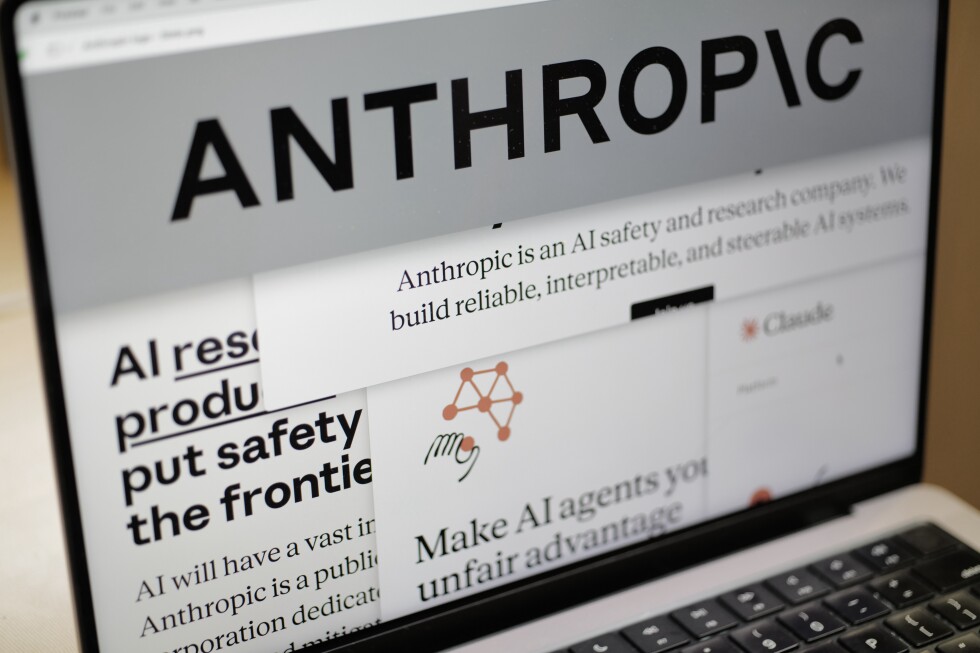
Anthropic’s Claude chatbot has surpassed rival ChatGPT in U.S. app downloads this week, as consumers appear to side with the company in its escalating conflict with the Pentagon over military applications of AI. The milestone comes in the wake of the Trump administration’s order on Friday directing government agencies to cease using Claude, officially designating it a supply chain risk.
The controversy erupted after Anthropic CEO Dario Amodei refused to modify the company’s ethical safeguards that prevent its technology from being used in autonomous weapons systems and domestic mass surveillance operations. Anthropic has announced plans to challenge the Pentagon’s decision in court once it receives formal notification of the penalties.
While many military experts and human rights advocates have praised Amodei’s ethical stance, others point to a deeper irony in the situation. Critics argue that AI companies, including Anthropic, have fueled unrealistic expectations about their technologies’ capabilities through aggressive marketing.
“He caused this mess,” said Missy Cummings, a former Navy fighter pilot who now directs George Mason University’s robotics and automation center. “They were the No. 1 company to push ridiculous hype over the capabilities of these technologies. And now, all of a sudden, they want to be for real.”
Cummings published research in December arguing that government agencies should prohibit generative AI from controlling weapons systems – not due to concerns about AI becoming too intelligent, but rather because current large language models are fundamentally unreliable. These systems make too many errors, dubbed “hallucinations,” rendering them inappropriate for life-or-death situations.
“You’re going to kill noncombatants,” Cummings warned. “You’re going to kill your own troops. I’m not clear whether the military truly understands the limitations.”
Amodei echoed these concerns in defending Anthropic’s position last week, stating that “frontier AI systems are simply not reliable enough to power fully autonomous weapons. We will not knowingly provide a product that puts America’s warfighters and civilians at risk.”
Until recently, Anthropic was uniquely positioned among its competitors with approval for use in classified military systems, where it partnered with data analysis company Palantir and other defense contractors. President Trump announced Friday that the Pentagon would have six months to phase out Anthropic’s military applications, coinciding with his approval of Saturday’s military strikes on Iran.
Cummings, a former Palantir adviser, speculated that Claude may have already been utilized in military strike planning. “I just fundamentally hope that there were humans in the loop,” she said. “A human has to babysit these technologies very closely. You can use them to do these things, but you need to verify, verify, verify.”
The Pentagon declined to comment on whether it continues to use Claude, including in operations related to Iran, citing operational security concerns.
The controversy has had divergent impacts on the major AI players. While potentially jeopardizing Anthropic’s defense industry partnerships, it has simultaneously enhanced the company’s reputation as a developer committed to ethical AI. Meanwhile, OpenAI’s ChatGPT has seen its consumer standing damaged following its announcement of a Pentagon deal that would effectively replace Anthropic in classified environments.
“It’s applaudable that a company stood up to the government in order to maintain what it felt were its ethics and were its business choices, even in the face of these potentially crippling policy responses,” noted Jennifer Huddleston, a senior fellow at the Cato Institute.
The public appears to be responding positively to Anthropic’s stance. Claude became the most popular iPhone app on Saturday and led downloads across all phone systems in the U.S. by Monday, according to market research firm Sensor Tower. Simultaneously, ChatGPT experienced a 775% increase in one-star reviews on Saturday in the Apple store.
OpenAI CEO Sam Altman acknowledged the misstep in a Monday social media post: “We shouldn’t have rushed to get this out on Friday. The issues are super complex, and demand clear communication.” Altman subsequently held an all-hands meeting with employees on Tuesday to discuss next steps, emphasizing the need to proceed carefully with Pentagon collaborations.
The ongoing situation highlights the growing tension between AI advancement, ethical boundaries, and national security interests as these powerful technologies continue to evolve.
Fact Checker
Verify the accuracy of this article using The Disinformation Commission analysis and real-time sources.

10 Comments
Fascinating development in the AI ethics debate. Anthropic’s principled stance on autonomous weapons and surveillance raises important questions about the military’s readiness to responsibly leverage advanced AI.
It’s a delicate balance – the military needs cutting-edge tech, but can’t ignore ethical concerns. Curious to see how this legal challenge unfolds.
This dispute highlights the complexity of integrating AI into sensitive military applications. Anthropic’s refusal to compromise its ethical safeguards is admirable, but the Pentagon’s response suggests deep divisions on the issue.
I wonder if this setback will prompt a broader rethinking of AI governance frameworks within the defense sector. Transparency and responsible development will be critical moving forward.
This conflict between Anthropic and the Pentagon underscores the growing pains of integrating AI into sensitive military applications. Navigating the ethical and technical complexities will require open, nuanced dialogue across stakeholders.
Anthropic’s principled stance is commendable, but the Pentagon’s reaction suggests deeper tensions that will need to be resolved. Careful governance frameworks and robust public discourse will be essential as this technology advances.
Anthropic’s refusal to compromise on its ethical standards in the face of Pentagon pressure is a bold move. It will be interesting to see if this dispute prompts deeper industry-wide discussions on the responsible development of military AI.
Kudos to Anthropic for taking a stand, but the Pentagon’s response highlights the challenges of reconciling competing priorities around national security and AI ethics. Finding the right balance will be critical.
The rapid advances in AI capabilities are both exciting and concerning. While Anthropic’s stance is principled, the Pentagon’s pushback underscores the urgent need for clear guidelines and oversight on military AI applications.
This episode underscores the vital importance of proactive, collaborative approaches to AI ethics, especially in high-stakes domains like national defense. Difficult conversations, but necessary ones.