


Listen to the article
Concerns Mount Over Congo-U.S. Minerals Deal as Tshisekedi Returns from Summit
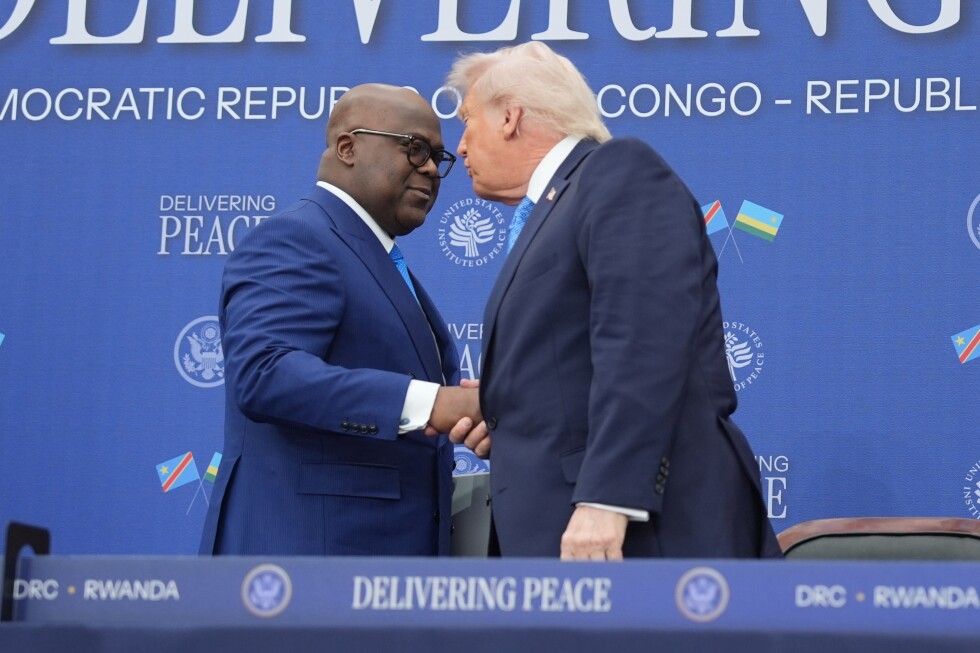
Opposition is intensifying against a proposed deal granting U.S. companies access to the Democratic Republic of Congo’s vast mineral resources, estimated to be worth $24 trillion. The controversy has escalated following Congolese President Felix Tshisekedi’s return from a critical minerals summit in Washington, where he received praise from U.S. President Donald Trump and American lawmakers.
Tshisekedi has offered American businesses entry to eastern Congo’s largely untapped mineral wealth as leverage for obtaining U.S. support in combating rebel forces and developing infrastructure in regions where Rwanda-backed rebels captured major cities last year. The arrangement comes as the Trump administration works to establish a minerals trading bloc with allies, partly to counter China’s dominance in critical elements essential for advanced technologies ranging from military equipment to consumer electronics.
China currently controls approximately 70% of global rare earth mining and 90% of processing capacity, while also maintaining the most significant presence in Congo’s minerals sector.
During the February 4 Critical Minerals Ministerial in Washington, Tshisekedi led a delegation in meetings with senior Trump administration officials and members of Congress, building upon a strategic partnership agreement signed by both nations in December. “We are open for business and we are serious about doing business the right way,” Tshisekedi told members of the U.S. Chamber of Commerce during his visit.
The U.S. State Department confirmed that discussions with Congolese officials centered on reviewing a list of strategic assets submitted by Congo to identify potential investment opportunities for American companies.
The framework of the strategic partnership focuses on securing supply chains for critical minerals including cobalt, copper, lithium, and coltan for the United States. In exchange, Congo would receive American support for developing essential infrastructure projects.
However, analysts and local residents in Congo report no evidence that U.S. involvement in the country’s minerals sector will address its most pressing need: lasting peace and stability, particularly in the eastern regions where Rwanda-backed M23 rebels seized territories a year ago.
These rebels currently control extensive mineral-rich areas, including the Rubaya coltan mine, which produces approximately 15% of the world’s coltan supply. The mine recently experienced a partial collapse that resulted in the deaths of at least 200 miners.
American companies have historically avoided investing in Congo due to high levels of insecurity and corruption, creating a void that Chinese firms have readily filled. Josaphat Musamba, a doctoral researcher studying conflict and development at Belgium’s Ghent University, predicts that “the battle between China and the United States for access to and control of strategic minerals will intensify concretely on Congolese soil.”
In Kinshasa, resistance to the mineral partnerships is growing among public figures and civil society leaders. Some have accused the Congolese government of undervaluing the country’s extensive mineral resources. A coalition of lawyers and human rights activists has filed a lawsuit claiming the partnership threatens Congo’s sovereignty.
“We are assuming our responsibility as Congolese citizens to protect the sovereignty of our country and preserve our heritage for future generations,” stated Jean-Marie Kalonji, one of the attorneys involved in the legal challenge.
Within opposition political circles, concerns exist that the agreement will primarily benefit Tshisekedi personally. Moïse Katumbi, the principal opposition leader, has questioned how the deal could be implemented given the security situation in the mineral-rich east and advocates for a national dialogue as a more appropriate approach to attracting investors.
Archbishop Fulgence Muteba, president of the National Episcopal Conference of Congo (CENCO), compared the strategic partnership to “selling off the minerals of an entire nation to save a regime or a political system,” adding that it “clearly amounts to sacrificing the development of the population and confiscating the happiness of future generations.”
Residents in rebel-controlled territories express skepticism about America’s commitment to restoring peace. “We think this agreement will generate more conflict instead of actually providing solutions because the actors are not sincere,” said Christopher Muyisa, a youth activist.
For Tshisekedi and his administration, according to Yvon Muya, a research associate at Canada’s University of Ottawa, “the immediate gain is primarily political: strategic recognition from Washington.” The long-term impacts on Congo’s economy, stability, and sovereignty remain to be seen as this controversial partnership continues to develop amid growing domestic opposition.
Fact Checker
Verify the accuracy of this article using The Disinformation Commission analysis and real-time sources.

11 Comments
This is a high-stakes game of global influence. I hope cooler heads prevail and the interests of the Congolese people are put first, not just those of the US and China.
Agreed. Congo must assert its autonomy and extract the best possible terms, without getting caught in the crossfire of US-China rivalry.
The scale of Congo’s mineral wealth is staggering, but a history of corruption and conflict raises serious concerns. Any US-Congo deal must have strong transparency and accountability measures to prevent abuses.
Absolutely. Oversight and fair distribution of resource revenues will be critical to avoid the ‘resource curse’ that has plagued Congo in the past.
This is a complex and contentious issue. On one hand, the US needs access to critical minerals, but Congo’s citizens deserve a fair deal that benefits the country. I hope an agreement can be reached that respects local interests and environmental concerns.
Agreed, it’s a delicate balance. Congo should negotiate hard to ensure they get a good deal and protect their sovereignty.
It’s encouraging to see the Congolese government standing up to protect their interests. They should hold out for an equitable deal that maximizes benefits for the local population and environment.
The potential environmental and social impacts of large-scale mineral extraction in Congo are deeply concerning. Any deal should require rigorous environmental assessments and community consultation.
The US and China’s competition for Congo’s minerals is troubling. I worry this could lead to further exploitation of the country and its people. Sustainable development and environmental protection should be top priorities in any mineral deals.
You make a good point. The US and China need to cooperate more on responsible resource extraction, not engage in a zero-sum competition that harms the Congolese.
The geopolitical implications of this deal are huge. The US is clearly trying to counter China’s dominance, but they can’t just strong-arm their way in. Congo deserves sovereignty over its own mineral resources.