


Listen to the article
When Cami Teacoach’s son turned three, she embarked on a mission to find volunteer opportunities they could do together. They created Valentine’s Day cards for seniors, picked up trash during hikes, harvested produce at community gardens, and made seed balls to promote wildflower growth. Despite many organizations turning them away due to her son’s young age, Teacoach persisted.
“Everyone was like, ‘A 3-year-old can’t do that,'” Teacoach recalls. “And I was like, ‘No, I swear, he really can if you would just give him a chance.'”
This determination highlights a growing challenge many families face, particularly during the holiday season when the spirit of giving back is at its peak. While many parents seek opportunities to instill values of community service in their children, most nonprofit organizations require volunteers to be at least 18 years old, creating barriers for families with young children.
Polly Lagana, executive director of Volunteer New York!, which connects people with service opportunities, notes the increased interest among families. “There’s a million different ways to help people and volunteer. So many families want to do this and literally just don’t know where to start,” she says. “In a turbulent time in our world, families — and parents in particular — are very interested in showing their kids how they can help out and how they can give back.”
Experts have observed that children can excel at certain volunteer tasks. Sapreet Saluja, executive director of New York Cares, has been impressed by the capabilities of young volunteers. “I’ve been very impressed with the detail-orientation and the precision and the following of directions and the care that some kids I’ve seen, as young as six, take to the tasks that they’re doing,” Saluja explains. “In many cases, they’re more detail-oriented than the adults, which I think is very inspiring.”
For families interested in volunteering together, the first step is to research organizations in your community that offer family-friendly projects. Inquire directly about minimum age requirements, as policies can vary widely between organizations.
Including children in the decision-making process is crucial for meaningful engagement. Lagana suggests explaining community issues at an age-appropriate level and offering choices. “Let them know what problem you’re trying to fix in your community, and maybe one or two options of how that problem can be fixed,” she advises. This approach helps children develop agency and deeper understanding of social issues.
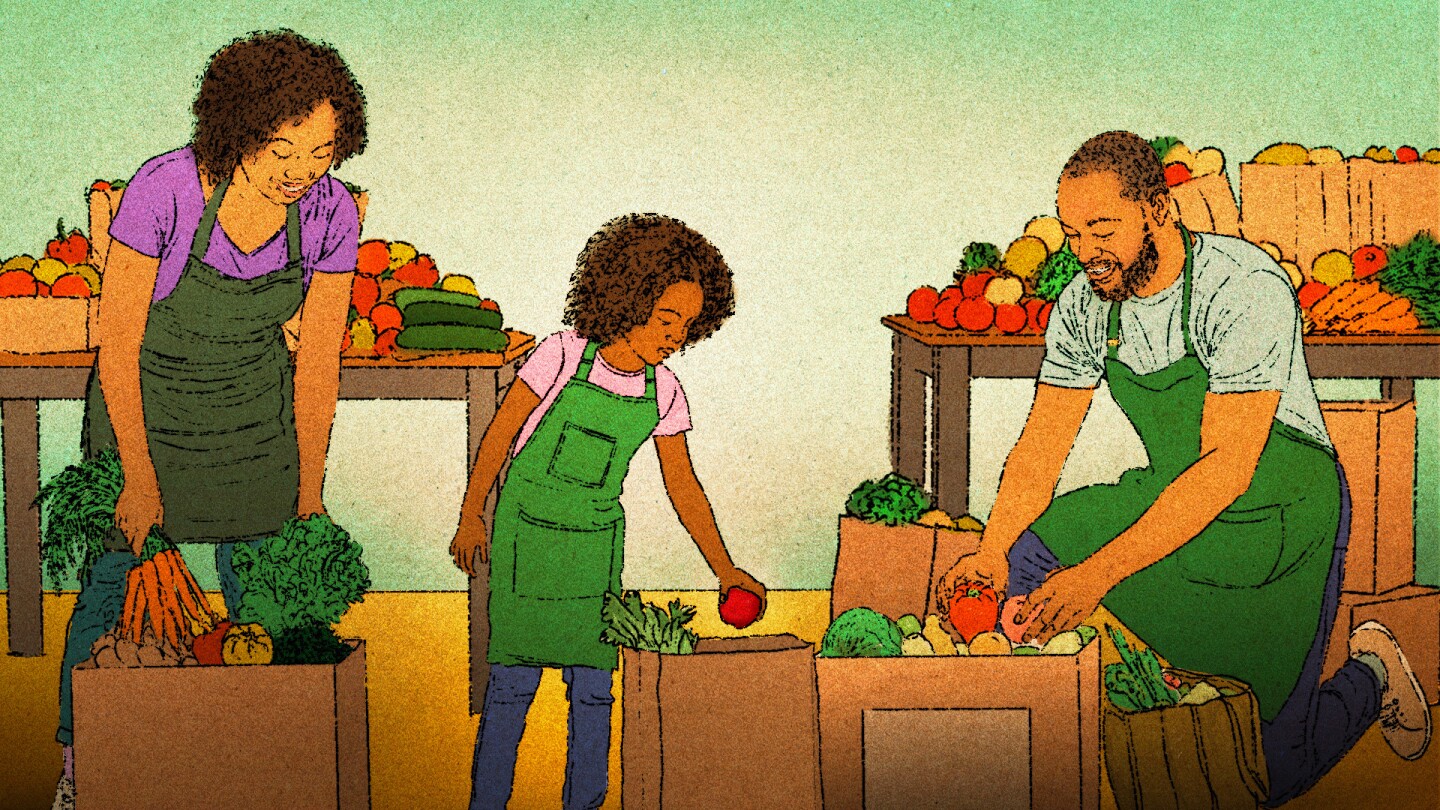
Food-related volunteer work often resonates with children, who innately understand the concept of hunger. Sorting grocery boxes at food pantries or delivering meals to those in need can be accessible options for young helpers.
Aviva Davis, now 17, began delivering Meals on Wheels with her family in Denver when she was about eight years old. “It definitely opened my eyes to what the world is like outside of our bubble. We saw all sorts of different things and I saw not everyone lives the same way,” Davis reflects. The experience provided valuable perspective and eventually made her a resource for classmates seeking volunteer opportunities.
Her father, Seth Davis, notes an additional benefit: “It’s a great chance for us to catch up as a family. When we’re not all on our phones, you get some pretty cool quality time.” This sentiment is echoed by her mother, Bonnie Davis, who adds, “The older they get, the harder it is to get that time together.”
When existing opportunities aren’t available, creating your own can be effective. Teacoach founded VolunTOTs in Pittsburgh, organizing activities where children as young as three pack groceries for families in need, play bingo with seniors, and make treats for animal rescue centers. Parents report improvements in their children’s behavior after volunteering, which Teacoach attributes to the confidence boost children receive from helping others.
The Bernaba family of Rhode Island created “Tough Cookies,” delivering homemade cookies to veterans. What began as a school service project for 15-year-old Matthew has become a meaningful family activity that’s also helped him develop social skills. “For the first couple of deliveries I was more to myself, and as we kept going, we talked more with the veterans and got to hear great stories from them,” he shares.
Making volunteering a social activity can increase children’s willingness to participate. Organizing group projects at home, like assembling care packages or donation baskets, allows families to combine socializing with service. Bonnie Davis has hosted such gatherings, including one at her son’s graduation party where guests assembled bean soup kits.
“It’s a win for everybody,” she says. “You get quality time, you’re raising your children with what feels like good values, and people benefit.”
Fact Checker
Verify the accuracy of this article using The Disinformation Commission analysis and real-time sources.

7 Comments
It’s great to see families finding ways to volunteer with young children. Instilling a spirit of community service at an early age is so important. While some organizations may be hesitant, it’s wonderful that determined parents like Cami Teacoach persist in seeking opportunities.
Volunteering with kids can be a wonderful bonding experience. The article highlights some creative ideas like making cards for seniors and harvesting produce. I’m glad to see organizations like Volunteer New York! making an effort to connect families with service opportunities.
Volunteering is such a valuable experience for children, teaching them empathy, responsibility, and the importance of giving back. It’s a shame that age restrictions at many nonprofits create barriers for families. I hope more organizations will be open to accommodating young volunteers in the future.
Engaging children in volunteer work from an early age is a fantastic way to instill important values. The activities mentioned, like picking up litter and making seed balls, seem like fun and meaningful ways for young kids to get involved. Kudos to the parents who keep searching for these opportunities.
It’s wonderful to see families finding ways to volunteer together, even with young children. Instilling a sense of community service at an early age is so important. I hope more nonprofits will be open to accommodating families with little ones in the future. This is a great way to build empathy and responsibility in kids.
What an inspiring story! It’s wonderful to see parents like Cami Teacoach finding creative ways to volunteer with their young children. Nurturing a spirit of community service at such an impressionable age is so valuable. I hope more organizations will open their doors to families with little ones.
This article highlights an important issue. While many parents want to volunteer with their young kids, age restrictions at nonprofits can be a major obstacle. I’m glad to see organizations like Volunteer New York! trying to connect families with suitable service opportunities. Kudos to the determined parents who keep searching.