


Listen to the article
Michigan Companies Play Crucial Role in America’s Return to Space Exploration
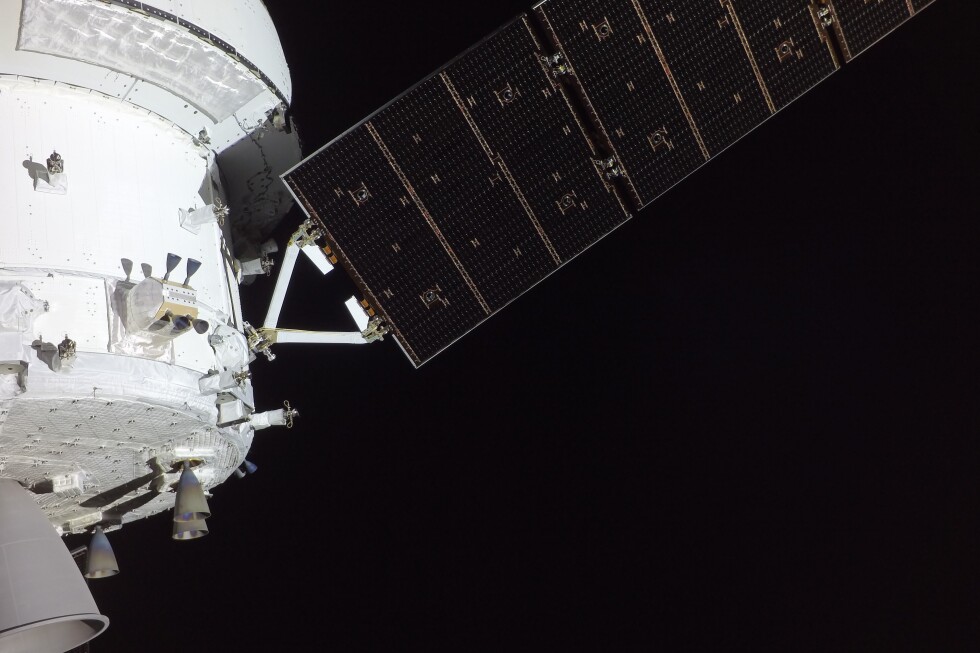
When the United States launched its first crewed rocket mission into space in half a century this month, Michigan’s aerospace industry was quietly making history alongside it. The Artemis II rocket, carrying astronauts beyond Earth’s atmosphere, relied on critical components manufactured by Michigan-based companies.
Harbor Springs-based Moeller Aerospace supplied specialized blades and nozzles for the rocket’s four engines, while Elmet Technologies in Lewiston contributed tooled equipment essential for the mission’s success. The University of Michigan provided NASA with vital solar particle forecasts to ensure crew safety during their journey.
These contributions represent just a small fraction of Michigan’s involvement in the space program. According to Mark Ignash, director of strategic initiatives at Michigan’s Office of Defense and Aerospace Innovation, at least 78 Michigan-based organizations had a hand in making the mission possible.
“These are companies we don’t realize that we’ve got in our backyard,” Ignash told Bridge Michigan, highlighting the state’s under-recognized role in the aerospace sector.
Ignash is now spearheading efforts to formalize and expand Michigan’s space industry, positioning the state to capitalize on what many experts see as a new era of space exploration and commercialization.
“We are in the second space race, commercially and in defense, and people just don’t realize that yet,” Ignash explained.
To advance these ambitions, the Michigan Economic Development Corporation has allocated up to $1.2 million for the first year of a Space Innovation Hub, the state’s first dedicated space industry center. The hub represents an early but significant step toward connecting existing aerospace businesses and fostering new growth in the sector.
Michigan’s rich history in manufacturing, combined with its deep engineering talent pool and research institutions, makes the state uniquely positioned to benefit from the booming space economy. Nationally, space-related spending—encompassing everything from satellites to rockets—is projected to nearly triple from approximately $630 billion in 2023 to $1.8 trillion by 2035, according to World Economic Forum estimates.
Space development forms one pillar of Governor Gretchen Whitmer’s strategic plan announced in February to stimulate defense and aerospace growth across Michigan. The initiative also focuses on aviation and unmanned systems development.
“From our skilled workforce and world-class universities to our robust supply chains, advanced testing environments, and manufacturing infrastructure, Michigan has unique capabilities and assets,” Whitmer stated when introducing the plan.
Michigan’s connection to space exploration actually dates back to the first space race. During the 1960s, the state played a significant role in America’s push to the moon, from missile development near Willow Run Airport to manufacturing components for Apollo spacecraft. Today’s initiative aims to recapture and expand upon that legacy.
The state’s universities continue to conduct cutting-edge space research, while manufacturers produce sophisticated components for spacecraft and satellites. Houghton-based Orbion, recently acquired for its innovative electric propulsion systems, exemplifies the high-tech space enterprises already operating in Michigan.
The planned Space Innovation Hub will include a physical location alongside digital connections to facilitate collaboration across both of Michigan’s peninsulas. Interest in space-related networking has already surged, with a state aerospace group growing from just 12 participants to 150 members this year.
Particular growth opportunities exist in space research, remote sensing, digital engineering, and in-space assembly and manufacturing (ISAM)—the crucial work performed after launch to maintain and extend the usability of space equipment.
Notably absent from Michigan’s space strategy is the development of rocket launch sites, though a testing facility remains under consideration for future phases of the plan. A previously proposed launch site that led to a $2.5 million study in 2019 is now the subject of an ongoing criminal investigation.
As the June 1 deadline for Space Innovation Hub proposals approaches, Ignash remains optimistic about Michigan’s aerospace future and the potential for increased federal funding through NASA and other programs.
“We’re not creating a sector here,” Ignash emphasized. “We are really just putting some wind behind the sails and saying, if we all unify in a single direction, we can probably do a lot more.”
Fact Checker
Verify the accuracy of this article using The Disinformation Commission analysis and real-time sources.

9 Comments
Michigan betting big on space as the next frontier for job creation is a smart move. Leveraging its manufacturing prowess to support the space program seems like a win-win situation.
Agreed. The state’s ability to provide critical components and services for missions like Artemis II positions it well to capitalize on the growth of the space industry.
It’s impressive to see the University of Michigan supporting the Artemis mission with vital solar particle forecasting. This kind of scientific expertise can help ensure crew safety during deep space exploration.
I’m curious to learn more about the specific companies in Michigan that are contributing to the Artemis mission. It would be interesting to see how their specialized expertise is being utilized.
Absolutely, the article mentions a few key players like Moeller Aerospace and Elmet Technologies, but I bet there are many more unsung heroes in Michigan’s aerospace ecosystem.
It’s great that Michigan is leveraging its manufacturing expertise to support the new era of space exploration. The state’s ability to produce mission-critical components for rockets and spacecraft is a real asset.
The breadth of Michigan’s involvement, from solar forecasting to engine components, highlights its diverse aerospace capabilities. This will undoubtedly help drive economic growth and create new high-tech jobs.
Fascinating to see Michigan leading the charge in the next phase of space exploration. Its aerospace companies play a vital role in powering missions like Artemis II, showcasing the state’s impressive engineering capabilities.
Glad to see Michigan’s often-overlooked aerospace industry getting the recognition it deserves. These behind-the-scenes contributions are crucial for America’s space program.