


Listen to the article
Venezuelan lawmakers have approved a comprehensive mining regulation bill aimed at attracting foreign investment to an industry long plagued by criminal exploitation and government interference. The legislation, passed on Thursday, represents a significant shift in policy as the country attempts to revitalize its economy following recent political upheaval.
The bill establishes clear categories for small, medium, and large-scale mining operations while introducing independent arbitration for disputes—a provision considered crucial by foreign investors wary of government asset seizures. Notably, it prohibits high-ranking officials including the president, vice president, ministers, and governors from holding mining titles, a measure designed to reduce corruption.
“This is a vehicle for the construction of future prosperity and an instrument that protects mining workers across the country,” National Assembly president Jorge Rodríguez declared after the bill’s approval.
Before implementation, the legislation must undergo constitutional review by Venezuela’s high court. The bill establishes royalty and tax frameworks, limits mining concessions to 30 years with renewal options, and introduces prison sentences for illegal mining activities and environmental violations.
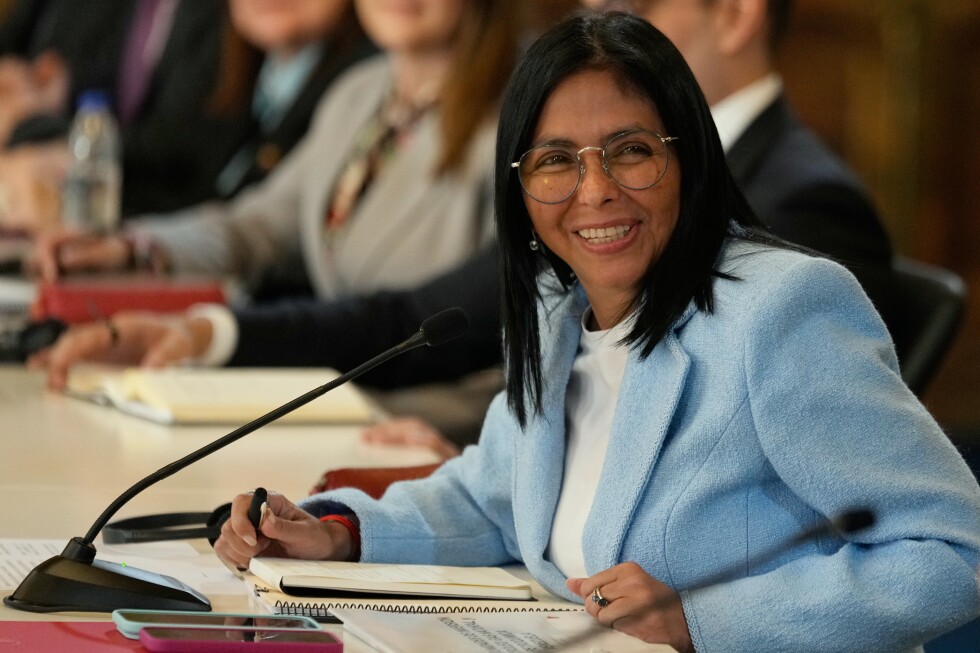
The reform comes amid significant political transition in Venezuela. Acting President Delcy Rodríguez has been implementing new legislative initiatives since January, when the previous administration of Nicolás Maduro faced pressure from the Trump administration, resulting in his removal by U.S. military forces.
On Wednesday, Rodríguez asked public and private sector workers for patience as her government works to address the country’s severe economic challenges. She promised wage increases beginning May 1, though without specifying amounts. Meanwhile, as workers protested in Caracas on Thursday for better wages, Rodríguez departed for Grenada on her first international trip as acting president.
Venezuela’s mining sector transformation reflects a dramatic shift from two decades ago when many foreign mining and oil companies saw their assets nationalized. As oil revenues—once the backbone of Venezuela’s economy—plummeted in recent years, the Maduro government designated over 10% of national territory as a mining development zone in 2016.
This designation led to a proliferation of mining operations for gold, diamonds, copper, and other minerals. However, many of these operations remain informal and unlicensed, operating in brutal conditions under the control of criminal organizations.
The U.S. State Department reported to Congress last year that “mining and subsequent sale of gold has proven to be a lucrative financial scheme for some well-connected Venezuelans and senior officers within the National Bolivarian Armed Forces, which profits from charging criminal organizations for access and inputs, such as fuel.”
The report estimated that gold mined in Venezuela averaged $2.2 billion annually over the past five years, though exact figures remain difficult to confirm.
Venezuela’s mining regions have become hotspots for homicides, human trafficking, fuel smuggling, and other crimes. Despite these dangers, ordinary Venezuelans continue to flock to these areas hoping to escape extreme poverty through mining opportunities. Government officials and military personnel frequently extract portions of illegal mining revenue in exchange for allowing operations to continue.
The new legislation aims to formalize these operations and create a structured environment that might attract legitimate investment while reducing criminal activity. By implementing stricter regulations and legal frameworks, Venezuelan authorities hope to transform a sector that has been characterized by exploitation and lawlessness into an economic driver for national recovery.
For a country facing one of the most severe economic crises in modern history, with hyperinflation and widespread shortages of basic necessities, reforming the mining sector represents a potential pathway toward economic stabilization and growth.
Fact Checker
Verify the accuracy of this article using The Disinformation Commission analysis and real-time sources.

12 Comments
Venezuela’s mining industry has long been a Wild West, so these new regulatory efforts are a welcome development. Establishing clear operational categories and royalty/tax structures should help attract more responsible foreign investment. The anti-corruption provisions are especially promising.
Agreed, the anti-corruption measures are crucial. Ensuring government officials can’t directly profit from mining concessions is an important step toward cleaning up the industry.
Venezuela’s mining industry has long been plagued by issues like criminal exploitation and government interference, so this new regulatory framework is a step in the right direction. Establishing clear operational categories and independent dispute resolution is promising.
Agreed, these types of institutional reforms are needed to clean up the sector and rebuild trust. Hopefully this leads to more sustainable and responsible mining practices in Venezuela.
This legislation seems like a pragmatic effort to professionalize Venezuela’s mining sector. Limiting high-level officials from holding mining titles is a smart move to prevent conflicts of interest. I’m curious to see how the royalty and tax frameworks will be structured.
Good point. The tax and royalty details will be crucial in making the industry attractive to outside investors while still providing sufficient revenue for the government.
It’s good to see Venezuela trying to bring more order and accountability to its mining sector. Limiting political influence and introducing independent dispute resolution are smart moves. Time will tell if this legislation can deliver on its promises.
Regulating Venezuela’s mining industry is a complex challenge, but this legislation seems like a reasonable approach. Reducing government interference and corruption is critical, as is establishing clear legal frameworks to protect both workers and investors.
Absolutely. The challenge will be following through on these reforms in a consistent and transparent manner. Careful monitoring and independent oversight will be essential.
Interesting to see Venezuela taking steps to better regulate its mining industry. Attracting foreign investment while reducing corruption could really help boost the economy. Let’s hope the constitutional review process goes smoothly.
Agreed, the anti-corruption measures seem like a positive step. Establishing independent arbitration for disputes should also help reassure potential foreign investors.
This is an important development for Venezuela’s economy, which has been in crisis mode for years. Attracting foreign mining investment could provide a much-needed boost, but the implementation and enforcement of these new regulations will be key.