


Listen to the article
Greece has announced plans to implement a total social media ban for children aged 15 and under, joining other European Union nations in restricting young people’s access to social platforms. The move is intended to pressure the EU into establishing formalized age restrictions across all member states.
The forthcoming legislation will target platforms that allow users to create profiles, interact with others, and share content, including Facebook, Instagram, and TikTok. Under the new rules, these platforms will be required to reverify the ages of all users in Greece to exclude those 15 and younger.
Greek authorities have clarified that their role will be limited to ensuring platform compliance rather than directly monitoring users. The government will take action only when violations are reported, with enforcement directed to authorities in the country where the social media company is headquartered or to the European Commission.
Companies failing to comply could face substantial penalties, including fines of up to 6% of their global turnover, daily financial penalties until they address violations, or operational restrictions within the country.
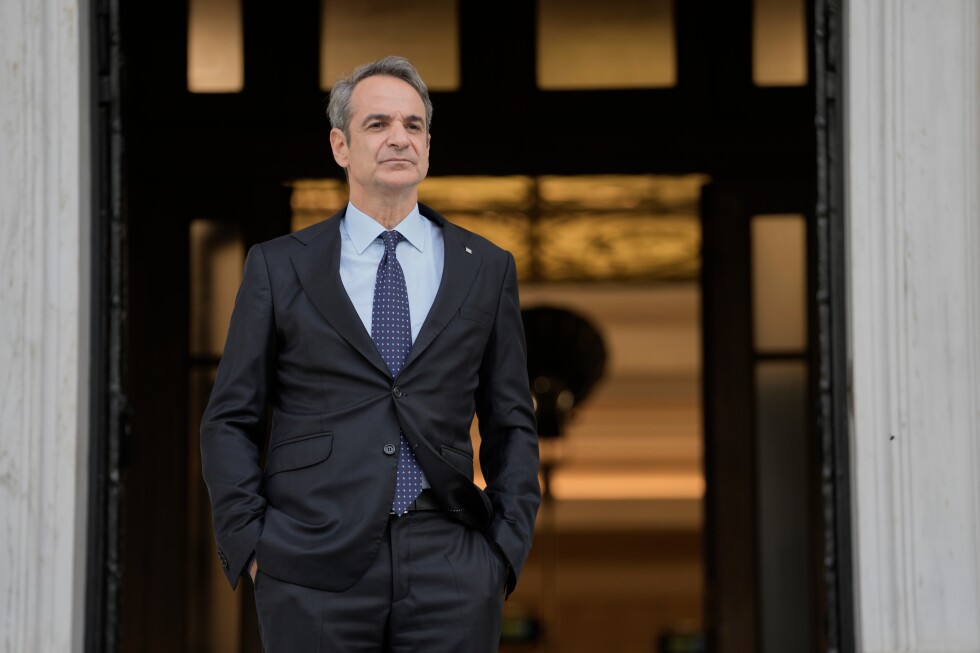
Prime Minister Kyriakos Mitsotakis addressed young people directly in a video message posted Wednesday, acknowledging potential resistance while defending the ban as necessary protection. “Now I’m certain that many young ones will be angry. If I was at your age, perhaps I’d feel the same way too. But our role, my role isn’t always to be pleasant,” Mitsotakis said.
The prime minister emphasized that the legislation aims to shield young people from the “addictive design of certain platforms and their profit model that’s grounded in how long you spend in front of a mobile phone screen.” He cited concerns shared by parents and youth themselves about social media’s negative impacts, including increased stress, anxiety, and sleep disturbances.
Mitsotakis clarified that the ban isn’t intended to disconnect young people from technology entirely but rather to protect their well-being and development. The legislation is expected to be introduced this summer and implemented on January 1, 2025.
Greece follows France, which earlier this year instituted a similar social media ban for users under 15. The Greek initiative reflects growing concerns across Europe about the impact of social media on youth mental health and development.
Beyond national legislation, Mitsotakis is pushing for EU-wide regulations. In a letter to European Commission President Ursula von der Leyen, he called for a “unified European framework” to be established by year-end that would complement national protective measures.
His proposal includes implementing a standardized age verification mechanism across the EU, requiring platforms to reverify user ages every two years, and establishing a dedicated body comprising member states and Commission representatives to assess incidents and quickly impose penalties on non-compliant platforms.
The Greek ban comes amid increasing global scrutiny of social media’s influence on younger users. Several studies have linked excessive platform use to depression, anxiety, and other mental health issues among adolescents. Tech companies have faced criticism for allegedly designing features that foster addiction and engagement at the expense of user wellbeing.
While tech industry representatives have argued for parental controls over outright bans, European policymakers increasingly favor regulatory approaches that place responsibility on platforms themselves. The Greek model puts enforcement burden primarily on the companies, requiring them to implement effective age verification systems or face significant consequences.
As digital platforms continue to shape social interactions and communication, the debate over appropriate access for minors has become a priority issue for governments worldwide, with the EU positioning itself as a leader in digital regulation and child protection online.
Fact Checker
Verify the accuracy of this article using The Disinformation Commission analysis and real-time sources.

8 Comments
An interesting move by Greece to protect minors from the potentially harmful effects of social media. While it’s a bold step, I wonder about the practical challenges of enforcement and how it will impact young people’s ability to connect and learn online.
I’m curious to learn more about the specific data and research that informed Greece’s decision. What are the key risks they’re trying to mitigate, and how effective do they expect this ban to be?
Enforcing a social media ban for under-15s will be a major challenge. How will Greece verify ages, and what penalties will they impose on platforms that fail to comply? The implementation details will be crucial.
This is a complex issue without easy answers. While protecting minors is crucial, we also need to ensure they can access the educational and social benefits of the digital world. A balanced approach is needed.
From a parental perspective, I can understand the motivation behind this ban. Social media can expose young people to a lot of unhealthy content and pressure. However, outright restrictions may not be the best solution.
It’s an ambitious goal, but I’m skeptical about the effectiveness of this approach. Young people are highly adept at circumventing online restrictions, and a blanket ban may have unintended consequences. A more nuanced strategy could be more impactful.
This raises some important questions around balancing child safety and digital rights. I’m curious to see how the EU responds and whether other member states follow suit. A coordinated regional approach could be more effective.
You raise a good point. A consistent, EU-wide policy would likely be more impactful than piecemeal national efforts. The devil will be in the details of how this is implemented.