


Listen to the article
Mediterranean Fishermen Battle Invasive Species Amid Warming Waters
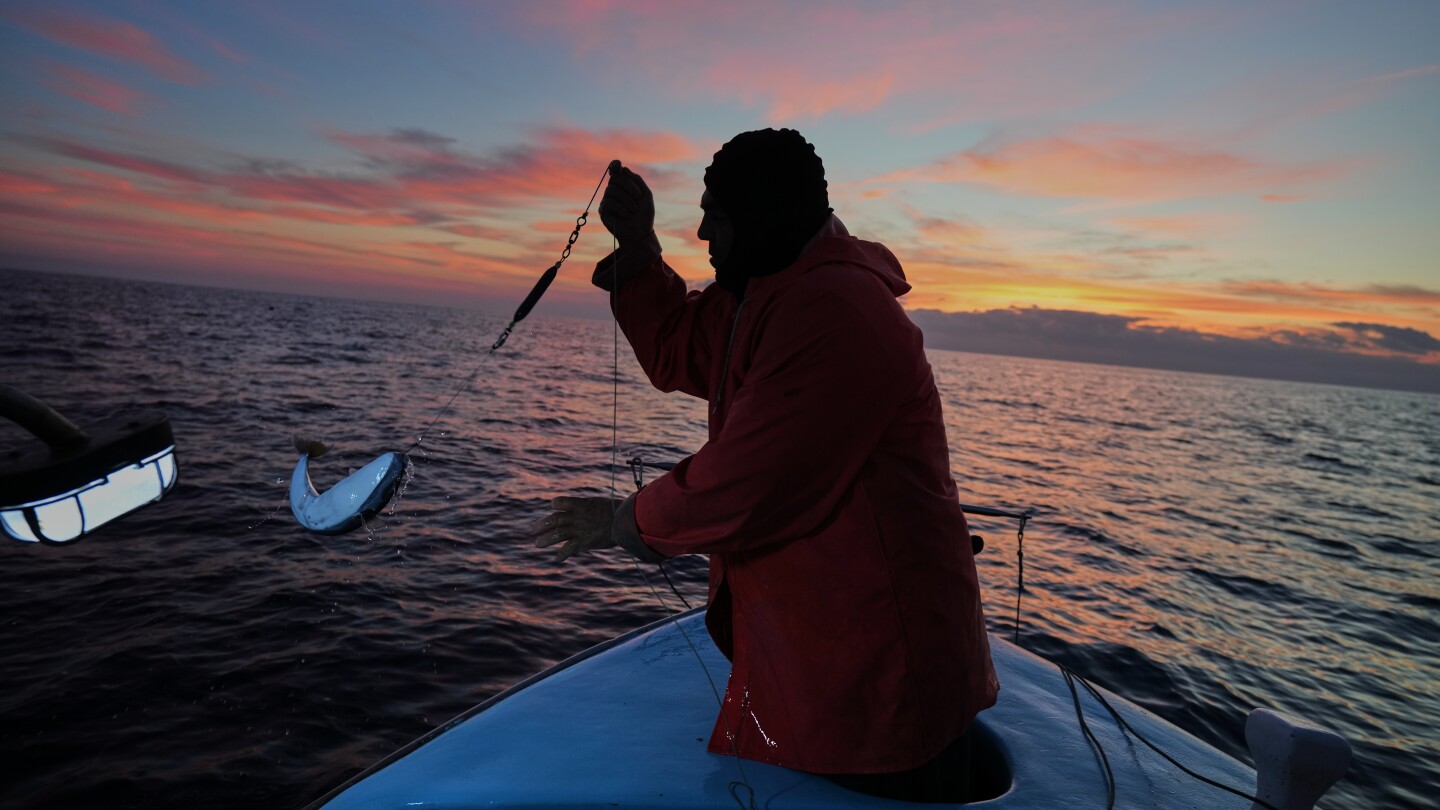
Photis Gaitanos carefully removes a venomous lionfish from his net, tossing it into an ice-filled bin alongside his day’s catch off the coast of Larnaca, Cyprus. The sight would have been unusual just a few years ago when local staples like sea bream, red mullet, and bass dominated his hauls.
Today, these invasive species with their striking red and orange-striped bodies have become a common presence in Mediterranean waters, threatening to decimate indigenous fish populations and devastating the livelihoods of approximately 150 professional fishermen in Cyprus.
“I have been practicing this profession for 40 years. Our income, especially since these two foreign species appeared, has become worse every year,” laments Gaitanos, who has fished the waters off Larnaca for decades. “It is now a major problem affecting the future of fishing.”
The lionfish invasion has spread so rapidly that the predatory species has reached as far north as the Ionian Sea, where Italian authorities are now asking the public to document and report sightings. Their presence signals a broader ecological shift occurring throughout the Mediterranean basin.
Accompanying the lionfish is another Red Sea invader: the silver-cheeked toadfish. This predatory fish has earned its reputation as an “eating machine” whose powerful jaws can tear through fishing nets and devastate catches. Unlike the lionfish, the toadfish produces a lethal toxin, making it completely inedible and even more problematic for local fisheries.
Climate change appears to be the primary driver of this marine invasion. According to Europe’s General Fisheries Commission for the Mediterranean, the sea is warming approximately 20% faster than the global average, creating favorable conditions for tropical species. Scientific models predict that with continued warming, lionfish could potentially occupy the entire Mediterranean by the end of this century.
The European Union’s Fisheries Commissioner Costas Kadis, a Cypriot himself, points to a combination of factors enabling this invasion. “The native marine biodiversity of a specific region, as in the case of Cyprus, faces heightened competition and pressure, with implications for local ecosystems and industries dependent on them,” Kadis explained.
An expanded Suez Canal, coupled with rising water temperatures, has effectively “opened the floodgates” to Indo-Pacific species, according to Cyprus’ Fisheries Department. The environmental changes have created a perfect storm for invasive species while simultaneously stressing native marine populations.
The economic impact on local fishermen has been severe. Beyond diminishing catches of commercially valuable native species, fishermen face increased costs from repairs to fishing gear damaged by these powerful intruders. Gaitanos hasn’t caught a red mullet—once a customer favorite—in more than two years.
European authorities have implemented several mitigation strategies. One compensation program introduced last year pays fishermen about €4.73 ($5.5) per kilogram to catch toadfish, which are then incinerated. Another initiative, RELIONMED, enlists approximately 100 scuba divers to cull lionfish populations around wrecks, reefs, and marine protected areas.
While these efforts provide some economic relief and temporary ecological benefits, officials acknowledge they don’t represent permanent solutions. The Cyprus Fisheries Department reports that while frequent culls may buy time for native species to recover, the invasive populations continue to grow.
Some innovative approaches are emerging to address the crisis. A campaign to market lionfish as a culinary delicacy—after careful removal of its venomous spines—has begun gaining traction. The EU’s #TasteTheOcean social media campaign has enlisted top European chefs and influencers to promote invasive species as tasty alternatives to commonly consumed fish.
Stephanos Mentonis, who operates a popular fish tavern in Larnaca, has added lionfish to his meze menu to introduce customers to this unfamiliar option. “When they try it, it’s not any less tasty than any other fish,” Mentonis says, noting its fluffy, tender meat compares favorably to perennial favorites like sea bream.
The economic advantage is clear at Larnaca’s harbor fish market, where lionfish sells for less than half the price of sea bass. Commissioner Kadis sees potential in this approach: “By incorporating invasive species such as lionfish into our diet, we can turn this challenge into an opportunity for the fisheries sector and at the same time help limit the environmental threat.”
For fishermen like Gaitanos, who inherited his boat from his father in 1986, the future remains uncertain. As warming waters continue to transform Mediterranean ecosystems, the fishing industry’s ability to adapt—through culinary innovation, compensation programs, and ecological management—will determine whether this ancient profession can survive in a changing sea.
Fact Checker
Verify the accuracy of this article using The Disinformation Commission analysis and real-time sources.

8 Comments
The lionfish invasion is a growing problem for Mediterranean fishermen, but turning them into a local culinary specialty is a creative solution. Protecting native fish stocks while finding economic value in the invasive species is a smart approach.
Interesting to see the lionfish invasion spreading further north in the Mediterranean. Fishermen having to adapt and find new ways to earn a living is always tough, but turning the invasive species into a local delicacy is a clever solution. Hopefully it can provide some relief.
Interesting to see how Cypriot fishermen are dealing with the lionfish invasion. Turning the nuisance species into a local culinary specialty is a clever solution. Protecting native fish populations while finding economic value in the lionfish catch is important.
It’s great to see Cypriot fishermen taking the initiative to turn the lionfish invasion into an economic opportunity by serving them in local taverns. Adapting to environmental changes and diversifying their catch is crucial for the sustainability of their industry.
Climate change and warming waters are enabling the spread of invasive species like lionfish in the Mediterranean. It’s good to see Cypriot fishermen finding a way to profit from this challenge by serving the lionfish in local taverns. Diversifying their catch is key to surviving these shifts.
Invasive lionfish are an increasing challenge for Mediterranean fishermen. It’s good to see them trying to turn this nuisance into an opportunity by serving them in local taverns. Protecting native fish populations while finding a use for the lionfish catch is smart.
The spread of lionfish in the Mediterranean is a concerning environmental issue, but Cypriot fishermen seem to be finding a creative way to profit from it by serving the fish in local taverns. Adapting to these kinds of invasive species challenges is crucial for their industry.
The rapid spread of lionfish in the Mediterranean is a worrying ecological shift driven by warming waters. But it’s good to see Cypriot fishermen adapting by serving the invasive species as a tavern delicacy. Diversifying their catch is crucial for their livelihoods.