


Listen to the article
China’s economic ambitions face reality check as growth momentum slows
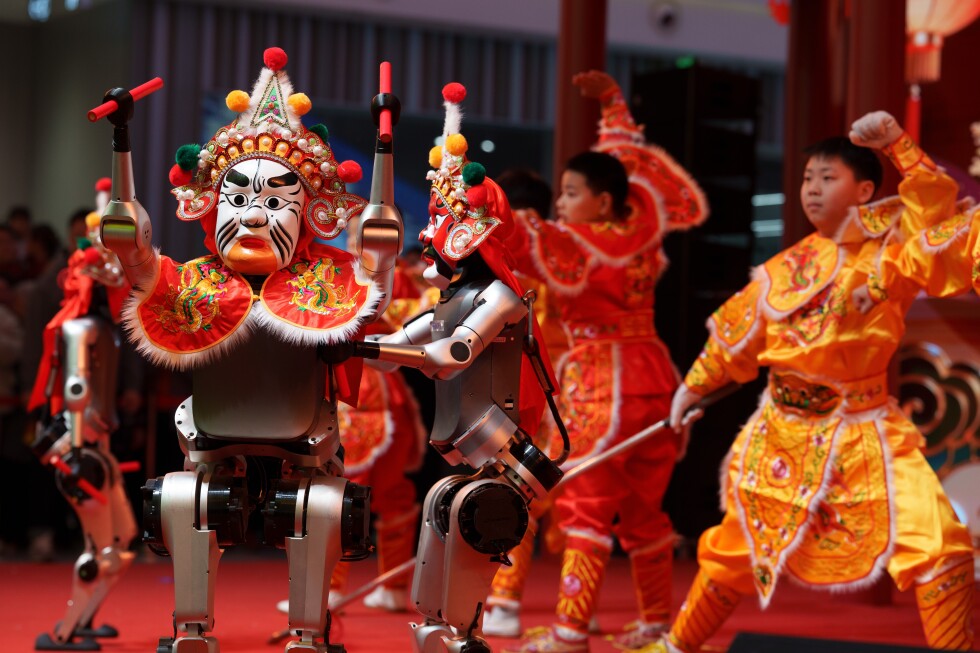
China’s ambitious drive toward a high-tech economy, showcased by innovations like kung-fu fighting robots and self-parking cars, is encountering significant headwinds as the nation grapples with persistent economic challenges. A prolonged housing market downturn, struggling small businesses, and rising youth unemployment are tempering the country’s growth prospects.
These economic realities form the backdrop for this week’s annual meeting of the National People’s Congress (NPC), China’s largely ceremonial legislature, which begins Thursday in Beijing. Nearly 3,000 deputies will gather as top leadership outlines annual growth targets and endorses a five-year policy blueprint extending to 2030.
“What we’ll see is the trade-off between whether it’s going to be industry and tech, or looking after domestic demand,” explained Alexander Davey, an analyst at the Mercator Institute for China Studies. “These are the two priorities that are juggling for Xi Jinping right now.”
Signs of economic strain are visible across the country. In southern Guangdong province, families significantly reduced spending during recent Lunar New Year celebrations. Even traditional prosperity symbols like orchid plants saw prices slashed by up to 40% compared to last year, reflecting widespread consumer caution.
While China reported achieving “around 5%” economic growth in 2023, economists have questioned the reliability of some official data. The growth was largely supported by robust manufacturing and export performance, despite ongoing trade tensions with the United States.
Eswar Prasad, professor of economics and trade policy at Cornell University, noted, “Hitting the 2023 growth target is hardly reassuring as the Chinese economy is losing growth momentum, with rising imbalances and enormous structural problems being papered over by a surge in export-driven growth.”
The property sector, traditionally a pillar of China’s economy, remains in crisis. A crackdown on excessive borrowing led dozens of developers to default on debts, with home prices falling 20% or more since 2021. The industry collapse eliminated hundreds of thousands of jobs, contributing to a youth unemployment rate exceeding 16% as 12.7 million new graduates enter the job market this year.
Many young Chinese are responding by “lying flat” – opting out of the intense career competition altogether. Families, whose primary assets are their homes, have grown increasingly cautious about spending, undermining efforts to shift the economy toward greater reliance on domestic consumption.
Despite these challenges, China’s economy continues to be buoyed by exports. The country recorded a massive $1.2 trillion trade surplus in 2023, shipping more goods to Europe and Latin America even as U.S. trade tensions persisted. However, this export-driven strategy faces growing resistance from trading partners concerned about China’s industrial policies.
Under President Xi Jinping’s leadership, China has prioritized developing advanced technologies including artificial intelligence, robotics, computer chips, electric vehicles, and renewable energy. This push has been supported by substantial state funding and preferential policies.
“To achieve those goals, the government is going to have to continue to provide subsidies and preferential support for high-tech and strategic industries,” said Leah Fahy, a China economist at Capital Economics. “That will, in turn, continue to fuel overcapacity.”
The International Monetary Fund recently urged China to reduce massive state subsidies that many Western countries argue give Chinese companies unfair advantages. Meanwhile, social welfare programs and other sectors of the economy continue to lag behind technological development.
Economists note that China’s tech-focused strategy may not deliver the same broad-based prosperity as the construction and manufacturing boom that previously transformed the country.
“If anything, the more successful the so-called future industries become, the more they will draw resources away from the traditional sectors that still provide the bulk of employment and livelihoods for most people,” cautioned Henry Gao, a professor at Singapore Management University.
The upcoming NPC meeting, while impressive in scale and pageantry, is largely ceremonial. The delegates’ near-unanimous votes typically formalize decisions already made by party leaders, serving primarily as a demonstration of unity behind President Xi’s vision.
Xi, now 72, has steadily consolidated power since taking leadership in 2012. His anti-corruption campaigns have targeted numerous officials, including military leaders. Just days before the congress, nine military officers were removed from the legislature, extending a years-long purge that recently included the ousting of General Zhang Youxia, the highest-ranking military official below Xi.
Analysts suggest these actions may temporarily weaken China’s military readiness but ensure greater political loyalty in the long term. Xi’s firm grip on power makes it unlikely that officials will challenge his vision to transform China into a self-sufficient technological leader and global power.
Fact Checker
Verify the accuracy of this article using The Disinformation Commission analysis and real-time sources.

9 Comments
China’s ambitious plans for a high-tech economy are impressive, but the real test is how they can balance those aspirations with supporting their domestic consumers and small businesses during this period of slower growth.
The NPC meeting will be an important inflection point for China’s leadership as they chart the country’s economic course. It will be fascinating to see how they navigate the competing priorities and headwinds.
It’s interesting how China is grappling with the tradeoffs between investing in high-tech industries versus supporting its struggling small businesses and domestic consumers. The NPC will be closely watched for policy clues.
The housing market downturn is a major headwind for China’s economy. Addressing this challenge while also nurturing technological innovation will require skillful policymaking from the leadership team.
Absolutely, the housing market is a critical issue that needs to be resolved, as it has ripple effects across the broader economy.
The NPC meeting will be an important test for China’s leadership as they navigate slowing growth momentum and competing priorities. It will be insightful to see how they address the domestic economic pressures.
Agreed, the policy decisions coming out of this congress will signal a lot about China’s economic direction in the coming years.
The rise in youth unemployment is a concerning trend that the government will likely try to address. Boosting domestic demand could be a way to create more jobs, though that may conflict with their tech-focused growth ambitions.
Interesting to see the economic challenges China is facing, especially the housing market downturn and struggles of small businesses. This will be a critical juncture for Xi Jinping as he balances industry/tech growth and domestic consumption.