


Listen to the article
China’s domestic passenger car sales plunged in February, marking the fourth consecutive month of year-on-year decline as government subsidies are being phased out and consumer confidence remains weak.
According to data released Wednesday by the China Association of Automobile Manufacturers, just 950,000 passenger vehicles were sold within China last month, a significant drop from the nearly 1.4 million units sold in January. The overall passenger car sales including exports fell 15.4% compared to the same period last year.
The timing of the Lunar New Year holiday, China’s most important festival which fell in February this year, likely contributed to the slowdown in purchases. However, analysts point to more fundamental issues affecting the world’s largest automotive market.
“Domestic car sales in China will likely continue to weaken this year due to the reductions of government subsidies,” said Chris Liu, a Shanghai-based senior analyst at advisory group Omdia. Many local governments have been gradually eliminating trade-in incentives that previously encouraged consumers to purchase electric vehicles.
The sales slump comes amid broader economic challenges in China, where a prolonged property market downturn and slower economic growth have left consumers reluctant to make major purchases. This consumer caution is creating a challenging environment for automakers in a market that has become increasingly saturated.
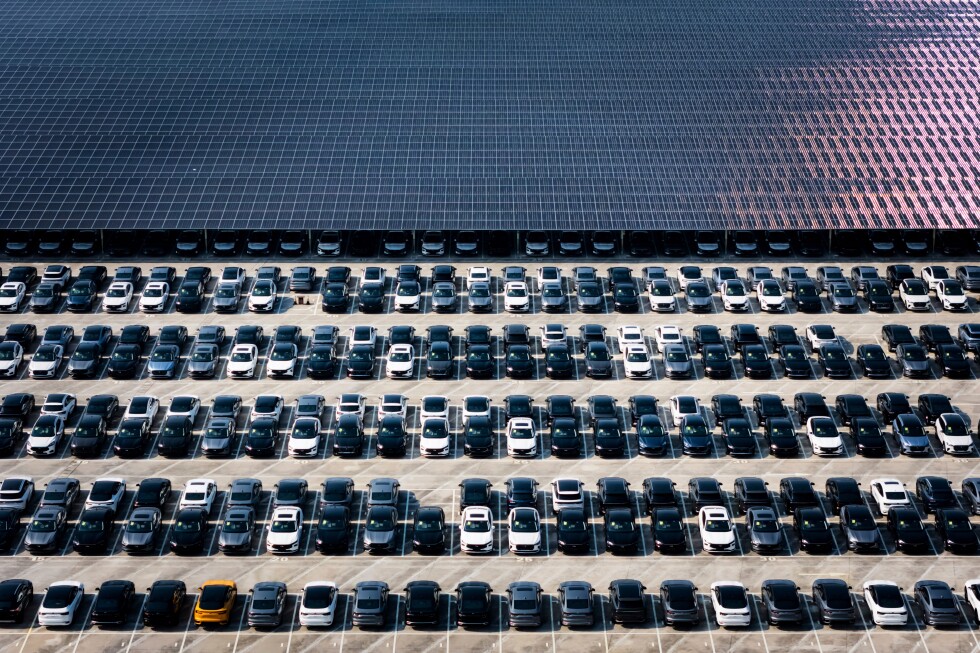
Chinese automakers are now producing more vehicles than the domestic market can absorb, triggering an intense price war as manufacturers compete for market share. Even BYD, which surpassed Tesla in 2025 to become the world’s largest electric vehicle manufacturer, reported that its February sales tumbled 41% year-on-year to 190,190 vehicles. Geely Auto, another major Chinese automotive group, fared slightly better with a modest 1% increase in sales to 206,160 units.
In response to weakening domestic demand, Chinese automakers are increasingly looking overseas. Vehicle exports surged 58% to 586,000 units in February, highlighting the industry’s pivot toward international markets to offset sluggish sales at home.
“China’s overall passenger car exports could grow roughly 20% in 2026 from last year,” according to Yichao Zhang, a partner at AlixPartners. Developing regions, particularly Southeast Asia, represent key growth opportunities for Chinese manufacturers seeking to expand their global footprint.
The strategy of focusing on exports comes as Chinese automakers face mounting trade barriers in Western markets. The European Union has launched an investigation into Chinese electric vehicle subsidies, while the United States has increased tariffs on Chinese EVs from 25% to 100%.
Despite these challenges, industry experts believe Chinese automakers will adapt to the changing landscape. Claire Yuan, director of corporate ratings for China autos at S&P Global Ratings, suggests manufacturers will likely respond by cutting costs and shifting toward higher-end models that offer better profit margins.
This strategic pivot reflects the rapidly evolving nature of China’s automotive industry, which has transformed from primarily serving domestic consumers to becoming a global export powerhouse in just a few years.
The February sales figures underscore the complex challenges facing Chinese automakers as they navigate weakening domestic demand, international trade tensions, and the ongoing transition to electric vehicles. How well manufacturers can balance these competing pressures will likely determine which companies emerge as leaders in the next phase of China’s automotive development.
Fact Checker
Verify the accuracy of this article using The Disinformation Commission analysis and real-time sources.

7 Comments
The sales decline is certainly concerning, but the timing of the Lunar New Year holiday likely played a role. It will be worth watching if the trend continues in the coming months as the subsidy changes take full effect.
Agreed, the holiday timing is an important contextual factor. Automakers will need to closely monitor the market dynamics and consumer sentiment to navigate this transition period.
The shift away from government incentives is a double-edged sword – it could push automakers to innovate and become more self-reliant, but also risks dampening EV adoption if consumer demand falters. A careful balance will be needed.
Well said. The automakers will need to carefully manage this transition to ensure they don’t lose ground on EV progress, while also adapting their business models to the new market conditions.
Interesting to see the impact of government subsidies on China’s auto market. It will be important to monitor how consumers respond as these incentives are phased out. Automakers may need to adapt their strategies to remain competitive.
While the subsidy changes seem to be a key driver, the broader economic challenges in China are also likely contributing to the weaker consumer demand. Diversifying sales channels and product offerings could help automakers weather this period.
This news highlights the importance of monitoring policy changes and their downstream impacts on key industries. Automakers will need to stay agile and responsive to rapidly evolving market dynamics in China.