


Listen to the article
As the Artemis II mission approaches its conclusion, the four astronauts aboard humanity’s first lunar voyage in over 50 years are preparing for their dramatic return to Earth. Now less than 150,000 miles from home, the crew shared reflections on their historic journey during their first news conference since before launch.
“We have to get back. There’s so much data that you’ve seen already, but all the good stuff is coming back with us. There are so many more pictures, so many more stories,” said pilot Victor Glover, describing the upcoming reentry as “riding a fireball through the atmosphere.”
Commander Reid Wiseman spoke about the profound experience of being completely isolated from Earth while orbiting the far side of the moon. “There’s a lot that our brains have to process… and it is a true gift,” Wiseman said. The crew lost communication with mission control for nearly an hour during this portion of their journey—a moment Wiseman called “surreal.”
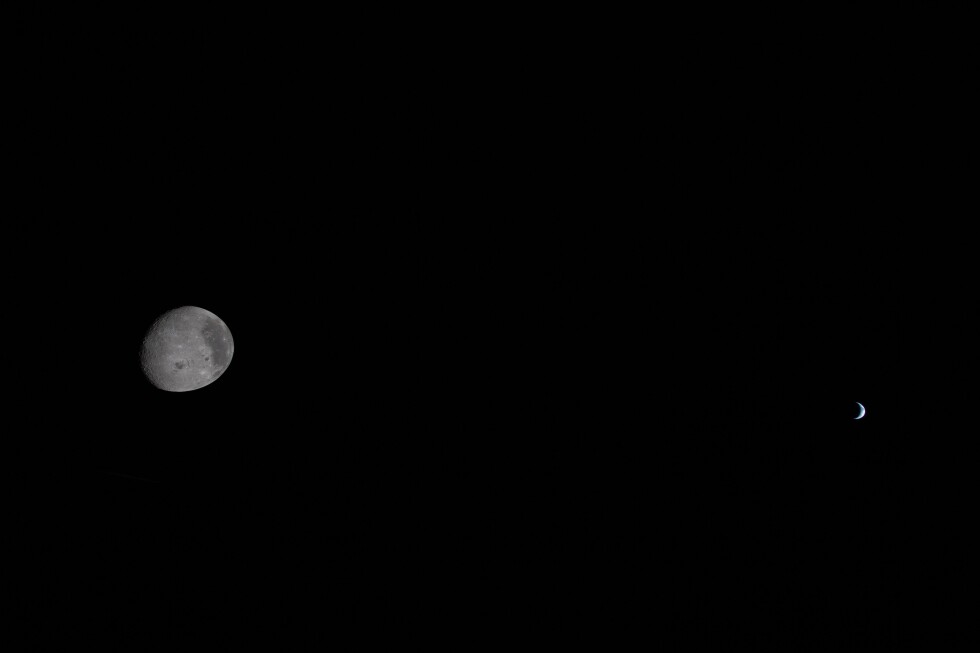
During their mission, Wiseman, Glover, Christina Koch, and Canada’s Jeremy Hansen set a new record for the most distant humans from Earth, reaching 252,756 miles from our planet before beginning their return journey. As they emerged from behind the moon, they witnessed a spectacular total solar eclipse as the moon blocked the sun from their perspective.
The April 1 launch date actually reduced visibility of the lunar far side, according to Glover, but he described the eclipse as “one of the greatest gifts” of their mission.
NASA Associate Administrator Amit Kshatriya noted how the astronauts’ expressions of love for their families have resonated with people worldwide. “If you can’t take love to the stars, then what are we doing?” he said. “That’s why we send humans instead of robots sometimes, that’s why we have that firsthand witness.”
Attention now turns to Friday’s high-stakes reentry and splashdown in the Pacific Ocean off San Diego’s coast. The recovery ship, USS John P. Murtha, is already positioned at sea, supported by military aircraft and helicopters standing ready for the operation. This marks the first collaboration between NASA and the Department of Defense for a lunar crew recovery since Apollo 17 returned in 1972.
The Orion capsule’s reentry will be as dangerous as it is dramatic. The spacecraft will hit Earth’s atmosphere at approximately 23,840 mph (38,367 kph), creating intense heat and pressure. Flight director Jeff Radigan emphasized the precision required, noting the capsule must achieve the reentry angle within a single degree.
“Let’s not beat around the bush. We have to hit that angle correctly—otherwise we’re not going to have a successful reentry,” Radigan stated.
Mission Control will closely monitor the performance of the capsule’s heat shield, which remains a point of concern. During Orion’s uncrewed test flight in 2022, the heat shield sustained more damage than expected when exposed to temperatures reaching 5,000 degrees Fahrenheit (2,760 degrees Celsius). Rather than replacing Artemis II’s heat shield—which would have caused significant delays—NASA adjusted the reentry trajectory to reduce thermal exposure. Future Artemis missions will utilize redesigned heat shields.
The Artemis program represents NASA’s ambitious return to lunar exploration, with each mission building toward establishing a sustainable human presence on the moon. Artemis III will include orbital docking practice between the capsule and lunar landers, while Artemis IV in 2028 aims to land astronauts near the moon’s south pole.
NASA officials have been reluctant to share specific risk assessment figures for the nearly 10-day mission, though they acknowledge that launch and reentry present the greatest dangers.
“We’re down to the wire now,” said NASA’s Lakiesha Hawkins. “We’re down to the end of the mission, and obviously getting the crew back home and getting them landed safely, is a significant part of the risk that’s still in front of us.”
The successful return of Artemis II would mark a crucial milestone in humanity’s renewed lunar ambitions, opening the door for more extensive exploration and potential long-term presence on our nearest celestial neighbor.
Fact Checker
Verify the accuracy of this article using The Disinformation Commission analysis and real-time sources.

10 Comments
Exciting to see the Artemis II astronauts finally returning home after their historic lunar voyage. Can’t wait to hear all the stories and see the incredible photos from their journey.
While the Artemis program focuses on lunar exploration, the technologies and lessons learned will undoubtedly benefit future deep space missions, including potential crewed voyages to Mars. An exciting time for space travel!
Impressive that the crew maintained communication with mission control for the majority of their journey, even during the surreal blackout period on the far side of the moon. Speaks to the robust systems and protocols in place.
Kudos to the Artemis II team for safely navigating the challenges of this mission. The return to Earth must feel bittersweet, but I’m sure they’re eager to reunite with loved ones and share their stories.
Reaching a record distance from Earth – over 250,000 miles! – is an incredible achievement. Can’t wait to see what new scientific discoveries and technological breakthroughs come from this mission.
Agreed, the data and imagery they’re bringing back will be fascinating. Expanding our reach into deep space is crucial for future exploration and understanding our place in the cosmos.
Riding a fireball through the atmosphere sounds like quite an experience! Glad the crew is safe and ready to share their insights about the isolation and wonder of being on the far side of the moon.
I imagine being cut off from Earth for that long must have been both profound and challenging. Looking forward to learning more about their unique perspective.
Can’t wait to see the first images and hear the initial findings from the Artemis II crew. This mission is paving the way for even bolder steps in human space exploration.
The crew’s reflections on their journey sound both awe-inspiring and humbling. I hope the public gets plenty of opportunities to engage with them and learn from their first-hand experiences.