


Listen to the article
The escalating conflict between the United States and Iran has distilled to a fundamental question of endurance: Which nation can withstand the mounting pressure longer?
As oil prices surged to nearly $120 per barrel this week—the highest since 2022—global markets reacted with alarm, exposing what may be Iran’s most potent weapon against American interests. The economic fallout has been swift and far-reaching, with consumers worldwide feeling the pinch of rising gas prices while international shipping and travel face significant disruptions.
President Donald Trump appeared to acknowledge these economic concerns when he characterized the conflict as “short-term,” a statement that temporarily calmed markets and brought oil prices back to around $90 per barrel. However, in nearly the same breath, Trump reaffirmed his commitment to continuing military operations against Iran, creating a mixed message about U.S. intentions.
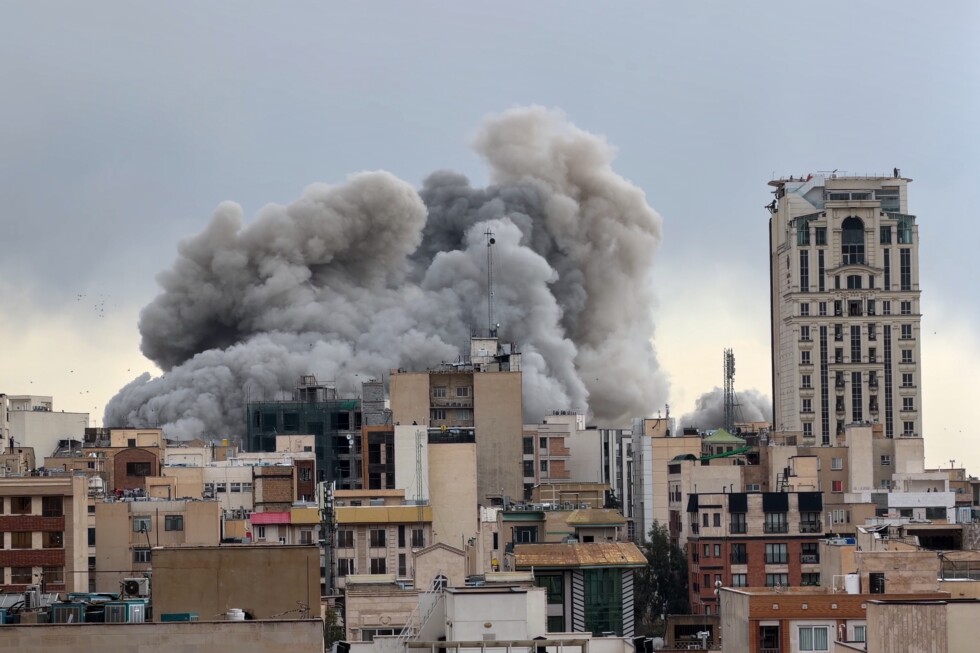
Iran, meanwhile, endures relentless American and Israeli airstrikes with little defensive capability. Despite these attacks, the Islamic Republic maintains operational control, with leadership smoothly transferring from the late Ayatollah Ali Khamenei to his son Mojtaba following the elder Khamenei’s death in an Israeli strike at the war’s outset.
The Iranian military, though significantly degraded, continues launching missiles and drones throughout the Middle East. Domestically, security forces maintain a heavy presence to prevent anti-government demonstrations from forming, even as public anger simmers beneath the surface following nationwide protests earlier this year.
U.S. allies in the region are experiencing mounting pressure as well. Gulf Arab states face persistent Iranian strikes targeting critical infrastructure including oil fields, water facilities, and urban centers. Israel, despite claiming substantial success in degrading Iran’s missile program and military capabilities, continues to endure sophisticated Iranian missile attacks on its cities. Air-raid sirens have become a disturbing norm across the region, disrupting daily life and closing schools and businesses.
Neither side appears ready to de-escalate. “We’ve already won in many ways, but we haven’t won enough,” Trump declared during a speech in Florida. “We go forward, more determined than ever to achieve ultimate victory that will end this long-running danger once and for all.”
Iranian officials offer equally defiant rhetoric. Foreign Ministry official Kazem Gharibabadi claimed Iran has rejected ceasefire proposals from China, France, Russia, and other nations. “At the moment, we hold the upper hand,” Gharibabadi told Iranian state television. “Just look at the state of the global economy and energy markets—it has been very painful for them.” He insisted that Iran “will determine the end of the war.”
Iran’s strategy centers on creating regional havoc, particularly targeting the oil infrastructure that underpins its Gulf neighbors’ wealth—a threat Tehran had long promised to execute if attacked. Qatar has halted natural gas production, while Bahrain announced its inability to fulfill contractual oil obligations. Other major producers, including Saudi Aramco, face operational disruptions, affecting energy supplies particularly to Asian markets, with China dispatching senior diplomats to the region in response.
Perhaps most critically, shipping has virtually ceased in the Strait of Hormuz, the narrow waterway through which 20% of global oil and natural gas trade passes, along with nearly 30% of world fertilizer exports. Iran didn’t need to mine these waters; its attacks on several vessels were sufficient to prompt shipping companies to avoid the strait altogether.
Trump has threatened a twentyfold escalation if Iran continues blocking oil shipments, warning that “Death, Fire, and Fury will reign upon them.” Iran responded by doubling down, with the Revolutionary Guard declaring it won’t allow “a single liter of oil” to leave the Persian Gulf.
The definition of victory remains ambiguous for both sides. For Iran’s leaders, success means regime survival regardless of cost. Trump has vacillated between suggesting regime change and more limited goals of neutralizing Iran as a regional threat.
Significant challenges would remain even if hostilities ceased immediately. Mojtaba Khamenei, now Iran’s supreme leader at 56, is considered by analysts to be even more hardline than his father, with strong ties to the Revolutionary Guard. Israel has already identified him as a target, while Trump has expressed desire for different leadership.
Additionally, Iran maintains its stockpile of highly enriched uranium—a primary justification for the conflict. Though U.S. forces bombed three Iranian nuclear sites in June, much of this material likely remains buried in debris, inaccessible to international inspectors. The younger Khamenei could potentially reverse his father’s religious edicts and authorize weaponization—a scenario both America and Israel are determined to prevent.
As the conflict intensifies, the question remains whether economic pain or military attrition will ultimately determine which side blinks first.
Fact Checker
Verify the accuracy of this article using The Disinformation Commission analysis and real-time sources.

8 Comments
The transition of leadership in Iran to Mojt is an interesting development. It suggests the regime is trying to project stability and continuity in the face of American pressure.
The economic impact of this conflict is already being felt worldwide. It will be interesting to see if diplomatic efforts can find a resolution before the situation escalates further.
Geopolitical tensions can have major ripple effects on commodity markets. This situation bears close watching, as it could significantly impact prices and supply for key resources like oil, copper, and lithium.
This situation has major implications for commodities like oil, gold, and other strategic minerals. Investors will be closely watching how this conflict unfolds and impacts global supply chains and prices.
It’s a complex situation – the U.S. wants to squeeze Iran economically, but that creates problems for consumers worldwide. Iran seems willing to endure the pain, betting the U.S. will blink first.
Exactly, it’s a game of who can take the most economic pain. Iran is banking on the U.S. public turning against the administration if gas prices stay high.
This conflict is becoming an economic war of attrition. Iran’s ability to withstand the pressure of rising oil prices and sanctions will be critical. The global markets are reacting nervously to the uncertainty.
I’m curious to see how the global energy landscape shifts if this conflict drags on. Will the pressure on Iran force them to compromise, or will they dig in and try to weather the storm?