


Listen to the article
As a rural Nebraska town braces for a massive economic blow, thousands face an uncertain future in what many are calling “the poster child for hard times.”
LEXINGTON, Neb. — On a frigid day after Mass at St. Ann’s Catholic Church, worshippers huddled in the basement, their faces reflecting the fear gripping their community. A pall hung over the room, just as it hung over the holiday season throughout Lexington.
“Suddenly they tell us that there’s no more work. Your world closes in on you,” said Alejandra Gutierrez, one of 3,200 people who will lose their jobs when Tyson Foods closes its beef processing plant next month after more than two decades of operation.
The plant closure threatens to unravel this town of 11,000, where the American Dream has remained attainable for immigrants who bought homes, raised families in a safe community, and sent children to college — all on the steady wages from Tyson.
Hundreds of families may soon be forced to pack up and leave, heading east to Omaha or Iowa, or south to meatpacking towns in Kansas or beyond. The ripple effects will likely trigger additional layoffs across Lexington’s restaurants, barbershops, grocery stores, and other small businesses dependent on Tyson workers’ patronage.
“Losing 3,000 jobs in a city of 10,000 to 12,000 people is as big a closing event as we’ve seen virtually for decades,” said Michael Hicks, director of the Center for Business and Economic Research at Indiana’s Ball State University. “It will be close to the poster child for hard times.”
The economic impact will be devastating. University of Nebraska economists project total job losses could reach 7,000 across Lexington and surrounding counties. Tyson employees alone will lose an estimated $241 million in annual pay and benefits.
Tyson says the closure is necessary to “right-size” its beef business, citing the historically low cattle herd in the U.S. and an expected $600 million loss in beef production next fiscal year. While the business rationale may make sense on a corporate spreadsheet, the human toll is incalculable.
“At that moment, my daughter said she no longer wanted to study,” Gutierrez recalled, describing when she learned about the closure while visiting a college campus with her high school senior daughter, Kimberly. “Because where would we get the money to pay for college?”
A tear slipped down Kimberly’s cheek as she looked at her mother, then down at her hands.
The Tyson plant has been Lexington’s lifeblood since it opened in 1990 (Tyson acquired it in 2001). Its presence nearly doubled the town’s population within a decade, attracting workers from as far away as Los Angeles.
Lizeth Yanes was among those who arrived from California. She initially hated what she called “a little ghost town,” but watched as Lexington flourished with new suburbs and a downtown that became a multicultural hub with Somali grocers next to Hispanic bakeries.
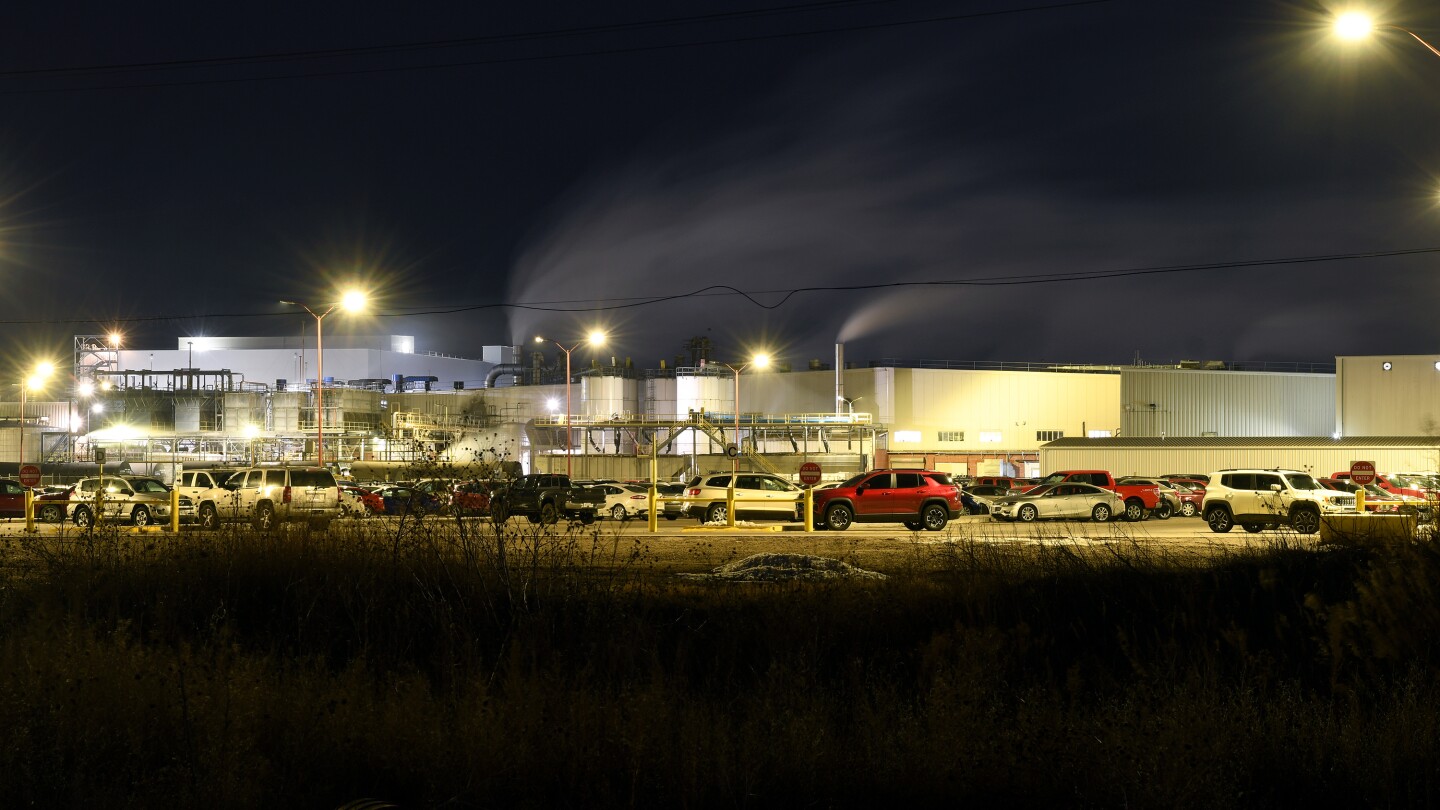
Today, the plant creates the town’s rhythm as workers roll on and off daily shifts and fill restaurants, school pickup lines, and the one-screen movie theater.
“It took a long time for me to actually enjoy this little place,” said Yanes. “Now that I enjoy it, now I have to leave.”
Inside the plant, where workers process up to 5,000 head of cattle daily, the atmosphere feels “like a funeral,” according to employees. Workers handle everything from slaughter to meat trimming, often in physically demanding conditions.
“Tyson was our motherland,” said plant worker Arab Adan, a Kenyan immigrant. Sitting in his car with his two energetic sons, they asked him a question he couldn’t answer: “Which state are we gonna go, daddy?”
Like many parents, Adan is determined that his children finish the school year in Lexington, where school officials say nearly half of students have a parent working for Tyson. The school district, where at least 20 languages and dialects are spoken, boasts higher graduation and college attendance rates than state and national averages.
Economist Hicks predicts the domino effect could be severe: “If 1,000 families skip town — and I wouldn’t be surprised if it were double that — seats would be left empty in schools, leading to teacher layoffs; there would be far fewer customers in restaurants, shops and other businesses.”
For restaurant owner Armando Martinez, whose Los Jalapenos serves mostly Tyson workers, the outlook is grim. Martinez, who undergoes dialysis for diabetes and has an amputated foot, prays for a miracle: that Tyson will change its mind.
Asked about plans for the site, Tyson told The Associated Press it “is currently assessing how we can repurpose the facility within our own production network,” without providing details or addressing whether it plans to support the community through the transition.
City Manager Joe Pepplitsch hopes Tyson will sell the plant to another company that would bring comparable jobs. “Tyson owes this community a debt. I think they have a responsibility here to help ease some of the impact,” he said, noting the company doesn’t pay city taxes due to a decades-old agreement.
At a recent information session at the Dawson County Fairgrounds, state agencies offered help with retraining, resume writing, unemployment filing, and avoiding scammers when selling homes. The atmosphere was somber, with advisors warning, “Your financial health is going to change. Don’t ignore the bank, they will not go away.”
Many older workers face particularly daunting prospects. “We know only working in meat for Tyson, we don’t have any other experience,” said Adan. Others worry about age discrimination. “They only want young people now,” said Juventino Castro, who’s worked at Tyson for 25 years. “I don’t know what’s going to happen in the time I have left.”
As Fernando Sanchez, a 35-year Tyson veteran, put it while squeezing his tearful wife’s hand: “We started here from scratch and it’s time to start from scratch again.”
Fact Checker
Verify the accuracy of this article using The Disinformation Commission analysis and real-time sources.

11 Comments
This is a heartbreaking situation for the families of Lexington. Losing 3,200 jobs at the Tyson plant will have a huge impact on the local economy and the ability of residents to achieve the American Dream. I hope the town can come together to find solutions and support those affected by this closure.
Agreed, the town will need to act quickly and creatively to mitigate the fallout. Providing job retraining, attracting new industries, and supporting local businesses will be crucial to helping Lexington recover.
The situation in Lexington highlights the challenges faced by rural towns when major industries shut down. The loss of 3,200 jobs will be devastating for the local economy and the families who have built their lives around the Tyson plant. I hope the town can find ways to support the displaced workers and attract new businesses to the area.
You’re right, this is a difficult position for Lexington to be in. The town will need to get creative and proactive to mitigate the fallout from the plant closure and provide a path forward for its residents.
This is a sobering reminder of the vulnerability of communities that are heavily reliant on a single large employer. The closure of the Tyson plant in Lexington will have a ripple effect across many local businesses. I hope the town can find ways to diversify its economic base and create new opportunities for its residents.
This is a troubling situation for the town of Lexington and its hard-working residents. The closure of the Tyson beef plant, which has been a major employer for over two decades, will have a devastating economic impact on the community. I hope the town can find ways to adapt and support those who will be affected by the job losses.
Agreed, the loss of 3,200 jobs in a town of 11,000 is a massive blow. Diversifying the local economy and providing retraining programs will be crucial to helping these workers transition.
The closure of the Tyson plant in Lexington is a stark reminder of the fragility of small-town economies. These communities can be devastated when a major employer leaves, as we see with the 3,200 jobs lost. I hope the town can find ways to diversify its economic base and provide support and retraining for the displaced workers.
The American Dream is at risk for the families in Lexington who have built their lives around the steady wages from the Tyson plant. It’s heartbreaking to see this type of economic disruption hit a small town so hard. I hope the community comes together to support one another during this difficult time.
Absolutely, the town will need to rally together and explore all options to mitigate the fallout from the plant closure. Maintaining a sense of community will be so important for these families facing an uncertain future.
This is a devastating blow for Lexington and a stark reminder of the challenges faced by rural communities when a major employer shuts down. The loss of 3,200 jobs at the Tyson plant will ripple through the local economy, impacting businesses and families alike. I hope the town can find ways to diversify and support its displaced workers during this difficult transition.