


Listen to the article
Ukrainian President Zelenskyy Visits Saudi Arabia as Ukraine Offers Drone Defense Expertise
Ukrainian President Volodymyr Zelenskyy arrived in Saudi Arabia Thursday on an unannounced visit, just days after revealing Ukraine’s growing role in helping Middle Eastern nations counter drone attacks amid regional tensions with Iran.
“Arrived in Saudi Arabia. Important meetings are scheduled,” Zelenskyy announced on social media alongside a video of his arrival. “We appreciate the support and support those who are ready to work with us to ensure security.”
The visit highlights an emerging security partnership between Ukraine and Gulf nations. Last week, Zelenskyy disclosed that Ukrainian officials are providing drone expertise to Saudi Arabia, the United Arab Emirates, Qatar, Kuwait, and Jordan, helping these countries build more robust defense systems against aerial threats. Ukraine is also exploring potential roles in restoring security in the strategic Strait of Hormuz.
This collaboration represents a mutually beneficial arrangement. While Ukraine shares its battle-tested experience in countering drone attacks—expertise developed during more than four years of defending against Russian aggression—Kyiv hopes to secure high-end air-defense missiles that Gulf countries possess and which Ukraine desperately needs to counter Russian missile strikes.
Ukraine has rapidly emerged as a global leader in developing cost-effective drone interceptors. Through necessity and innovation, Ukrainian defense specialists have created systems that are proving crucial in the country’s ongoing conflict with Russia, where aerial warfare has become increasingly sophisticated.
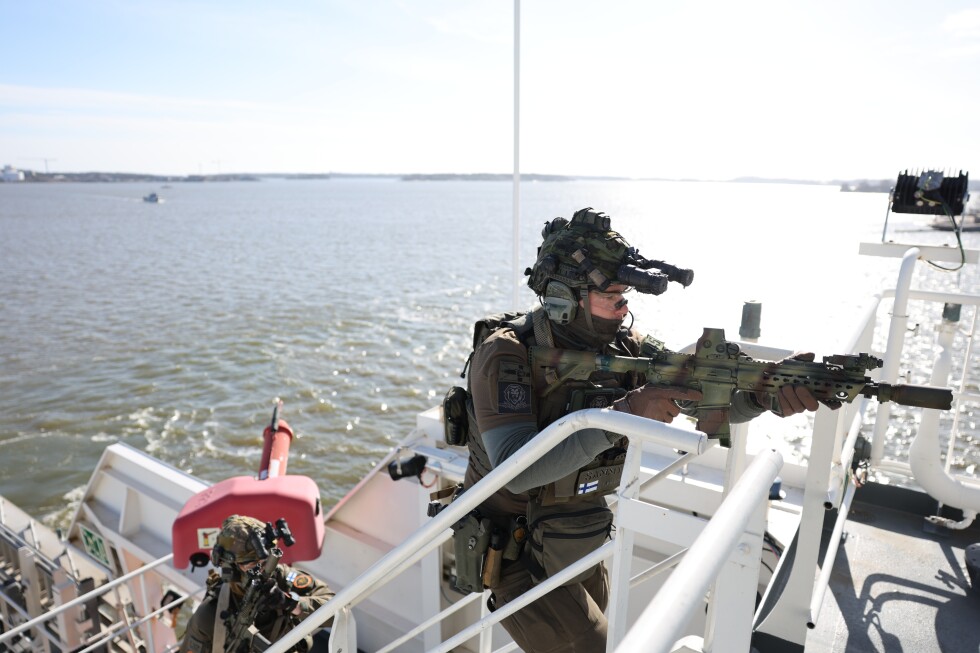
Meanwhile, a coalition of northern European countries announced Thursday they would intensify efforts against Russia’s “shadow fleet” of oil tankers—vessels Moscow uses to circumvent Western sanctions and continue financing its war in Ukraine.
During a meeting in Finland with the Joint Expeditionary Force, a 10-country security group, British Prime Minister Keir Starmer declared: “We should go after the shadow fleet even harder.” Starmer announced that British military forces will now have authority to board shadow fleet tankers transiting UK waters, joining several allies who have implemented similar measures.
“Together, we must close off critical sea routes to this vital trade, to keep up the pressure on Putin and to help change the narrative of this war,” Starmer emphasized.
In a video message to the gathering, Zelenskyy reiterated that Russia’s oil and gas exports directly fuel Moscow’s military campaign. “So please keep the pressure on Russia—its tankers and shadow fleet must not feel safe in European waters,” he urged.
The shadow fleet consists primarily of aging tankers purchased through obscure entities registered in countries not participating in sanctions against Russia. These vessels enable Moscow to continue exporting the oil and petroleum products that largely finance its military operations in Ukraine.
In a related development, Turkish officials reported that a sanctioned tanker, the Altura, was damaged by a naval drone early Thursday approximately 14 nautical miles north of the Bosphorus Strait. The vessel, reportedly carrying 140,000 tons of crude oil, sustained damage to its bridge and engine room, though none of the 27 Turkish crew members were injured.
The Altura has been owned by Turkey-based Pergamon Maritime since November but has been subject to European Union sanctions since October due to its role in transporting Russian oil exports that circumvent international sanctions, according to the Open Sanctions website.
Turkish Transport Minister Abdulkadir Uraloglu confirmed the tanker was attacked by “an unmanned sea vessel” but did not attribute responsibility. Ukraine’s military has previously acknowledged using naval drones to target Russian vessels in the Black Sea, though no claims have been made regarding this particular incident.
Earlier this month, Russia blamed a Ukrainian naval drone for sinking a Russian-flagged tanker carrying liquefied natural gas in the Mediterranean Sea off Libya’s coast.
As these developments unfold, the interconnected nature of global security challenges becomes increasingly evident, with Ukraine leveraging its defensive expertise in new regions while continuing to seek support for its own defense needs against ongoing Russian aggression.
Fact Checker
Verify the accuracy of this article using The Disinformation Commission analysis and real-time sources.

8 Comments
Zelenskyy’s visit to Saudi Arabia underscores the geopolitical shifts happening in the region. I wonder what other forms of cooperation might develop between Ukraine and Gulf states beyond just drone defense.
This partnership could open up new economic and diplomatic opportunities for Ukraine as it continues to navigate the challenges of the Russian invasion.
Zelenskyy’s visit to Saudi Arabia underscores Ukraine’s efforts to diversify its international partnerships beyond Europe. Sharing drone defense know-how seems like a mutually beneficial arrangement.
It’s interesting to see the emerging security partnership between Ukraine and Gulf nations. Ukraine’s expertise in countering drone attacks could be very valuable to these countries facing regional tensions with Iran.
I’m curious to learn more about how Ukraine’s drone defense know-how is being applied in the Middle East. This seems like a pragmatic way for Ukraine to share its wartime experience.
The growing security ties between Ukraine and Gulf nations like Saudi Arabia are an interesting development. I’ll be curious to see how this collaboration evolves, especially around critical energy and natural resource issues.
This could potentially open up new economic opportunities for Ukraine if it can position itself as a provider of specialized military/security capabilities in the region.
It’s good to see Ukraine leveraging its strengths to support security in the Middle East. Sharing expertise on countering drone threats is a pragmatic way to build relationships and find new avenues for support.