


Listen to the article
Ukrainian President Claims U.S. Security Guarantees Tied to Donbas Concession
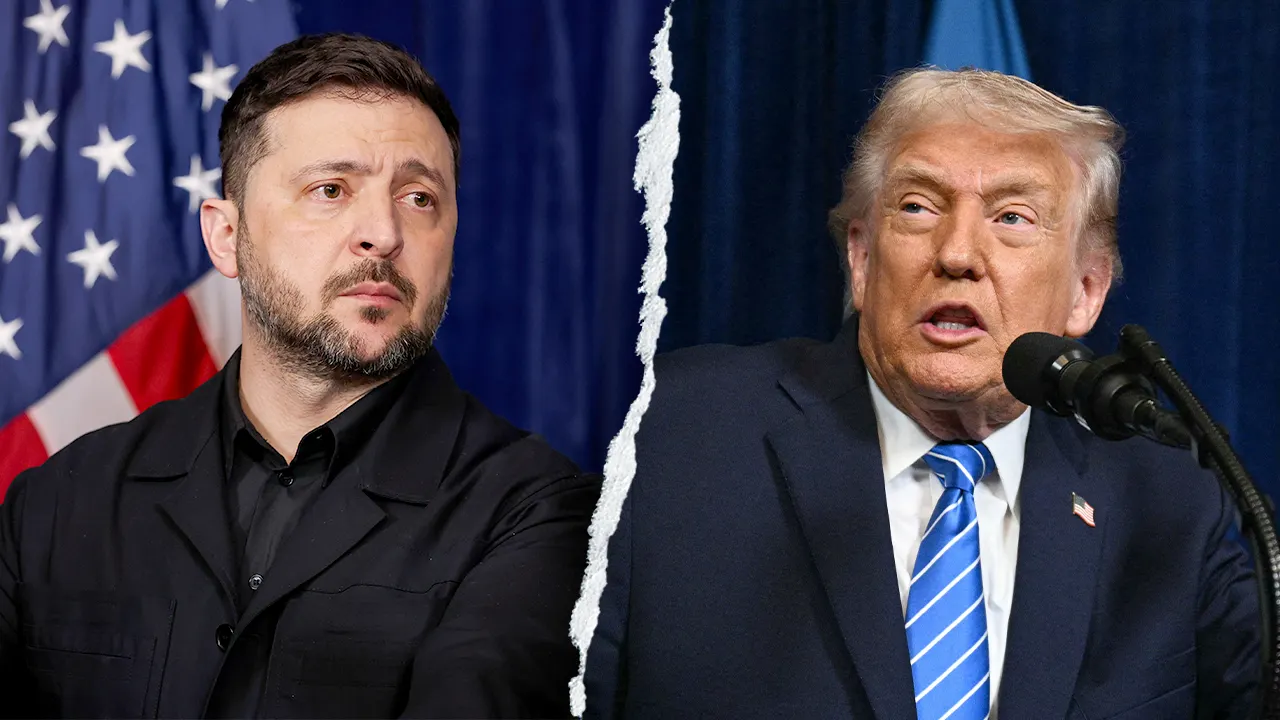
Ukrainian President Volodymyr Zelenskyy has claimed that U.S. security guarantees for Ukraine are being linked to Kyiv ceding the eastern Donbas region to Russia as part of potential peace negotiations, according to an interview published Thursday by Reuters.
“The Americans are prepared to finalize these guarantees at a high level once Ukraine is ready to withdraw from Donbas,” Zelenskyy said, describing a proposal he warned could undermine both Ukraine’s defensive capabilities and broader European security.
A U.S. official, speaking on background, promptly denied the claim, telling Fox News Digital that the assertion is false.
Zelenskyy’s comments highlight increasing pressure from President Donald Trump’s administration to swiftly end the conflict, now in its fourth year following Russia’s 2022 invasion. The Ukrainian leader suggested the administration’s approach is partly influenced by competing global crises, particularly in the Middle East.
“The Middle East definitely has an impact on President Trump,” Zelenskyy stated. “President Trump, unfortunately, in my opinion, still chooses a strategy of putting more pressure on the Ukrainian side.”
Diplomatic efforts have advanced with talks between the United States, Russia, and Ukraine taking place in Abu Dhabi and Geneva in 2026. However, critical issues remain unresolved, including the framework for Ukraine’s future security guarantees and the financing of its long-term defense needs.
Zelenskyy expressed serious concerns about abandoning the Donbas region, warning that such a concession would hand Russia heavily fortified Ukrainian defensive lines, potentially enabling future Russian aggression.
“I would very much like the American side to understand that the eastern part of our country is part of our security guarantees,” he emphasized.
Russian President Vladimir Putin has consistently maintained that full control of Donbas is central to Moscow’s war objectives. Despite recent Russian territorial gains, analysts cited by Reuters note that progress has been slow, and capturing the remaining Ukrainian-held territory could require significant time and military resources.
The Ukrainian president also cautioned that Moscow is strategically betting on Washington eventually losing interest if negotiations stall. “Russia is counting on the fact that the United States will not have the strength or patience to bring this to an end,” he said.
Despite tensions over the negotiation process, Zelenskyy expressed gratitude to the Trump administration for continuing deliveries of Patriot missile defense systems, which Ukraine relies on to intercept Russian ballistic missiles. “Deliveries to us were not stopped. I’m very grateful to President Trump, and to his team,” he said, while noting that current supply levels remain insufficient for Ukraine’s defense needs.
In parallel with diplomatic initiatives, Zelenskyy has signaled a broader strategy to expand Ukraine’s role as a security provider, particularly in the Middle East. In a statement on social media platform X, he revealed that Ukraine has been approached by the United States regarding American bases in Middle Eastern countries, as well as by Saudi Arabia, Qatar, the United Arab Emirates, Bahrain, Jordan, and Kuwait.
Ukrainian teams are reportedly already on the ground in these regions, sharing operational experience in countering mass drone attacks – expertise gained from the ongoing conflict with Russia.
“No matter how many Patriots, THAADs, or other air defense systems are in the Middle East, that alone is not enough,” Zelenskyy wrote. “There are modern interceptors designed to counter heavy drone strikes.”
The Ukrainian leader also indicated his country is exploring defense trade arrangements, offering to sell surplus systems and expertise while seeking access to air defense missiles it currently lacks. This comes as Ukraine’s defense industry operates at approximately half capacity due to funding constraints.
At a Joint Expeditionary Force summit, Zelenskyy emphasized that Ukraine’s battlefield experience could play a broader role in European and global security. “We have this experience. Let’s bring all of this together even more,” he urged, calling for deeper cooperation with European partners and warning that the continent must develop its own capacity to produce air defense systems rather than rely on external suppliers.
As peace negotiations continue amid battlefield developments, the territorial question – particularly regarding the Donbas region – remains a critical and contentious issue, with significant implications for Ukraine’s sovereignty and the future security architecture of Europe.
Fact Checker
Verify the accuracy of this article using The Disinformation Commission analysis and real-time sources.

5 Comments
Zelenskyy’s claim about Donbas concessions seems quite serious, if true. The White House denial is notable, but doesn’t necessarily mean the full story is known. Transparency and clear communication from all sides would be helpful in understanding the dynamics at play.
This highlights the complexity of the conflict in Ukraine and the competing global interests at play. It’s understandable that the US administration would want a swift resolution, but that shouldn’t come at the expense of Ukraine’s sovereignty and security. A balanced approach is needed.
This is a complex issue with high stakes for the mining and energy sectors. While I’m cautious about taking sides without more information, I’m concerned to hear about potential security guarantees being linked to territorial concessions. The situation bears close watching.
The mining and energy sectors will be closely watching developments, as the outcome in Ukraine could have significant implications for commodity markets and geopolitical stability. I hope all parties can find a path forward that protects Ukraine’s interests while also addressing broader regional concerns.
Interesting claim from President Zelenskyy. If true, it would be concerning to see security guarantees linked to concessions on Donbas. However, the White House denial suggests this may not be the full picture. I’m curious to learn more about the nuances of these negotiations.