


Listen to the article
Ukrainian and Russian negotiators are grappling with thorny territorial issues in U.S.-led peace talks aimed at ending nearly four years of conflict, President Volodymyr Zelenskyy revealed Thursday before meeting with leaders from about 30 allied nations.
Speaking to reporters in Kyiv, Zelenskyy highlighted that discussions have centered on the future of Ukraine’s eastern Donetsk region and the Russian-occupied Zaporizhzhia nuclear power plant, one of the world’s ten largest atomic facilities.
“We are grateful that the U.S. is working with us and trying to take a balanced position,” Zelenskyy said. “But at this moment it is still difficult to say what the final documents will look like.”
In Washington, White House press secretary Karoline Leavitt confirmed that President Donald Trump’s special envoy, Steve Witkoff, continues discussions with both sides. She indicated the U.S. might send a representative to weekend talks if there’s “a real chance of signing a peace agreement,” but acknowledged it remains “still up in the air whether we believe real peace can be achieved.”
The Trump administration has expressed growing frustration with the pace of negotiations. “The president is extremely frustrated with both sides of this war,” Leavitt told reporters, adding that officials have spent over 30 hours in recent weeks meeting with representatives from Russia, Ukraine, and European nations. She emphasized that Trump is “sick of meetings just for the sake of meeting” and “doesn’t want any more talk. He wants action.”
Ukraine has submitted a 20-point peace plan to the U.S., with potentially separate documents detailing settlement terms for each point. American negotiators have proposed creating a “free economic zone” in the resource-rich Donbas industrial region, which includes Donetsk and neighboring Luhansk. Russian officials have characterized this as a “demilitarized zone,” according to Zelenskyy.
Russia has intensified efforts in recent months to gain full control of the Donbas, a strategically important industrial heartland. Zelenskyy firmly stated that Ukraine rejects surrendering the region, suggesting instead that both sides maintain their current positions along the line of contact as “a fair outcome.”
U.S. proposals reportedly envision Ukrainian forces withdrawing from Donetsk with Russian forces not entering that territory. Zelenskyy countered that any Ukrainian withdrawal should be matched by Russian forces withdrawing an equal distance, while raising questions about who would govern the region.
The future of the Zaporizhzhia nuclear plant remains another contentious point. Russia seeks to maintain control of the currently non-operational facility, which Ukraine opposes. American negotiators have suggested joint management of the plant, with details still under discussion.
European allies have mobilized to support Ukraine in the negotiations, concerned about their own security implications. German Chancellor Friedrich Merz said he, British Prime Minister Keir Starmer, and French President Emmanuel Macron proposed to Trump finalizing peace proposals together with U.S. officials over the weekend, with possible follow-up talks in Berlin.
NATO Secretary-General Mark Rutte underscored the threat, noting Russia has launched over 46,000 drones and missiles against Ukraine this year. “We are Russia’s next target,” he warned during a speech in Berlin, describing China as “Russia’s lifeline” for providing critical electronic components for Russian weapons.
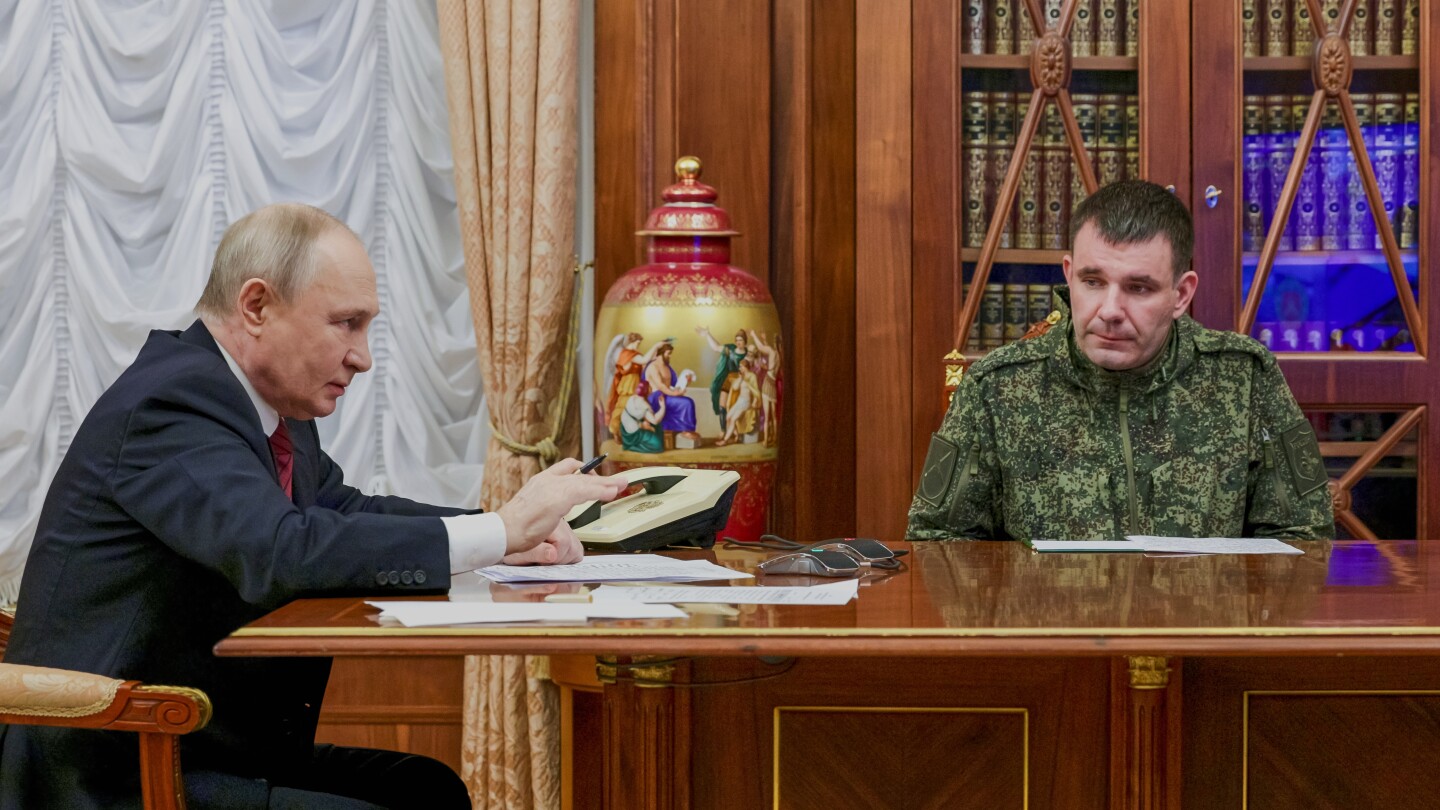
On the battlefield, Russian President Vladimir Putin claimed Thursday that his forces are “fully holding the strategic initiative.” Russian military officials reported capturing the city of Siversk in Donetsk, though Ukrainian officials denied this. Analysts suggest Putin aims to negotiate from a position of strength, despite Russia occupying only about 20% of Ukrainian territory.
Meanwhile, Ukrainian forces have escalated long-range attacks. A Ukrainian security official, speaking anonymously, claimed drones struck a Russian oil rig in the Caspian Sea for the first time, targeting a Lukoil facility approximately 600 miles from Ukraine. The strike reportedly halted extraction from over 20 wells, though Russian officials and Lukoil have not commented.
Ukraine also launched one of its largest drone attacks of the war overnight, shutting down all four Moscow airports for seven hours and disrupting operations at airports in eight other Russian cities.
As negotiations continue, Zelenskyy plans to coordinate with European countries bilaterally next week, ahead of a regular EU summit in Brussels.
Fact Checker
Verify the accuracy of this article using The Disinformation Commission analysis and real-time sources.

8 Comments
Given Russia’s track record, I’m a bit skeptical that they will ultimately be willing to make the concessions needed for a true peace agreement. But I’m hopeful the diplomatic process can at least help reduce the violence and suffering in the short term.
It’s good to see that the US is trying to take a balanced position in these talks, but the Russian demands for Ukrainian territory are clearly a major sticking point. I’m curious to see if any compromises can be found on that issue.
The territorial disputes over Donetsk and Zaporizhzhia are really at the heart of this conflict. It will take a lot of political will and creative problem-solving to find solutions that satisfy both sides. I’m glad the US is involved, but the challenges ahead are daunting.
Interesting to see the complex territorial issues that are being navigated in the peace talks between Ukraine and Russia. It sounds like a delicate balancing act to try to find a resolution everyone can accept.
The pace of these negotiations seems frustratingly slow, but given the high stakes involved, it’s understandable that all parties are proceeding cautiously. I hope they can make meaningful progress towards a lasting peace agreement.
The involvement of the US in these negotiations is important, though it’s understandable that they remain cautious about the prospects for a real peace agreement. Resolving the status of the Zaporizhzhia nuclear plant will be a critical challenge.
Absolutely, the Zaporizhzhia plant is a major flashpoint that will require careful handling. Maintaining the safety and security of that facility has to be a top priority.
From the outside, it seems like Ukraine is in a very difficult position, having to negotiate with Russia while under military pressure. I hope the US and other allies can provide strong support to help Ukraine protect its sovereignty and territorial integrity.