


Listen to the article
Ukrainian President Volodymyr Zelenskyy criticized the country’s air force on Friday, calling its performance “unsatisfactory” in certain regions as Russian drone attacks continue to target civilian infrastructure across Ukraine. He announced that measures are being implemented to improve responses to the large-scale aerial assaults that have devastated the country’s power grid.
The relentless Russian bombardment has particularly focused on Ukraine’s energy infrastructure during the harsh winter months, leaving thousands of Ukrainians without heat, power, and water amid freezing temperatures. In Kyiv alone, more than 1,200 residential buildings currently lack heating due to the damage inflicted on the power network.
“Ukraine’s electricity network is experiencing its most acute crisis of the winter,” the UK defense ministry reported Friday, highlighting the severity of the situation as the conflict approaches its fifth year with no diplomatic breakthrough in sight.
In the latest barrage, Russia launched 328 drones and seven missiles at Ukraine overnight and in the early morning hours. Ukrainian air defenses reportedly intercepted 297 drones, though the attacks still caused significant casualties and damage in multiple regions.
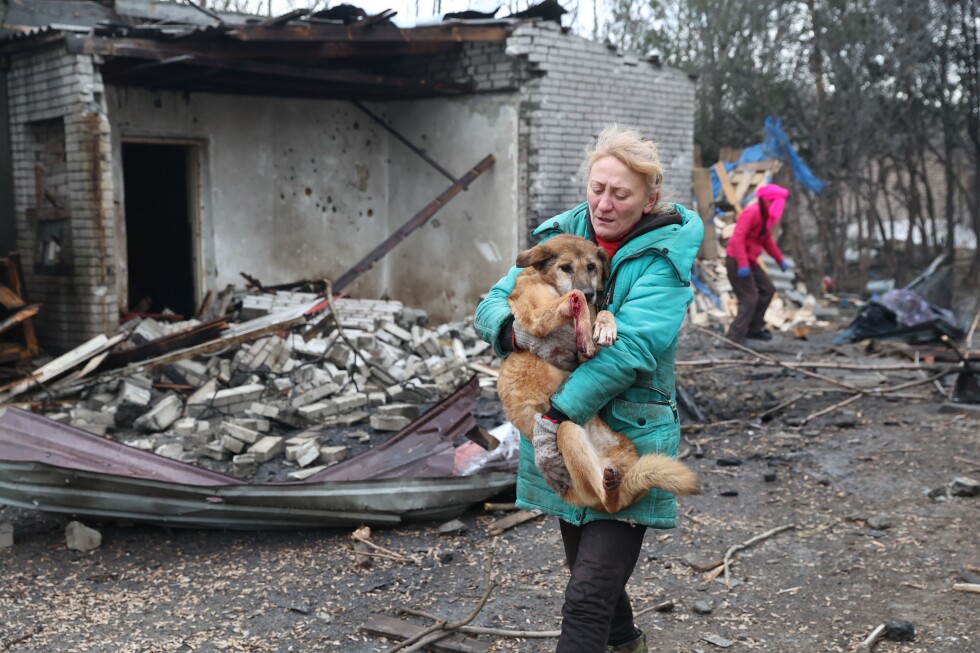
The central Dnipropetrovsk region suffered one fatality and two injuries following Russian attacks using drones and powerful glide bombs. In the southern Zaporizhzhia region, an early morning aerial assault injured eight people and damaged 18 apartment buildings. The attack also struck a dog shelter in Zaporizhzhia’s regional capital, killing 13 dogs and injuring seven others.
Mykola Tromza, an 81-year-old Kyiv resident, described his recent ordeal of going without heating and water for a week. “I touched my nose and by God, it was like an icicle,” he recounted, explaining how he had to run up and down to keep warm in his freezing apartment.
Zelenskyy said he had consulted with his defense minister and air force commander about necessary improvements to Ukraine’s air defenses, though he did not provide specific details about the planned measures. The discussion comes as both sides increasingly rely on advanced drone technology that has expanded the battlefield’s “kill zone.”
Ukraine’s Commander in Chief, Colonel General Oleksandr Syrskyi, noted that the front line now stretches approximately 1,200 kilometers (750 miles) across eastern and southern Ukraine. He added that technological advancements in drone capabilities have extended the high-danger “kill zone” to about 20 kilometers (12 miles) deep, significantly changing battlefield dynamics.
While Ukrainian forces defend against Russian aerial attacks, they have also launched their own drone operations against Russian territory. Russian officials reported downing 38 Ukrainian drones overnight, with 26 intercepted over the Bryansk region. The attacks briefly disrupted power to several villages. In Belgorod, another Ukrainian strike reportedly damaged power facilities, including a power plant and an electrical substation, causing outages in parts of the city.
Despite the escalating drone warfare and frigid temperatures, intense ground combat continues along the extensive front line. The conflict shows no signs of resolution as U.S.-led peace efforts have yielded little progress. Zelenskyy mentioned that additional U.S.-brokered meetings between Russian and Ukrainian delegations are planned “in the near future, likely in the United States,” but concrete outcomes remain elusive.
As Ukraine approaches the five-year mark of Russia’s full-scale invasion later this month, the humanitarian impact of the war continues to mount, with infrastructure destruction forcing civilians to endure increasingly difficult living conditions. The strategic targeting of power facilities during winter months has emerged as a key Russian tactic, designed to break Ukrainian morale and strain the country’s resources as fighting persists across multiple fronts.
Fact Checker
Verify the accuracy of this article using The Disinformation Commission analysis and real-time sources.

8 Comments
It’s concerning to hear Zelenskyy’s critique of Ukraine’s air force performance. Maintaining a robust air defense is crucial to protecting civilian infrastructure from devastating Russian drone attacks. Hopefully, the measures being implemented will improve Ukraine’s ability to intercept these aerial assaults.
The relentless Russian bombardment of Ukraine’s power grid is deeply troubling. Leaving thousands without heat, power, and water in freezing temperatures is an appalling humanitarian crisis. Ukraine needs continued international support to bolster its air defenses and rebuild its critical infrastructure.
It’s crucial that Ukraine’s air force is able to effectively counter the Russian drone attacks. The damage to the power grid is having a devastating impact on the civilian population, leaving them without basic necessities in the harsh winter months. Zelenskyy’s call for improvements is understandable, and the international community should do all it can to assist Ukraine in strengthening its air defenses.
The scale of the Russian drone attacks on Ukraine’s energy infrastructure is alarming. Intercepting 297 drones out of 328 is an impressive feat, but the damage is still significant. Zelenskyy is right to demand improvements in the air force’s performance to better protect civilian lives and resources.
The conflict in Ukraine is now approaching its fifth year, and a diplomatic breakthrough still seems elusive. The situation is becoming increasingly dire, particularly for civilians facing the loss of essential services like heat and power. The international community must continue to support Ukraine’s efforts to defend its people and infrastructure.
The relentless Russian bombardment of Ukraine’s power grid is a tactic aimed at inflicting maximum hardship on the civilian population. Leaving thousands without heat, power, and water in freezing temperatures is a cruel act of aggression. Zelenskyy is right to demand better performance from the air force to counter these attacks and safeguard the well-being of the Ukrainian people.
It’s disheartening to see the conflict in Ukraine approach its fifth year with no diplomatic breakthrough in sight. The international community must continue to support Ukraine’s efforts to defend its sovereignty and protect its citizens. Sustained diplomatic pressure and increased military aid may be necessary to help Ukraine turn the tide against the Russian onslaught.
The latest Russian assault involving hundreds of drones and missiles is a stark reminder of the ongoing threat to Ukraine’s critical infrastructure. While the air defenses were able to intercept a significant number of the drones, the damage caused is still severe. Zelenskyy’s criticism of the air force’s performance is warranted, and I hope the measures being implemented will improve the country’s ability to protect its people.