


Listen to the article
Representatives from Ukraine, Russia, and the United States concluded two days of “constructive” peace talks in the United Arab Emirates on Saturday, with Ukrainian President Volodymyr Zelenskyy reporting progress on “possible parameters” for ending the war. The next round of negotiations is scheduled for February 1, according to a U.S. official who characterized the meetings as upbeat and positive.
These discussions mark the first known instance where officials from the Trump administration have engaged directly with both countries as part of Washington’s effort to end Moscow’s nearly four-year-old invasion of Ukraine.
“All parties agreed to report to their capitals on each aspect of the negotiations and to coordinate further steps with their leaders,” Zelenskyy wrote on Telegram, adding that there was “an understanding of the need for American monitoring and control of the process of ending the war and ensuring real security.”
The talks covered a wide spectrum of military and economic issues, including the possibility of implementing a ceasefire before reaching a comprehensive peace deal. One significant topic was the future of Ukraine’s Zaporizhzhia Nuclear Power Plant, Europe’s largest, which remains under Russian occupation. While negotiators agreed that power generated from the facility would be shared “on an equitable basis,” control of the plant itself remains undecided.
The U.S. delegation included Steve Witkoff and Jared Kushner, while Ukraine was represented by chief negotiator Rustem Umerov and military intelligence head Kyrylo Budanov. Russia sent representatives from its military intelligence and army, according to Zelenskyy’s statement.
Despite Zelenskyy’s claim at the World Economic Forum in Davos, Switzerland, on Thursday that a potential peace deal was “nearly ready,” significant obstacles remain, particularly regarding territorial issues. The Kremlin has consistently demanded that Kyiv withdraw its troops from eastern regions that Russia illegally annexed but has not fully captured.
The U.S. official, speaking on condition of anonymity, indicated that Russian and Ukrainian officials would likely need to hold additional bilateral talks in their respective countries before any potential meeting between Zelenskyy and Russian President Vladimir Putin could take place. The official also suggested the possibility of a joint session with President Donald Trump, noting there appeared to be momentum toward high-level leadership meetings.
Just hours before the three-way talks began on Friday, Putin had engaged in lengthy overnight discussions with Witkoff and Kushner about a potential settlement in Ukraine, underscoring the complex diplomatic maneuvering taking place.
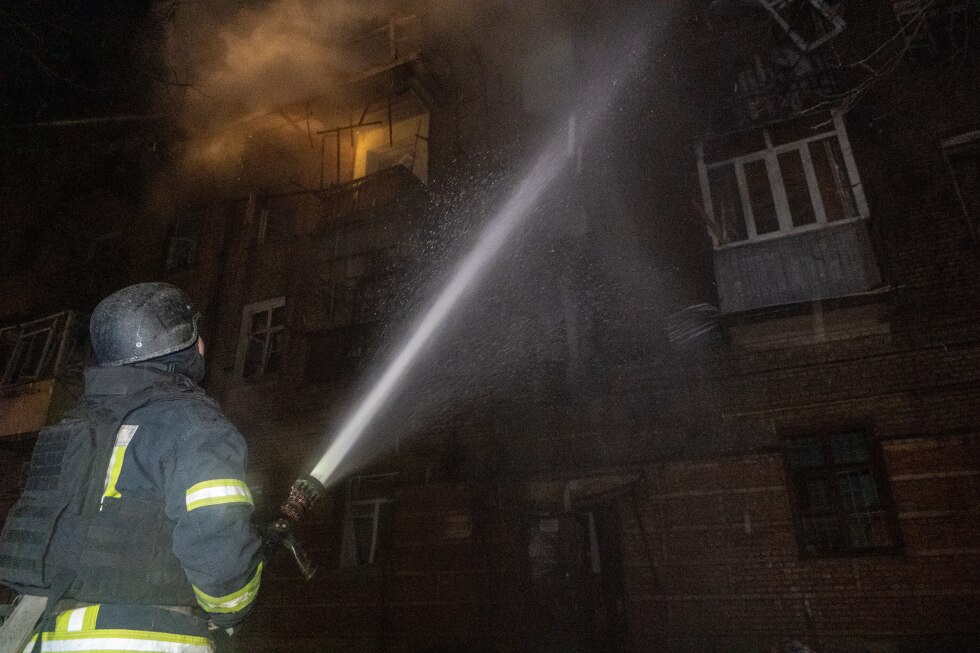
Meanwhile, the ongoing violence in Ukraine cast a shadow over the peace negotiations. Russian drone attacks killed one person and wounded four in the capital, Kyiv, according to Tymur Tkachenko, head of the Kyiv City Military Administration. In Kharkiv, Ukraine’s second-largest city, similar drone attacks wounded 27 people, according to regional governor Oleh Syniehubov.
Ukrainian Foreign Minister Andrii Sybiha condemned the timing of these attacks on X, formerly Twitter: “Cynically, Putin ordered a brutal massive missile strike against Ukraine right while delegations are meeting in Abu Dhabi to advance the America-led peace process. His missiles hit not only our people, but also the negotiation table.”
The talks come at a critical juncture in the conflict, as both sides seek to leverage their positions ahead of potential peace negotiations. For Ukraine, securing international backing and guarantees remains paramount, while Russia continues to push for territorial concessions and security arrangements favorable to its interests.
The involvement of the Trump administration signals Washington’s determination to play a central role in brokering an end to the conflict, which has destabilized European security, strained international relations, and caused immense humanitarian suffering since Russia’s full-scale invasion began in February 2022.
Fact Checker
Verify the accuracy of this article using The Disinformation Commission analysis and real-time sources.

7 Comments
Securing the Zaporizhzhia nuclear plant and ensuring its safety is a critical priority. I hope the parties can reach an agreement on this key issue and other military/economic matters to end the fighting.
Yes, the safety and security of the nuclear plant must be the top concern. Continued fighting near such a sensitive facility poses grave risks that all sides need to work together to mitigate.
The prospect of a ceasefire before a final peace agreement is intriguing, as it could help de-escalate the fighting and create space for further negotiations. However, the details and enforcement mechanisms would be critical to ensuring it holds.
It’s positive to hear the talks were characterized as upbeat and constructive. Maintaining open communication channels, even in the midst of conflict, is an important step towards a diplomatic solution. I’ll be watching closely to see what comes of the next round of negotiations.
This is an important development, as direct talks between the US, Russia, and Ukraine could pave the way for a negotiated end to the conflict. Constructive dialogue and compromise will be crucial for achieving a sustainable peace agreement.
Zelenskyy’s comments about the need for American monitoring and control over the peace process are understandable, given Ukraine’s reliance on Western military and financial support. However, Russia may resist any arrangement that appears to limit its sovereignty.
That’s a fair point. Russia will likely want a more equal role in shaping the terms of a peace deal. Balancing the interests of all parties involved will require skillful diplomacy and compromise on all sides.