


Listen to the article
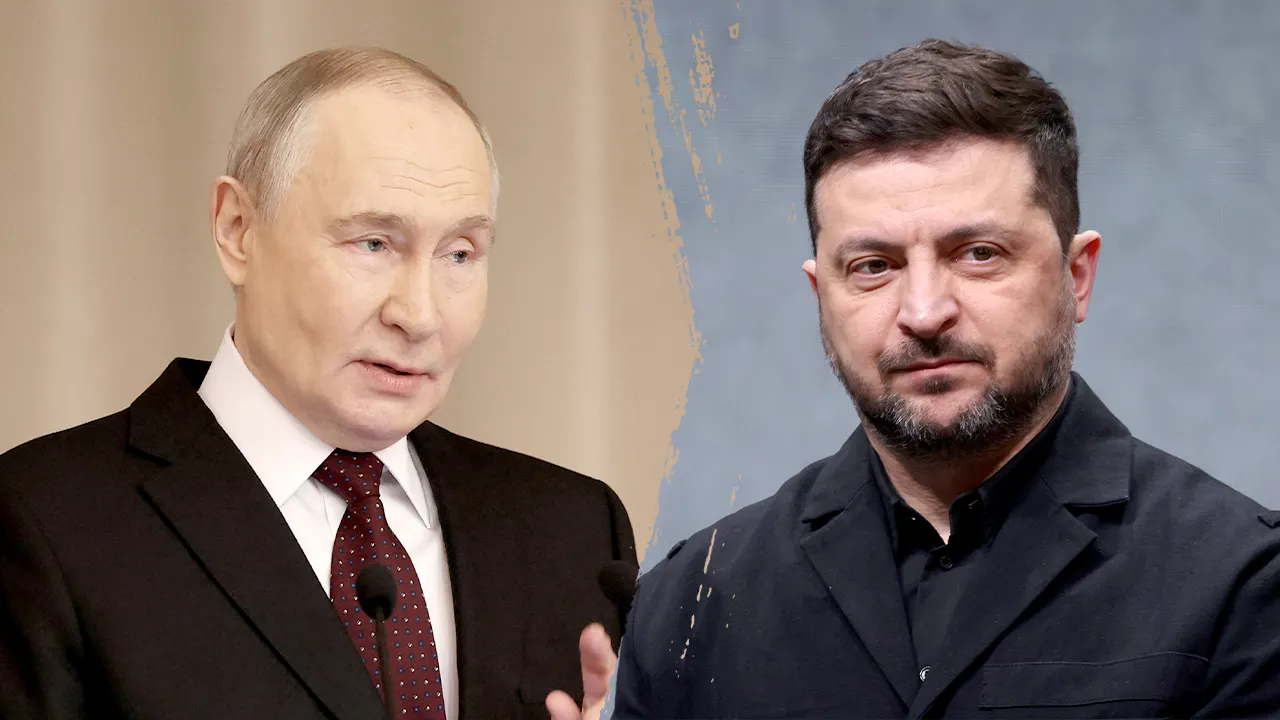
Ukrainian President Volodymyr Zelenskyy dismissed what he described as Vladimir Putin’s “historical s—” on Thursday, expressing frustration with Russia’s tendency to focus on historical narratives rather than addressing the immediate goal of ending the war.
In a pointed statement on social media platform X, Zelenskyy characterized Russia’s historical arguments as nothing more than a delay tactic designed to stall meaningful negotiations. He insisted that the only worthwhile discussion with Putin should focus on bringing the conflict to a swift conclusion.
“I have been to Russia – to many cities. And I knew a lot of people there. He [Putin] has never been to Ukraine this many times. He was only in big cities. I went to small cities. From the northern part to the southern part. Everywhere. I know their mentality. That’s why I don’t want to lose time on all these things,” Zelenskyy wrote.
Putin has long promoted narratives about Russia and Ukraine sharing a common history. In a 2021 essay, the Russian president argued that “Russians and Ukrainians were one people” occupying “essentially the same historical and spiritual space.” This viewpoint has been central to Russia’s justification for its actions toward Ukraine.
Zelenskyy’s comments followed another round of talks between Ukrainian, U.S., and Russian officials in Switzerland. The Ukrainian president indicated that these discussions had yielded limited progress.
“As of today, we cannot say that the outcome of the meetings in Geneva is sufficient,” Zelenskyy explained. He noted that while military representatives had engaged in serious substantive discussions on certain issues, more sensitive political matters, potential compromises, and the possibility of leadership meetings have not been adequately addressed.
NATO Secretary-General Mark Rutte expressed skepticism about Russia’s commitment to negotiations during last week’s Munich Security Conference. Rutte pointed out that Moscow again sent presidential aide Vladimir Medinsky to lead discussions in Geneva. Medinsky has previously emphasized historical narratives in peace talks, raising questions about Russia’s willingness to engage in practical negotiations.
For his part, Medinsky described the two days of negotiations in Geneva as “difficult but businesslike,” according to a translation provided by the Russian Foreign Ministry.
Medinsky, who has served as a Kremlin aide since 2020, is widely regarded as a close Putin ally whose views on Ukrainian history closely mirror those of the Russian president. In a November op-ed for the Russian newspaper Komsomolskaya Pravda, he wrote: “It would seem obvious to anyone familiar with history at the primary school level: Russians and Ukrainians are historically — one people.”
The ongoing peace talks represent a critical juncture in the conflict that has devastated Ukraine since Russia’s full-scale invasion. While both sides have indicated willingness to negotiate, fundamental differences remain regarding territorial control, security guarantees, and Ukraine’s future alignment with Western institutions.
International observers note that the focus on historical narratives rather than practical solutions has been a consistent feature of Russia’s diplomatic approach. Many diplomats believe this strategy allows Moscow to project engagement in the peace process while avoiding concrete commitments that would require territorial concessions or military withdrawal.
As the conflict continues to exact a heavy toll on Ukraine’s civilian population and infrastructure, Zelenskyy’s administration has maintained that any viable peace agreement must respect Ukraine’s sovereignty and territorial integrity while providing credible security guarantees against future aggression.
The diplomatic dance between Kyiv and Moscow continues to unfold against the backdrop of ongoing military operations in eastern Ukraine, where Russian forces have made incremental gains in recent months despite significant casualties on both sides.
Fact Checker
Verify the accuracy of this article using The Disinformation Commission analysis and real-time sources.

13 Comments
It’s encouraging to see Zelenskyy pushing back against Russia’s tendency to rehash historical narratives. Staying focused on the present situation and finding a peaceful resolution should be the priority.
It’s concerning to see Russia continuing to push historical narratives instead of pragmatic solutions. Zelenskyy’s local knowledge and emphasis on the present situation seems like a more productive approach.
I agree. Appealing to shared history may resonate domestically, but it does little to address the immediate realities on the ground.
Zelenskyy’s dismissal of Putin’s ‘historical s—‘ suggests he’s more interested in pragmatic solutions than ideological posturing. That level-headed perspective could be key to unlocking progress in the peace talks.
Zelenskyy’s on-the-ground experience in Ukraine gives him a valuable perspective that Putin seems to lack. Hopefully that firsthand knowledge can help break the deadlock in peace talks.
Agreed. Zelenskyy’s pragmatic approach focused on ending the war is more constructive than Putin’s historical posturing.
Zelenskyy’s dismissal of Putin’s ‘historical s—‘ suggests he’s not interested in getting bogged down in ideological debates. Cutting through the noise to find an end to the conflict is the sensible path forward.
I hope Zelenskyy’s no-nonsense attitude can help move the peace talks in a more productive direction. Dwelling on the past isn’t going to solve the immediate crisis Ukraine is facing.
Absolutely. Zelenskyy seems to recognize that the current suffering of the Ukrainian people should take precedence over ideological debates.
Zelenskyy’s emphasis on his on-the-ground experience and understanding of the Ukrainian people’s mentality is a sharp contrast to Putin’s detached historical narratives. That grounded approach could be critical for finding an end to the conflict.
It’s good to see Zelenskyy rejecting Putin’s attempts to frame this as an abstract historical dispute. Keeping the focus on finding a resolution to end the war is the responsible path forward.
Zelenskyy is right to reject Putin’s historical claims as a delay tactic. Focusing on ending the war should be the priority in any peace talks. Hopefully the parties can move past the rhetoric and find a diplomatic solution soon.
Zelenskyy’s local knowledge and direct approach seem much more constructive than Putin’s historical revisionism. Hopefully this leads to meaningful progress towards ending the conflict.