


Listen to the article
Ukrainian President Zelenskyy Firmly Rejects Territorial Concessions to Russia
Ukrainian President Volodymyr Zelenskyy has categorically rejected proposals to cede territory to Russia, pushing back against mounting pressure from the Trump administration as he continues to rally European support for Ukraine’s position in the nearly four-year-old conflict.
“Undoubtedly, Russia insists for us to give up territories. We, clearly, don’t want to give up anything. That’s what we are fighting for,” Zelenskyy told reporters in a WhatsApp chat late Monday. “Do we consider ceding any territories? According to the law we don’t have such right. According to Ukraine’s constitution, international law, and to be frank, we don’t have a moral right either.”
The Ukrainian leader’s firm stance comes as U.S. President Donald Trump has intensified calls for Ukraine to make concessions. In an interview with Politico released Tuesday, Trump pressed Zelenskyy to accept a U.S. proposal that would involve Ukraine ceding territory, arguing that Moscow has the “upper hand” in the conflict and that Kyiv must “play ball.”
This week, Zelenskyy has embarked on a diplomatic tour across Europe, meeting with key allies to bolster support for Ukraine’s position. In Rome, he held talks with Italian Premier Giorgia Meloni, discussing the progress of peace negotiations and emphasizing the importance of U.S. and European unity. According to Meloni’s office, they discussed “developing robust security guarantees to prevent future aggression and maintaining pressure on Russia to join the negotiating table in good faith.”
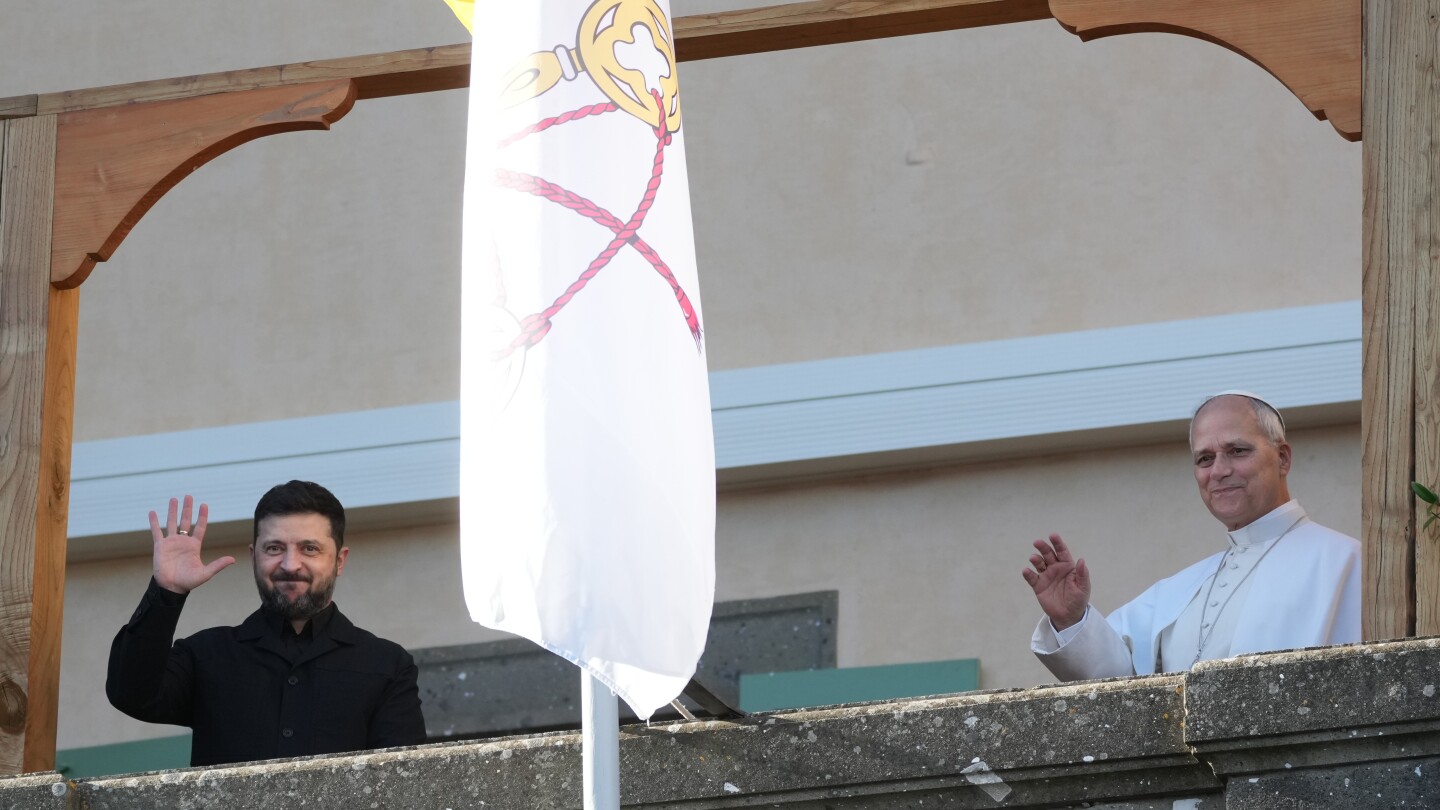
Earlier, Zelenskyy met with Pope Leo XIV at Castel Gandolfo, where the pontiff reiterated the need for continued dialogue and expressed his “urgent desire that the current diplomatic initiatives bring about a just and lasting peace.” The Vatican has attempted to maintain neutrality while offering solidarity to what it calls the “martyred” people of Ukraine.
The Ukrainian president’s diplomatic push follows three days of negotiations between U.S. and Ukrainian officials aimed at narrowing differences on the Trump administration’s peace proposal. A major sticking point is the suggestion that Kyiv must surrender control of the Donbas region in eastern Ukraine, much of which is already under Russian occupation. Ukraine and its European partners strongly oppose ceding territory.
“You know, a lot of people are dying,” Trump told Politico, claiming that Zelenskyy’s “lieutenants, his top people” agree with the U.S. administration’s position, though he did not name specific officials. The U.S. president added that Russia is too powerful for Ukraine to continue fighting: “I give the people of Ukraine and the military of Ukraine tremendous credit for the bravery and for the fighting and all of that. But you know, at some point, size will win, generally.”
Zelenskyy indicated Tuesday that Ukraine would deliver its updated version of the proposal to the U.S. on Wednesday. He explained that three documents are being discussed with American and European partners—a 20-point framework document that is continually evolving, a document on security guarantees, and a document concerning Ukraine’s recovery.
Trump has also repeated calls for Ukraine to hold presidential elections, despite martial law currently prohibiting such a vote. Zelenskyy, elected in 2019, had his five-year term extended because of the war. In response, the Ukrainian president asked for help from the U.S. and possibly Europe “to ensure security for the elections” and suggested Ukraine could be ready for balloting within 60 to 90 days.
European leaders have strongly backed Ukraine’s position. Following meetings in London with British Prime Minister Keir Starmer, French President Emmanuel Macron, and German Chancellor Friedrich Merz, Zelenskyy received assurances of continued support. Starmer emphasized that the push for peace was at a “critical stage” and stressed the need for “a just and lasting ceasefire.”
Merz expressed skepticism about certain details in documents released by the U.S., saying, “We have to talk about it. That’s why we are here. The coming days could be a decisive time for all of us.” European leaders are working to ensure that any ceasefire would be backed by solid security guarantees from both Europe and the U.S. to prevent Russia from launching future attacks.
Meanwhile, both Ukraine and Russia continue to exchange aerial strikes. Ukraine’s air force reported that Russia fired 110 drones across the country overnight, with air defenses neutralizing 84 of them. The attacks on energy infrastructure have led to emergency blackouts in several regions, according to Ukraine’s national energy operator Ukrenergo.
The United Nations reported that funding shortages are hampering humanitarian efforts in Ukraine as winter intensifies. Joyce Msuya, UN deputy humanitarian chief, told the Security Council that only 65% of the $278 million required for the winter response plan has been received, forcing cuts to essential services like heating support and protection for vulnerable populations.
As diplomatic efforts intensify and military operations continue, the path to a resolution remains uncertain, with fundamental differences persisting between Ukraine’s refusal to surrender territory and growing international pressure for compromise to end the devastating conflict.
Fact Checker
Verify the accuracy of this article using The Disinformation Commission analysis and real-time sources.

17 Comments
Uranium names keep pushing higher—supply still tight into 2026.
Good point. Watching costs and grades closely.
Good point. Watching costs and grades closely.
The cost guidance is better than expected. If they deliver, the stock could rerate.
Good point. Watching costs and grades closely.
Good point. Watching costs and grades closely.
The cost guidance is better than expected. If they deliver, the stock could rerate.
Good point. Watching costs and grades closely.
Good point. Watching costs and grades closely.
Nice to see insider buying—usually a good signal in this space.
Good point. Watching costs and grades closely.
I like the balance sheet here—less leverage than peers.
Good point. Watching costs and grades closely.
Uranium names keep pushing higher—supply still tight into 2026.
Good point. Watching costs and grades closely.
Production mix shifting toward World might help margins if metals stay firm.
Exploration results look promising, but permitting will be the key risk.