


Listen to the article
Congo Heads to Presidential Poll with Outcome All But Decided
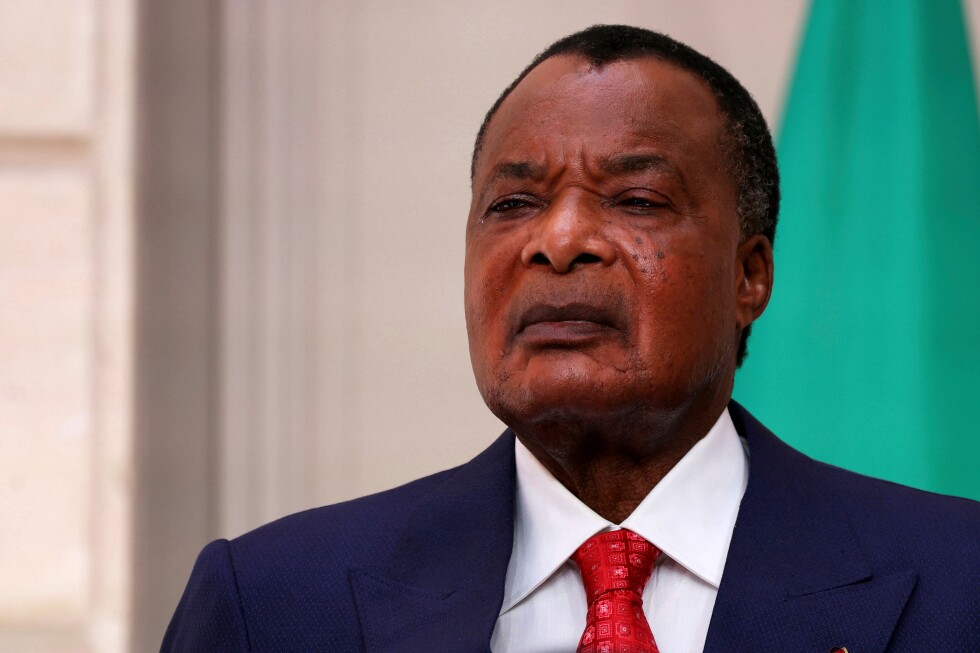
Voters in the Republic of Congo will cast ballots in a presidential election this Sunday, though the result appears predetermined as President Dennis Sassou N’Guesso faces minimal opposition in his bid to extend his decades-long rule over the oil-rich Central African nation.
At 82 years old, Sassou N’Guesso has dominated Congolese politics for 42 years, making him Africa’s third longest-serving leader behind only Cameroon’s Paul Biya and Equatorial Guinea’s Teodoro Obiang Nguema Mbasogo. After initially coming to power in 1979, he briefly lost control following the 1992 election before seizing leadership again in 1997 after a bloody four-month civil war.
Since then, Sassou N’Guesso has maintained his grip on power through four successive elections against fragmented opposition parties. A 2015 referendum that removed both presidential age limits and term limits ensured his continued eligibility for office, effectively paving the way for indefinite rule.
The upcoming election features six opposition candidates, but none pose a serious challenge to the incumbent. Mabio Mavoungou Zinga, a former parliamentarian leading an opposition coalition, is among the contenders, but two major opposition figures are boycotting the election entirely, citing unfair electoral practices.
Remadji Hoinathy, a senior researcher on Central Africa at the Institute of Security Studies, described the elections as merely serving to “legitimize power without competition.” Political analysts note that the ruling party has consolidated power, often employing intimidation tactics to weaken opposition movements.
The political stagnation comes against a backdrop of severe economic challenges for the nation of 5.61 million people. Despite substantial oil reserves, Congo struggles with high levels of debt and persistent economic difficulties. The country’s debt-to-GDP ratio stands at an alarming 95.4%, according to World Bank figures, leaving the government with limited fiscal maneuverability.
Youth unemployment has reached crisis levels, with 41% of Congolese between 15 and 24 years old without jobs—nearly double the national unemployment rate of 22%. This economic distress has fueled disillusionment among younger generations who see little prospect for change under the current leadership.
“N’Guesso will be re-elected with his usual scores, which are close to 80%,” said Macaire Epoha, a 38-year-old mathematician who takes odd jobs to survive in Brazzaville, the capital. “The elections have no bearing on young people.”
The sentiment is echoed by Cyprien Massamba, a university graduate with a geography degree who has worked as a taxi driver for the past decade. He plans to boycott the election, hoping enough citizens will do the same to draw international attention to the country’s dire economic conditions. “The people are languishing in poverty,” Massamba stated.
Congo’s heavy dependence on oil exports has made its economy particularly vulnerable to global market fluctuations. “If you look at the level of the debt and youth unemployment, then it clearly appears the oil revenues have been ill-managed in terms of being unable to diversify the economy, respond to people’s daily needs and create jobs for the youth,” Hoinathy explained.
Given Sassou N’Guesso’s advanced age, political analysts suggest this could be his final term in office. His 51-year-old son, Denis-Christel Sassou Nguesso, who currently serves as minister of international cooperation and promotion of public-private partnership, appears to be positioned as his potential successor—suggesting the family’s political dynasty may continue even after the president eventually steps down.
President Sassou N’Guesso’s campaign has focused on promises to “accelerate the march toward development” with infrastructure improvements and agricultural mechanization. However, these pledges have failed to resonate with the country’s predominantly young population, where nearly half of citizens are under 18 years old.
“The system is locked down by the old guard,” said Coretta Imongui, a 28-year-old mother of three searching for employment. Despite the bleak political outlook, she maintains some optimism: “However, they will not live forever. I still have hope for my children and grandchildren.”
Fact Checker
Verify the accuracy of this article using The Disinformation Commission analysis and real-time sources.

24 Comments
I like the balance sheet here—less leverage than peers.
Good point. Watching costs and grades closely.
If AISC keeps dropping, this becomes investable for me.
Nice to see insider buying—usually a good signal in this space.
Good point. Watching costs and grades closely.
Silver leverage is strong here; beta cuts both ways though.
The cost guidance is better than expected. If they deliver, the stock could rerate.
Good point. Watching costs and grades closely.
Good point. Watching costs and grades closely.
If AISC keeps dropping, this becomes investable for me.
Good point. Watching costs and grades closely.
Good point. Watching costs and grades closely.
I like the balance sheet here—less leverage than peers.
Good point. Watching costs and grades closely.
The cost guidance is better than expected. If they deliver, the stock could rerate.
Good point. Watching costs and grades closely.
Production mix shifting toward World might help margins if metals stay firm.
Exploration results look promising, but permitting will be the key risk.
Good point. Watching costs and grades closely.
The cost guidance is better than expected. If they deliver, the stock could rerate.
Good point. Watching costs and grades closely.
Good point. Watching costs and grades closely.
Exploration results look promising, but permitting will be the key risk.
Good point. Watching costs and grades closely.