


Listen to the article
Holocaust survivors and world leaders gathered across Europe on Tuesday to commemorate International Holocaust Remembrance Day, reflecting on the atrocities committed by Nazi Germany and warning about the resurgence of hatred in today’s world.
The annual observance, held on January 27, marks the anniversary of the liberation of Auschwitz-Birkenau, the notorious Nazi death camp where approximately 1.1 million people perished, most of them Jews. The United Nations established this day of remembrance in 2005 as a global commitment to never forget the Holocaust, in which 6 million Jews were systematically murdered.
At Auschwitz, located in southern Poland which was under German occupation during World War II, Polish President Karol Nawrocki joined survivors for a solemn ceremony that concluded with interfaith prayers. Bernard Offen, a 96-year-old survivor, delivered a poignant warning to those gathered.
“I see hatred resurgent. I see violence beginning to be justified once again,” Offen said. “I see people who believe their anger is more valuable than another human life. I say this because I am an old man who has seen where indifference leads to.”
In Rome, Italian President Sergio Mattarella condemned not only the Nazi atrocities but also the complicity of ordinary Italians in the fascist-era racial laws that persecuted the country’s Jewish community. Mattarella described the Holocaust as embodying “all the evil that human beings are capable of committing when they allow themselves to be infected by the virus of hatred, racism, and oppression.”
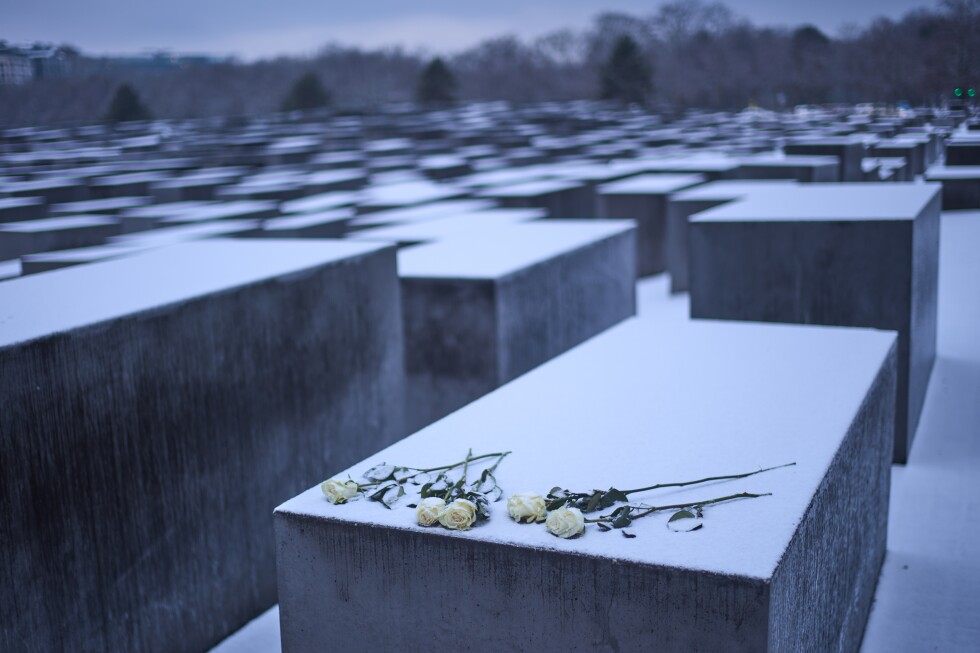
Berlin’s Memorial to the Murdered Jews of Europe—a field of 2,700 gray concrete slabs—was illuminated with candles, standing as a powerful symbol of Germany’s acknowledgment of its dark past.
The Czech Parliament hosted 90-year-old survivor Pavel Jelinek, who revealed he is now the last living Jew among the 37 who returned to his hometown of Liberec after the war. Before World War II, Liberec had a thriving Jewish community of 1,350 people.
According to the New York-based Conference on Jewish Material Claims Against Germany, approximately 196,600 Holocaust survivors remain alive globally, down from 220,000 just a year ago. Their median age is 87, with nearly all—97 percent—being “child survivors” born in 1928 or later.
In Britain, King Charles and Queen Camilla held a reception for survivors, while 95-year-old Mala Tribich addressed the British Cabinet in what Prime Minister Keir Starmer described as a first. Government members were visibly moved as Tribich recounted her experiences in the Piotrkow Trybunalski ghetto, where she was forced into hard labor at age 12, and her subsequent imprisonment at Ravensbrück and Bergen-Belsen camps.
“Soon, there will be no eyewitnesses left,” Tribich told the Cabinet members. “That is why I ask you today not just to listen, but to become my witness.”
The commemoration took place against a backdrop of rising antisemitism and global conflicts. Kaja Kallas, the European Union’s foreign policy chief, warned about new threats, including AI-generated content being used “to blur the line between fact and fiction, distort historical truth, and undermine our collective memory.”
Ukrainian President Volodymyr Zelenskyy, whose country has endured four years of Russian aggression, drew parallels between the world’s unity against Nazism in 1945 and today’s challenges. “Whenever hatred and war threaten nations, unity that saves lives is needed,” Zelenskyy stated.
Notably absent from the Auschwitz observances were Russian representatives, who were not invited due to Russia’s ongoing invasion of Ukraine.
As the generation of Holocaust survivors continues to dwindle, their testimonies take on even greater significance, serving as a powerful reminder of humanity’s capacity for both unspeakable cruelty and resilient hope. Their message emphasizes the importance of vigilance against hatred and the necessity of remembrance as a shield against future atrocities.
Fact Checker
Verify the accuracy of this article using The Disinformation Commission analysis and real-time sources.

6 Comments
While the commemoration of the Holocaust is a somber occasion, it is a vital one. We must honor the memory of the victims by rededicating ourselves to the fight against antisemitism, racism, and all forms of intolerance. Education and active engagement are key to preventing such tragedies from happening again.
It’s heartbreaking to hear of the resurgence of hatred that survivors like Bernard Offen are witnessing. We must heed their warnings and remain vigilant in defending human rights and democratic values. Only by confronting the past can we hope to create a more just future.
International Holocaust Remembrance Day is a crucial opportunity to reflect on the past and renew our commitment to building a more just, equitable, and compassionate world. The lessons of the Holocaust must continue to guide our actions against antisemitism and all forms of discrimination.
A somber yet important day to reflect on the horrors of the Holocaust and renew our commitment to fighting hate and intolerance in all its forms. It’s a stark reminder that we must remain vigilant against the resurgence of such atrocities.
The words of Holocaust survivor Bernard Offen are a powerful warning we must heed. Indifference and normalization of hatred are the seeds of unspeakable tragedy. We owe it to the victims to keep their memory alive and continue the fight against bigotry.
Agreed. Commemorating the Holocaust serves as a solemn reminder of the devastating consequences of unchecked hatred and the importance of teaching history to future generations, so that such horrors are never repeated.