


Listen to the article
World leaders have called for peace and a return to negotiations after the United States and Israel conducted military strikes on Iran, raising fears of a widening regional conflict. The situation escalated dramatically following the killing of Iran’s Supreme Leader Ayatollah Ali Khamenei, with Iran vowing devastating retaliation.
On Sunday morning, a massive explosion rocked Tehran as Israeli forces targeted what they described as the “heart” of the Iranian capital, following claims they had cleared a path to the city the previous day. Iran continued its retaliation campaign, with Qatar, Kuwait, and Bahrain reporting they intercepted multiple missiles.
The strategic Strait of Hormuz saw additional attacks, with Oman reporting an oil tanker came under fire. The port of Duqm, which serves as a logistical hub for the U.S. Navy and can host aircraft carriers, was targeted in a drone attack. Oman has previously served as an intermediary between Tehran and Washington during nuclear negotiations.
Khamenei’s death has created a leadership vacuum in Iran, as he had no designated successor, throwing the country’s future into uncertainty at a particularly volatile moment.
The danger of a broader conflict became more apparent when British Defense Minister John Healey revealed that Iranian missile and drone strikes had come within a few hundred yards of approximately 300 British military personnel stationed in Bahrain. He also noted that two missiles were fired in the direction of Cyprus, where the United Kingdom maintains military bases.
“We don’t believe they were targeted at Cyprus, but nevertheless, it’s an example of how there is a very real and rising threat from a regime that is lashing out widely across the region, and that requires us to act,” Healey told Sky News. He confirmed that British aircraft would intercept any Iranian drones and missiles they detect.
In the wake of the U.S. and Israeli strikes, President Donald Trump called on Iranian citizens to “seize control of your destiny” by rising against the Islamic theocracy that has governed Iran since 1979.
The European Union responded quickly, with its 27 member nations convening an emergency meeting on Sunday to discuss the situation. EU foreign policy chief Kaja Kallas condemned Iran’s actions, stating, “The Iranian regime’s indiscriminate attacks against its neighbours carry the risk of dragging the region into a broader war. It is essential that the war does not spread any further.”
Religious leaders also weighed in, with Pope Leo XIV expressing “profound concern” about the strikes and urging both sides to “stop the spiral of violence before it becomes an irreparable abyss.”
During a United Nations Security Council meeting on Saturday, Secretary-General António Guterres emphasized the need to prevent escalation. “The alternative,” he warned, “is a potential wider conflict with grave consequences for civilians and regional stability.”
Many nations, particularly in the Middle East, have refrained from directly criticizing the joint U.S.-Israeli strikes while condemning Iran’s retaliation. Anwar Gargash, an adviser to the UAE’s president, urged Iranian leaders to “return to your senses… and deal with your neighbors with reason and responsibility before the circle of isolation and escalation widens.”
The 22-nation Arab League characterized Iran’s attacks as “a blatant violation of the sovereignty of countries that advocate for peace and strive for stability.” Reports indicate Saudi Arabia has privately urged Iran not to attack the kingdom, even as it reported apparent attacks in Riyadh and its eastern region on Saturday, though no casualties were reported.
Russian President Vladimir Putin condemned Khamenei’s killing as “a cynical violation of all norms of human morality and international law.” China’s Foreign Minister Wang Yi echoed this sentiment in a conversation with his Russian counterpart, stating that “attacking a sovereign state without U.N. Security Council authorization undermines the foundation for peace established after World War II.”
The crisis has sparked diverse reactions globally. In Pakistan, at least nine people were killed when protesters stormed the U.S. Consulate in Karachi. Massive demonstrations also erupted in Indian-controlled Kashmir denouncing Khamenei’s killing.
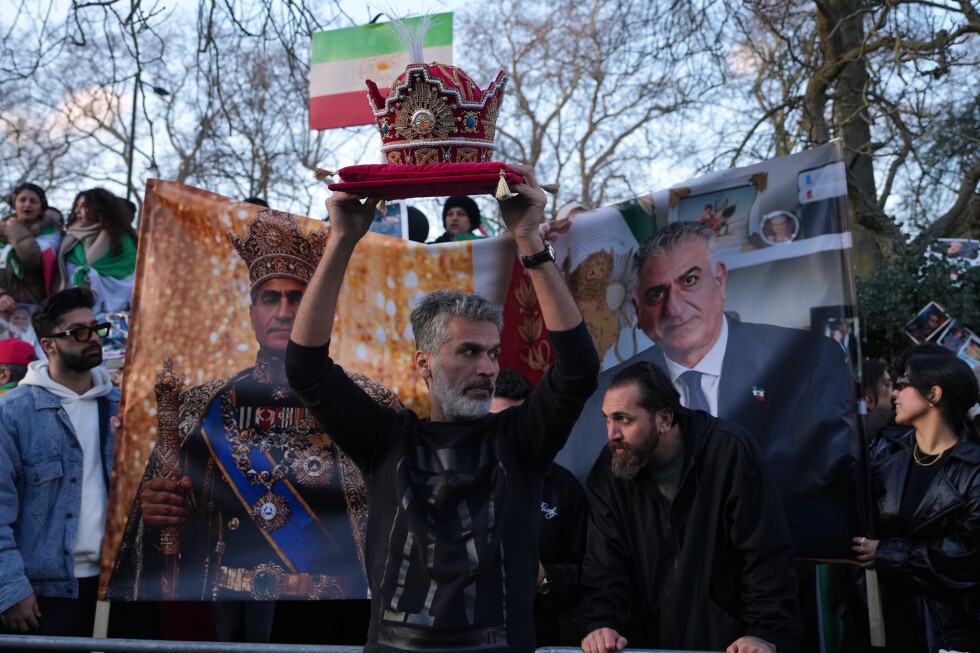
Conversely, members of the Iranian diaspora held celebrations in cities from Berlin to New York, with many expressing hope for political change in Iran. In Berlin, demonstrators waved flags of the Iranian monarchy alongside German, Israeli, and U.S. flags.
As the situation continues to evolve, the international community remains on high alert, with diplomatic efforts intensifying to prevent further escalation in this volatile region.
Fact Checker
Verify the accuracy of this article using The Disinformation Commission analysis and real-time sources.

8 Comments
The loss of life on all sides is tragic. While retaliation may seem justified, it risks spiraling into all-out war with devastating consequences. The international community must urgently intervene to broker a ceasefire and negotiate a diplomatic solution before the situation deteriorates further.
While understandable that all sides feel justified in their actions, the risk of uncontrolled escalation is too great. Khamenei’s death creates a power vacuum, making the situation even more precarious. Urgent, good-faith negotiations to restore stability and prevent further loss of life must be the top priority.
Tragic as Khamenei’s death is, retaliation and continued military action will only beget more violence. The priority now must be to restore stability through diplomacy and negotiation, not further inflame an already dire situation. I hope cooler heads can prevail on all sides.
Well said. The path of dialogue and compromise, however difficult, is the only responsible way forward now.
This is a complex and rapidly evolving situation. While the death of Khamenei is a significant development, a measured response and return to dialogue is essential to prevent an all-out regional war. The international community must act quickly to de-escalate tensions and broker a ceasefire.
A negotiated settlement is the only way forward here. Both sides have valid security concerns, but continuing down the path of military confrontation will only lead to more destruction. I hope cooler heads can prevail and the parties return to the negotiating table in good faith.
I agree, diplomacy is the only responsible path. Escalating the conflict further will only result in more needless loss of life on all sides.
This is a highly volatile and dangerous situation. De-escalation and a return to diplomatic talks are critical to prevent further bloodshed and a potential wider conflict. Khamenei’s death creates uncertainty, but all sides must exercise restraint and pursue peaceful resolution.