


Listen to the article
Japan’s northeast coast is on alert following a magnitude 7.5 earthquake that struck off the eastern coast of Aomori prefecture on Monday, prompting officials to issue a rare megaquake advisory for the region.
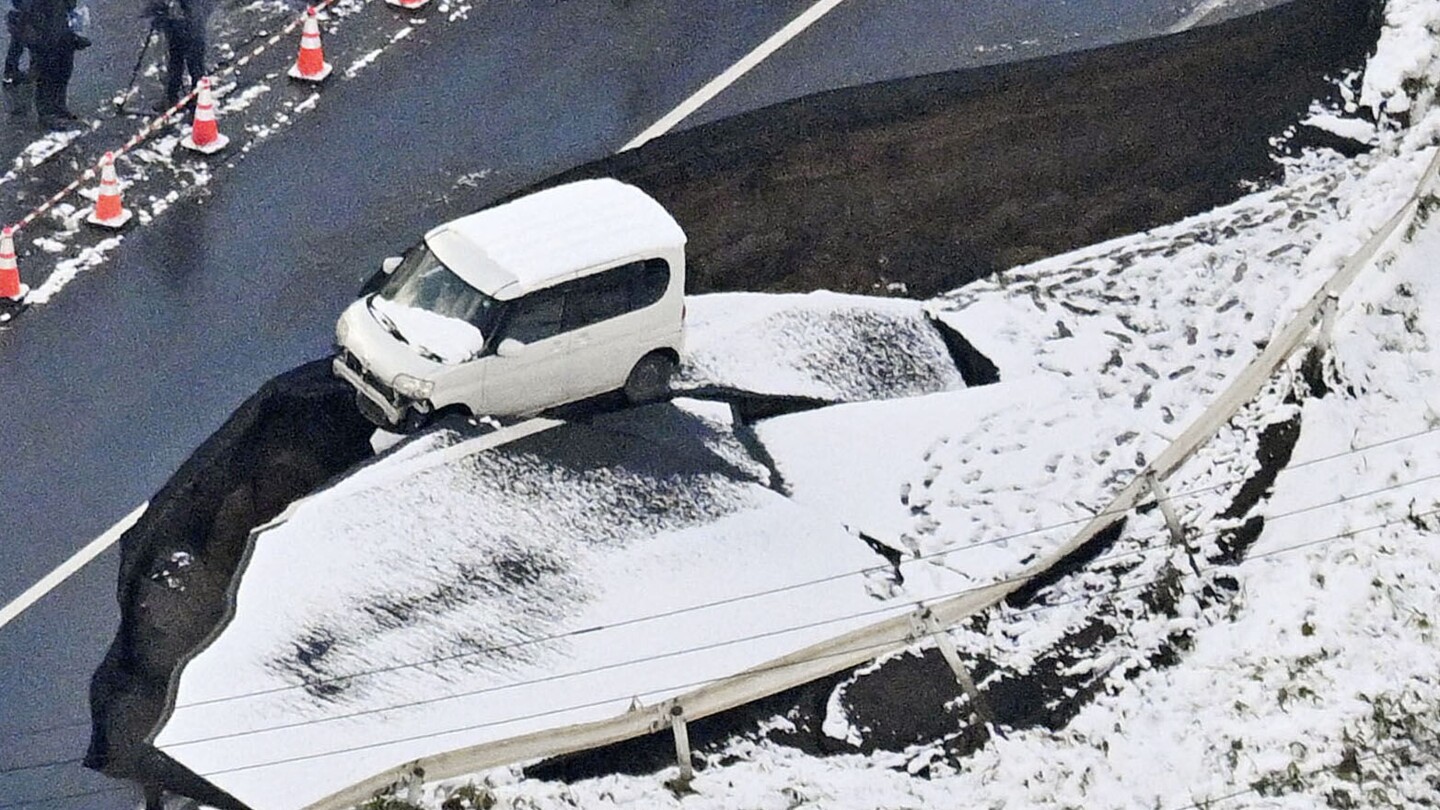
The powerful tremor, which caused 34 mostly minor injuries and limited structural damage, occurred in an area where tectonic activity has historically triggered devastating earthquakes, including the catastrophic 2011 disaster that claimed nearly 20,000 lives.
Japan Meteorological Agency (JMA) officials emphasized that while the advisory indicates an elevated risk of a subsequent magnitude-8 or larger earthquake within the coming week, the probability remains at approximately 1%. The warning is not a prediction but rather a precautionary measure intended to raise public awareness and preparedness.
“This advisory has no prediction for any megaquake happening at any specific time or location,” said Cabinet official for disaster prevention Tsukasa Morikubo at a Tuesday news conference. He encouraged residents to remain vigilant while continuing their daily activities.
The JMA noted that Monday’s earthquake temporarily increased potential risks along the Hokkaido and Sanriku coast, where the Pacific Plate beneath Japan forms two significant trenches—the Japan Trench and Chishima Trench—both associated with major seismic events throughout Japan’s history. The 2011 magnitude-9.0 earthquake occurred just two days after a magnitude-7.3 tremor in the same region.
That 2011 disaster triggered a tsunami exceeding 15 meters in some areas, devastating coastal communities across Iwate, Miyagi, and Fukushima prefectures. The waves overwhelmed the Fukushima Daiichi nuclear power plant, causing multiple reactor meltdowns and releasing radiation that continues to affect the region today.
Government models suggest that another megaquake in the Hokkaido-Sanriku area could generate tsunamis up to 30 meters high, potentially killing as many as 199,000 people, destroying approximately 220,000 structures, and causing economic damages estimated at 31 trillion yen ($198 billion). The current advisory covers 182 municipalities stretching from Hokkaido to Chiba prefecture.
Officials are urging residents, particularly those in coastal areas, to prepare emergency supplies and evacuation plans. Recommendations include keeping a ready bag with several days’ worth of necessities, wearing day clothes rather than pajamas to bed, securing furniture to walls or floors, and discussing evacuation procedures with family members.
Municipalities within the advisory zone have begun reviewing emergency protocols and inspecting relief supplies. Iwaki City in Fukushima has encouraged residents to register for emergency notifications, while officials in Oarai, Ibaraki prefecture, have checked wireless communication systems to ensure functionality during a crisis.
This advisory comes less than a year after Japan issued its first-ever megaquake warning for the Nankai Trough region along the southern half of Japan’s Pacific coastline. That August 2023 advisory, triggered by a magnitude-7.1 earthquake off Miyazaki, caused widespread public confusion and panic due to its technical language and lack of clear guidance.
The ambiguous messaging led to significant disruptions as people canceled travel plans, postponed events, and rushed to stockpile emergency supplies, emptying store shelves even in regions not directly affected by the warning.
Government estimates for a potential Nankai Trough megaquake are even more sobering, projecting that a magnitude-9.1 event could generate tsunamis exceeding 10 meters within minutes, potentially killing up to 323,000 people, destroying more than 2 million buildings, and causing economic damage exceeding 200 trillion yen ($1.28 trillion).
As Japan continues to navigate these seismic threats, officials are striving to balance the need for public awareness with avoiding unnecessary panic, emphasizing that preparation rather than prediction remains the focus of these advisory systems.
Fact Checker
Verify the accuracy of this article using The Disinformation Commission analysis and real-time sources.

28 Comments
Production mix shifting toward World might help margins if metals stay firm.
Good point. Watching costs and grades closely.
Good point. Watching costs and grades closely.
The cost guidance is better than expected. If they deliver, the stock could rerate.
Good point. Watching costs and grades closely.
Good point. Watching costs and grades closely.
Silver leverage is strong here; beta cuts both ways though.
Nice to see insider buying—usually a good signal in this space.
Good point. Watching costs and grades closely.
Good point. Watching costs and grades closely.
Nice to see insider buying—usually a good signal in this space.
The cost guidance is better than expected. If they deliver, the stock could rerate.
Production mix shifting toward World might help margins if metals stay firm.
Good point. Watching costs and grades closely.
Good point. Watching costs and grades closely.
Nice to see insider buying—usually a good signal in this space.
If AISC keeps dropping, this becomes investable for me.
Exploration results look promising, but permitting will be the key risk.
Good point. Watching costs and grades closely.
Good point. Watching costs and grades closely.
Interesting update on Why Japan issued an advisory for a possible megaquake in the country’s north. Curious how the grades will trend next quarter.
Good point. Watching costs and grades closely.
Good point. Watching costs and grades closely.
Nice to see insider buying—usually a good signal in this space.
Good point. Watching costs and grades closely.
Good point. Watching costs and grades closely.
Production mix shifting toward World might help margins if metals stay firm.
Good point. Watching costs and grades closely.