


Listen to the article
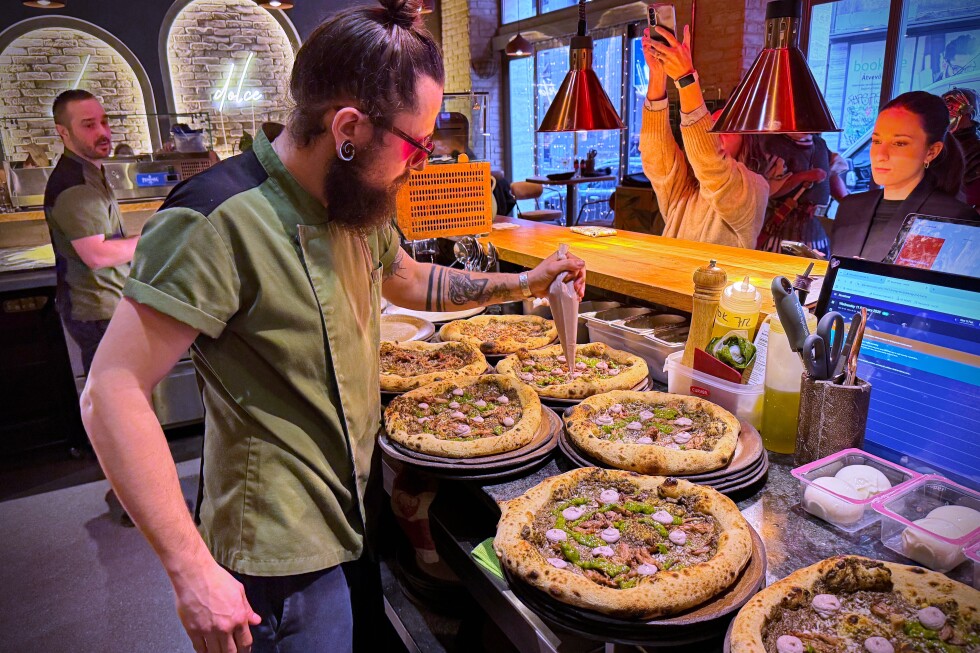
In the heart of Budapest, Hungary, a culinary time machine is taking diners back to ancient Rome through an unlikely medium: pizza. Neverland Pizzeria, located in the city center, has crafted a unique flatbread that reimagines what “pizza” might have been before tomatoes, mozzarella, or even the word “pizza” existed in Europe.
“Curiosity drove us to ask what pizza might have been like long ago,” explains Josep Zara, the pizzeria’s founder. “We went all the way back to the Roman Empire and wondered whether they even ate pizza at the time.”
The answer, strictly speaking, is no. The pizza as we know it today emerged in Naples in the 18th century, long after tomatoes arrived in Europe from the Americas and mozzarella cheese was developed. However, ancient Romans did consume flatbreads topped with herbs, cheeses, and sauces that food historians consider direct ancestors of modern pizza.
These proto-pizzas were often sold in thermopolia, ancient Roman snack bars that served quick meals to urban dwellers. The concept gained new interest in 2023 when archaeologists uncovered a fresco in Pompeii depicting a focaccia-like flatbread topped with what appeared to be pomegranate seeds, dates, spices, and a pesto-like spread.
This archaeological discovery sparked Zara’s imagination. “That made me very curious about what kind of flavor this food might have had,” he said. “That’s where we got the idea to create a pizza that people might have eaten in the Roman Empire, using only ingredients that were in wide use at the time.”
Developing the recipe required extensive historical research. Zara consulted a German historian and studied De re coquinaria, a cookbook from approximately the 5th century. He then compiled a list of historically documented ingredients and presented it to Gergely Bárdossy, Neverland’s head chef.
The constraints proved challenging. “We had to exclude all ingredients that originated from America,” Zara noted, eliminating not just tomatoes but many other common pizza components.
Bárdossy explained that even the dough presented challenges: “The fact that there wasn’t infrastructure like a water system at the time of the Romans made things difficult for us, since more than 80% of pizza dough is water. We had to come up with something that would have worked before running water.”
After months of experimentation and several false starts, the team developed an innovative solution. They used fermented spinach juice to help the dough rise and incorporated ancient grains like einkorn and spelt, which were widely cultivated in Roman times. The result is slightly denser than modern pizza dough but authentically represents what might have been possible two millennia ago.
The toppings reflect the sophisticated cuisine of Roman aristocrats rather than everyday fare. The flatbread features epityrum (an olive paste), garum (a fermented fish sauce that was ubiquitous in Roman cooking), confit duck leg, toasted pine nuts, ricotta, and a grape reduction. These ingredients create a flavor profile completely different from traditional Italian pizza but deeply rooted in ancient culinary traditions.
“Our creation can be called a modern pizza from the perspective that we tried to make it comprehensible for everyone,” Bárdossy said. “Although we wouldn’t use all its ingredients for everyday dishes. There is a narrow niche that thinks this is delicious and is curious about it, while most people want more conventional pizza, so it’s not for everyday eating. It’s something special.”
For Zara, this historical exploration aligns perfectly with Neverland Pizzeria’s philosophy of balancing innovation with tradition. The establishment has developed a reputation for creative approaches to pizza-making while maintaining respect for culinary heritage.
However, Zara draws a firm line at one modern controversy. “We do a lot of experimentation with our pizzas,” he said. “But of course, we definitely do not use pineapple.”
This innovative approach represents a growing trend in the culinary world where chefs are increasingly looking to ancient recipes and techniques to create unique dining experiences. By connecting diners with the flavors of ancient Rome, Neverland Pizzeria offers not just a meal but a tangible connection to culinary history.
Fact Checker
Verify the accuracy of this article using The Disinformation Commission analysis and real-time sources.

12 Comments
As someone who loves both history and food, this Budapest pizzeria sounds right up my alley. I’m curious to learn more about the specific ingredients and preparation methods they’re using to recreate an ancient Roman-style pie.
Same here! It would be fascinating to get a taste of what those proto-pizzas might have actually been like back in the day.
Very cool to see a modern restaurant exploring ancient Roman culinary traditions in this way. I wonder if they’ll expand the concept to include other ancient Roman-inspired dishes beyond just pizza.
That’s an intriguing idea. Expanding the menu to showcase a broader range of ancient Roman foods could make for a really immersive dining experience.
The archaeologists’ discovery of a fresco depicting an early proto-pizza in Pompeii is such a cool historical detail. I wonder what other ancient Roman food traditions we’ll uncover as excavations continue.
That’s a great point. Uncovering those kinds of glimpses into daily life in ancient Rome can really change our understanding of their culinary culture.
As someone who loves exploring the origins and evolution of various cuisines, I’m really intrigued by this ancient Roman-inspired pizza concept. It’s a unique way to connect modern diners with the past.
Absolutely, it’s a clever way to spark people’s curiosity about food history. I bet this pizzeria could inspire other restaurants to take a similar approach with different culinary traditions.
This is a fascinating look into the culinary history of ancient Rome and the evolution of pizza. I’d love to try this unique time-traveling flatbread – it sounds like an intriguing culinary adventure.
I agree, the idea of recreating an ancient Roman-style pizza is really creative. It’s amazing how much the dish has transformed over the centuries.
This is a really creative take on blending history and food. I’m impressed by the level of research and attention to detail the pizzeria seems to be putting into accurately recreating an ancient Roman-style flatbread.
Agreed, it’s great to see a restaurant putting in that kind of effort to authentically explore culinary history. I’d love to learn more about their sourcing and preparation methods.