


Listen to the article
Denmark Heads to Crucial Election Following Greenland-U.S. Standoff
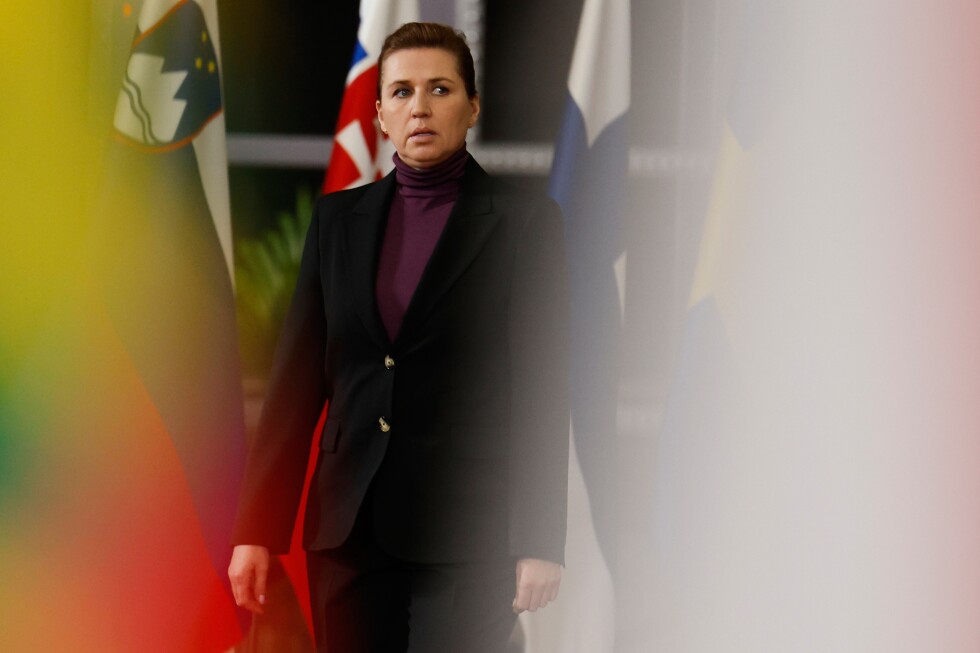
Danish voters will cast their ballots next Tuesday in a general election that could determine Prime Minister Mette Frederiksen’s political future. The vote comes in the wake of a diplomatic crisis with the United States over the status of Greenland, Denmark’s vast Arctic territory.
Frederiksen, who has led the Scandinavian nation since mid-2019, called the snap election last month, seemingly hoping to capitalize on her firm handling of former U.S. President Donald Trump’s ambitions regarding Greenland. If successful, she would secure a third term as prime minister of the NATO and EU member state.
The 48-year-old Social Democratic leader has built a reputation as a strong supporter of Ukraine in its defense against Russia’s invasion and for implementing restrictive immigration policies. While she has seen her domestic support wane amid rising living costs, her popularity experienced a boost during the Greenland crisis earlier this year.
The diplomatic tension peaked in January when Trump briefly threatened to impose tariffs on European nations opposing U.S. control over Greenland. Frederiksen’s defiant response, warning that an American takeover would effectively spell “the end of NATO,” resonated with many Danes. Following Trump’s retreat from tariff threats, the U.S., Denmark, and Greenland began technical discussions on Arctic security arrangements.
“She’s getting a big burst in her poll results on topics like Greenland, relations with the United States, and Ukraine,” noted Kasper Møller Hansen, an election researcher at the University of Copenhagen. “But on domestic issues, she’s being really challenged.”
Denmark’s proportional representation system typically produces coalition governments. The outgoing administration was unusual in that it spanned the political divide, becoming the first in decades to include parties from both left and right.
Frederiksen faces two center-right challengers. Defense Minister Troels Lund Poulsen leads the Liberal party (Venstre), which has headed several recent administrations but has struggled in polls. Meanwhile, the Liberal Alliance, led by 34-year-old Alex Vanopslagh, advocates lower taxes, reduced bureaucracy, and an end to Denmark’s nuclear power ban. However, Vanopslagh’s recent admission of cocaine use during his party leadership may have damaged his prospects.
The anti-immigration Danish People’s Party is poised for a comeback after a poor showing in 2022. Should neither the left-wing nor right-wing blocs secure a working majority, the centrist Moderate party, led by Foreign Minister Lars Løkke Rasmussen, could emerge as kingmaker.
Immigration continues to be a contentious issue in Denmark, which maintains some of Europe’s toughest immigration policies. Citing concerns about potential migration increases due to the Iran conflict, Frederiksen recently proposed an “emergency brake” on asylum applications and stricter controls on criminals without legal residence status. Her government has also presented plans to deport foreigners sentenced to at least one year in prison for serious crimes.
Frederiksen has been among European leaders advocating for “return hubs” outside the EU for rejected asylum seekers. Denmark received only 1,961 asylum applications last year, compared to more than 21,000 in 2015.
Other campaign issues include the cost of living, pensions, and a potential wealth tax. Agriculture has also entered the debate, with the left-wing Alternative party calling for improved animal welfare and an 86% reduction in pig production – a significant proposal in one of the world’s largest pork-exporting nations.
Despite the recent diplomatic tensions, Greenland has not featured prominently in campaign debates. “There’s a huge consensus on our relationship to Greenland and our relationship to foreign powers,” explains Møller Hansen. Within Greenland itself, the election will test Prime Minister Jens-Frederik Nielsen, who has governed for about a year. Recent campaign tensions have exposed cracks in his coalition government.
Danes will elect all 179 seats in the Folketing, Denmark’s single-chamber parliament. This includes 175 lawmakers from Denmark proper and two each from Greenland and the Faroe Islands, Denmark’s other semi-autonomous territory. More than 4.3 million citizens are eligible to vote, with traditionally high turnout expected – the 2022 election saw 84.2% participation.
Fact Checker
Verify the accuracy of this article using The Disinformation Commission analysis and real-time sources.

20 Comments
This election will test whether Frederiksen’s handling of the Greenland situation and her Ukraine policy can offset public discontent over economic challenges. It will be a close-watched race.
Absolutely. The interplay between foreign policy, national security, and domestic economic issues will be a key dynamic to follow. Voters will have a lot to weigh as they head to the polls.
The Greenland dispute was an unusual episode, but I doubt it will be the defining issue in this election. Danes will probably focus more on bread-and-butter economic matters in the voting booth.
That’s a fair assessment. While the Greenland situation generated headlines, it may not have the staying power to be the central focus of the campaign.
Denmark’s close ties to the US and NATO will likely be a factor, especially with the Ukraine war ongoing. Frederiksen’s support for Ukraine could play well, but economic pressures may prove more decisive.
Good point. Denmark’s foreign policy and security stance will be scrutinized, but cost-of-living concerns could still end up being the deciding issue for many voters.
The Greenland dispute with the US was certainly a high-profile event, but I suspect most Danish voters will be more focused on bread-and-butter economic concerns in this election.
That’s a fair point. While foreign policy and national security can’t be ignored, pocketbook issues like the cost of living are likely to be the top priority for many voters.
Interesting to see how the Greenland issue shapes this election, but I suspect economic concerns will ultimately carry more weight with Danish voters. It will be a close-watched race.
Agreed. While the Greenland dispute generated headlines, the public’s focus is likely to be more on domestic economic challenges. It will be fascinating to see how that plays out at the ballot box.
The Greenland dispute with the US was certainly a high-profile event, but I suspect Danish voters will be more concerned with the cost-of-living crisis and economic pressures facing the country.
That’s a fair assessment. While geopolitics can’t be ignored, pocketbook issues are likely to be the overriding concern for most Danish voters in this election.
It will be fascinating to see if Frederiksen’s strong stance on Greenland boosts her chances, or if the public is more focused on bread-and-butter economic matters. This election bears watching closely.
Absolutely. The interplay between foreign policy, security, and domestic economic issues will be a key dynamic to follow. Voters will have a lot to weigh as they head to the polls.
Interesting to see how the Greenland dispute shapes this election in Denmark. It will be telling to see if Frederiksen’s handling of that situation bolsters her position or if economic concerns take precedence.
Agreed, the Greenland issue seems to have become a key political flashpoint. It will be fascinating to see how Danish voters weigh that against other pressing domestic matters.
This election will test whether Frederiksen’s handling of the Greenland issue and her Ukraine policy resonate more than domestic economic challenges. It will be an interesting barometer of Danish priorities.
Agreed, the interplay between foreign policy, national security, and pocketbook issues will be pivotal. Voters will have to weigh those factors carefully.
Denmark’s relationship with the US and NATO is clearly an important consideration, but I suspect kitchen-table concerns will ultimately be the deciding factor for most Danes in this election.
That’s a fair assessment. While geopolitics can’t be ignored, the economy and cost-of-living pressures are likely to be the dominant issues driving voter behavior.