


Listen to the article
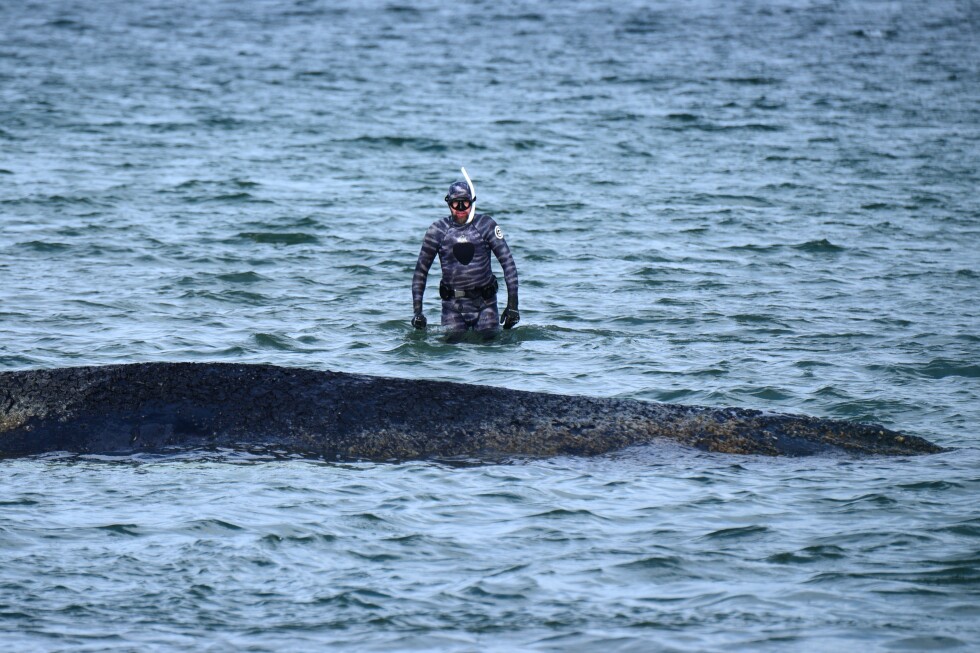
A whale that was stranded for days in shallow water at a Baltic Sea resort in Germany has successfully freed itself from a sandbank following intensive rescue efforts, officials reported Friday. However, marine experts warn the animal still faces significant challenges ahead.
The 12-15 meter (39-49 feet) whale managed to swim through an escape channel dug by an excavator on Thursday, according to marine biologist Robert Marc Lehmann. The operation represented a crucial breakthrough after multiple failed rescue attempts throughout the week.
“This is only a small step in the right direction,” Lehmann told German news agency dpa, emphasizing that the whale would only truly be safe once it reaches the Atlantic Ocean – a journey of several hundred kilometers through German and Danish waters.
The marine mammal was first discovered stuck on an underwater sandbank in Timmendorfer Strand, a popular German coastal resort town, on Monday morning. Initial rescue attempts proved unsuccessful, despite creative efforts from emergency responders.
Coast guard and fire department boats tried creating artificial waves to dislodge the animal, but the Baltic Sea’s lack of strong natural tides complicated these efforts. By Thursday morning, rescuers had escalated their approach, bringing in heavy machinery to create a path to deeper waters.
Excavators worked diligently under Lehmann’s guidance to dig a trench in front of the whale’s head, continuing their efforts until well after sunset. Though they hadn’t completely freed the animal before operations ceased for the night, their work created sufficient conditions for the whale to escape on its own.
Stephanie Gross from the Institute of Terrestrial and Aquatic Wildlife Research confirmed Friday morning that the whale was making its way out of Lübeck Bay, where Timmendorfer Strand is located. The massive mammal, spotted approximately 300 meters (nearly 1,000 feet) from the coastline, was being monitored by a coast guard ship and several accompanying vessels to ensure its continued progress toward open water.
Marine biologists believe the whale is likely a young male, as males typically demonstrate more migratory behavior than females. Experts also noted that this appears to be the same whale that had been repeatedly sighted in recent weeks at the port of Wismar, located east of Timmendorfer Strand.
The unusual presence of this humpback whale in the Baltic Sea has puzzled scientists, as the species is not native to these waters. The circumstances that led to the animal’s appearance in the region and subsequent stranding remain unclear, raising questions about potential navigation errors, food source pursuit, or other environmental factors that may have drawn it off course.
The whale now faces the daunting challenge of navigating through the complex waterways of the Baltic, through Danish straits, and into the North Sea before finally reaching the Atlantic Ocean – its natural habitat. Marine conservation experts express concern about the animal’s ability to complete this journey, particularly after the physical stress of being stranded.
The incident has drawn significant attention from local communities and wildlife protection organizations, highlighting the growing frequency of marine mammals appearing in unexpected locations around European waters. Similar stranding events have been documented with increasing regularity across the continent in recent years, prompting scientists to investigate potential links to changing ocean conditions, shifting prey distributions, or human-related disturbances.
Wildlife authorities will continue monitoring the whale’s progress as it attempts to navigate back to open ocean, though their ability to assist the animal further may be limited once it moves beyond coastal waters.
Fact Checker
Verify the accuracy of this article using The Disinformation Commission analysis and real-time sources.

11 Comments
This is an interesting story about the challenges whales can face when navigating coastal areas. It’s good the whale was eventually able to swim free, but as the article notes, it’s not out of danger yet. I wonder what factors led to it becoming stranded in the first place.
Good point. Whales can easily get disoriented or trapped in shallow waters, especially in areas with heavy human activity. Careful monitoring and quick response from authorities seem crucial in these situations.
The plight of this trapped whale highlights the importance of protecting marine habitats and migratory corridors. While it’s fortunate the rescue efforts succeeded this time, we need to do more to ensure the safety of vulnerable wildlife populations.
This is a reminder of the delicate balance between human activity and the natural world. While it’s great the whale freed itself, we need to be more mindful of the impacts our coastal development and maritime traffic can have on vulnerable marine life.
This story serves as a poignant reminder of the fragility of marine ecosystems and the need for greater protections. While the whale’s escape is a positive outcome, the underlying issues that led to its stranding in the first place must be addressed to prevent similar incidents in the future.
Glad to hear the whale was ultimately able to escape the sandbank, but the article highlights the significant challenges it still faces. Hopefully the marine experts can continue to track its progress and intervene if needed to ensure its safe passage to the open ocean.
Absolutely. Even with the successful escape, the whale’s journey is far from over. It’s critical that conservation efforts continue to monitor the situation and provide support where necessary.
It’s heartening to see the community come together to try and rescue this stranded whale. Even with the successful escape, the journey ahead will be challenging. I hope the whale is able to safely reach the open ocean without further incident.
Me too. Whales face so many threats in our crowded oceans. Continued monitoring and support from marine experts will be crucial as this whale navigates the remaining distance to the Atlantic.
Glad to hear the whale was able to free itself after such a challenging ordeal. Navigating shallow waters can be treacherous for these magnificent creatures. Hopefully it can make its way safely to the open ocean and avoid any further obstacles.
You’re right, it’s a relief the rescue efforts were ultimately successful. Still, the journey ahead will be difficult. I hope marine experts can monitor the whale’s progress and intervene if needed to ensure its safe passage.