


Listen to the article
A massive avalanche of garbage at Indonesia’s largest landfill has claimed at least five lives and left several others missing after heavy overnight rain triggered a catastrophic collapse, officials confirmed Monday.
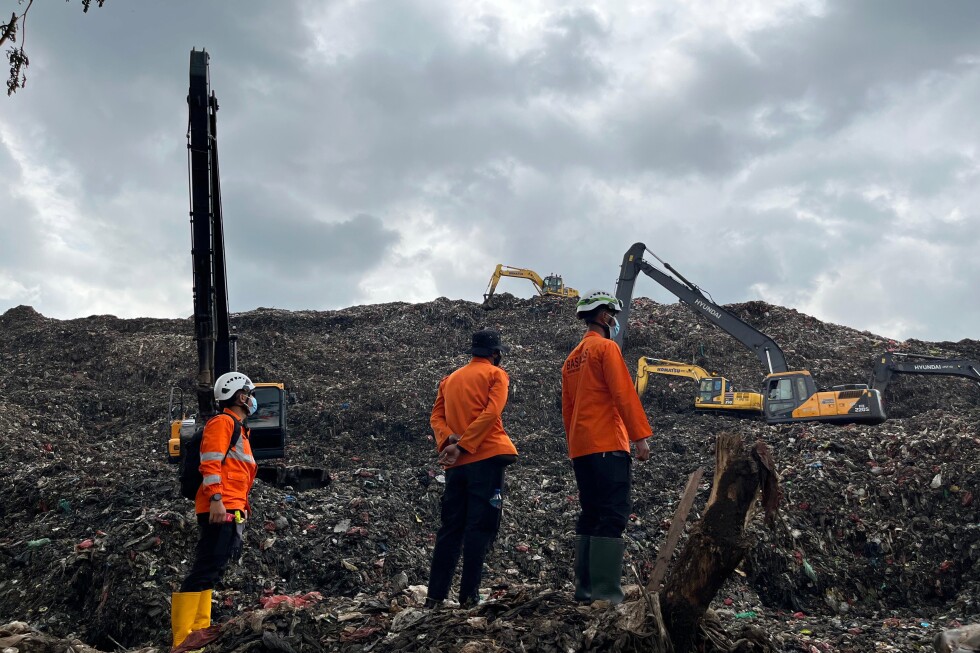
Emergency crews numbering more than 300 search-and-rescue personnel have been working tirelessly at the Bantargebang Integrated Waste Treatment Facility in Bekasi, a city on Jakarta’s outskirts. The teams, equipped with heavy machinery and sniffer dogs, began operations late Sunday and have faced treacherous conditions as they navigate unstable mountains of waste.
“Our rescue teams must proceed with extreme caution due to the unstable nature of the collapsed material,” said Desiana Kartika Bahari, head of Jakarta’s Search and Rescue Office. “The victims identified so far include two garbage truck drivers and two food stall vendors who were working or resting near the landfill when the collapse occurred.”
Four individuals managed to escape the disaster, but at least three others remain unaccounted for as rescue efforts continue. Authorities have acknowledged the death toll could rise as operations proceed.
“We have not ruled out the possibility of more victims,” Bahari said. “We are still gathering data to confirm how many vehicles and workers were caught beneath the debris.”
The National Search and Rescue Agency released images showing excavators digging through the collapsed mound, where several garbage trucks and small food stalls lie buried under tons of waste. The unstable conditions have complicated rescue efforts, with officials concerned about the possibility of secondary collapses.
Abdul Muhari, spokesperson for Indonesia’s National Disaster Management Agency, emphasized the need for strict safety protocols during the ongoing search. Weather forecasts indicate potential rainfall across Greater Jakarta over the next 48 hours, raising concerns about further destabilization of the already precarious site.
“The current conditions remain dangerous,” Muhari warned. “Additional ground movement could occur, placing rescue teams at even greater risk.”
The deadly collapse has renewed scrutiny of the Bantargebang facility, which serves as the primary waste disposal site for the greater Jakarta metropolitan area, home to over 30 million people. Environmental experts have long warned that the facility has exceeded its intended capacity, creating dangerous conditions while contributing to significant environmental degradation in surrounding communities.
Indonesia’s waste management challenges mirror those faced by many rapidly developing nations, where infrastructure development has failed to keep pace with population growth and increasing consumption. The Bantargebang facility receives approximately 7,000 tons of waste daily from Jakarta alone, according to government data.
Similar disasters have occurred elsewhere in Southeast Asia. In January, a comparable collapse at a landfill in the Philippines killed at least four people and left more than 30 others missing. Indonesia itself has experienced such tragedies before – in 2005, 31 people died and dozens disappeared after a 23-foot rubbish dump collapsed following heavy rain near Bandung, burying or damaging 60 houses in two West Java villages.
Late last year, the Indonesian government announced a two-year deadline to address the Bantargebang crisis through an accelerated waste-to-energy project. The initiative, backed by new presidential regulations designed to streamline licensing and encourage investment, aims to convert refuse into electrical or thermal energy while reducing the nation’s over-reliance on open dumping sites.
Environmental advocates have cautiously welcomed these initiatives while emphasizing the need for comprehensive waste reduction strategies, including improved recycling infrastructure and public education campaigns to address Indonesia’s growing waste management crisis at its source.
As rescue operations continue in Bekasi, the tragedy has highlighted the urgent need for sustainable waste management solutions in one of Asia’s most populous nations.
Fact Checker
Verify the accuracy of this article using The Disinformation Commission analysis and real-time sources.

24 Comments
Production mix shifting toward World might help margins if metals stay firm.
The cost guidance is better than expected. If they deliver, the stock could rerate.
Good point. Watching costs and grades closely.
Interesting update on Waste mound collapse at Indonesia’s largest landfill kills at least 5 and leaves several missing. Curious how the grades will trend next quarter.
Good point. Watching costs and grades closely.
Good point. Watching costs and grades closely.
Nice to see insider buying—usually a good signal in this space.
Good point. Watching costs and grades closely.
Good point. Watching costs and grades closely.
Exploration results look promising, but permitting will be the key risk.
Good point. Watching costs and grades closely.
Good point. Watching costs and grades closely.
I like the balance sheet here—less leverage than peers.
Exploration results look promising, but permitting will be the key risk.
Good point. Watching costs and grades closely.
Good point. Watching costs and grades closely.
Production mix shifting toward World might help margins if metals stay firm.
Good point. Watching costs and grades closely.
Good point. Watching costs and grades closely.
Nice to see insider buying—usually a good signal in this space.
Interesting update on Waste mound collapse at Indonesia’s largest landfill kills at least 5 and leaves several missing. Curious how the grades will trend next quarter.
The cost guidance is better than expected. If they deliver, the stock could rerate.
Good point. Watching costs and grades closely.
Good point. Watching costs and grades closely.