


Listen to the article
Lebanese Families Flee Homes as War Displaces One in Seven Residents
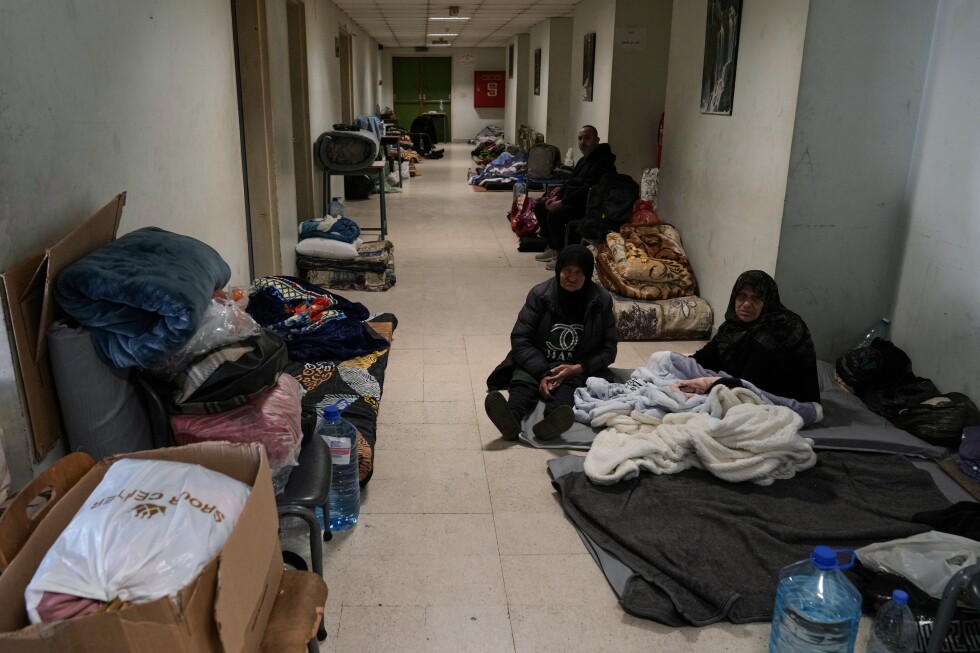
Fatima Nazha and her family spent two nights sleeping on Beirut’s streets after fleeing their home in the southern suburbs following an Israeli evacuation order. With government shelters at capacity and unable to afford alternative accommodation, Nazha eventually found refuge in a makeshift shelter at Lebanon’s largest stadium while her children and grandchildren sought safety near Sidon.
The rapid escalation of hostilities between Israel and Hezbollah has displaced more than 800,000 people in Lebanon in just ten days, according to the Norwegian Refugee Council. This represents approximately one in seven residents of the small Mediterranean country, creating an unprecedented humanitarian challenge.
Lebanon’s government, already struggling with financial constraints, has managed to accommodate only about 120,000 displaced people as it rushes to establish shelters and secure supplies.
“The strikes used to target a specific area, but now they’re hitting all the areas,” said Nazha, who uses a wheelchair and found this displacement far more traumatic than previous conflicts. The evacuation order came so suddenly that many residents, including Nazha, were unable to gather essential belongings before fleeing.
The intensity of the current conflict has shocked many Lebanese. Israel dramatically increased airstrikes on Lebanon after Hezbollah launched rockets into Israeli territory following the killing of Iran’s Supreme Leader Ali Khamenei at the war’s outset.
Most Lebanese had hoped Hezbollah would not respond to the attack on Iran, as the militant group’s support for Hamas in 2023 had already triggered Israeli strikes in Lebanon. The current situation has fueled growing resentment toward Hezbollah across Lebanon’s deeply divided society.
The crisis has created a chaotic housing market. Fearful landlords have hiked rents to discourage potential tenants, while hotels have implemented stricter guest screening after Israeli forces targeted hotel rooms allegedly housing Iranian Revolutionary Guard members operating in Beirut.
Many displaced people without financial resources or family connections have resorted to sleeping in cars or makeshift tents around central Beirut. Even these impromptu shelters proved dangerous when an overnight Israeli strike hit Beirut’s Ramlet el-Bayda neighborhood, killing at least eight people and wounding more than 30 others in an area where many displaced people had sought refuge.
“The needs are escalating much faster than our capacity to respond,” warned Mathieu Luciano, head of the International Organization for Migration in Lebanon, during a recent press briefing. Humanitarian organizations, already underfunded after years of regional crises, are struggling to meet the growing demand.
The Lebanese government has converted the country’s largest sports stadium into a shelter housing over 800 people, including Nazha and her husband. While the facility has basic toilets and sinks, it lacks showers and has only intermittent electricity.
“It’s not enough that they bring us food. A tin of sardines or a loaf of bread or a gallon of water, that’s not enough,” Nazha explained from her foldout bed at the stadium. Outside in the parking lot, children played soccer as Israeli drones buzzed overhead and explosions echoed from nearby neighborhoods.
Naji Hammoud, who oversees sporting facilities for the Lebanese Youth and Sports Ministry, described the situation as “a race against time” as workers and volunteers rush to erect more tents.
The speed of displacement has caught many off guard. During the previous conflict, over a million people were displaced, but that occurred gradually over a year of escalating hostilities. This time, mass displacement happened within days as Israel issued evacuation notices for dozens of villages south of the Litani River, followed by warnings to evacuate Dahiyeh, the densely populated Shiite suburbs on Beirut’s southern edge.
Major roads leading to the capital quickly became gridlocked as people desperately sought safety. “We were on the road for two days until we found this place here that accepted us,” said Seganish Gogamo, an Ethiopian worker who fled the southern city of Nabatieh and found shelter in a Beirut church hosting migrant workers.
With approximately 100,000 Israeli troops positioned along the UN-mandated Blue Line separating the two countries, many fear a ground invasion is imminent. The conflict shows no signs of resolution, raising concerns it could continue beyond the broader regional war.
Joe Sayyah, who initially remained in his Christian border village of Alma al-Shaab, finally fled after his friend was killed by an Israeli drone strike. Despite appeals to the Vatican and the United States claiming their village had no military presence, residents realized they needed to evacuate.
“This time around, there’s a huge possibility we may not be able to go back to our village,” Sayyah said after reaching relative safety in Beirut’s northern outskirts, a sobering acknowledgment that the current conflict might permanently alter Lebanon’s demographic landscape.
Fact Checker
Verify the accuracy of this article using The Disinformation Commission analysis and real-time sources.

11 Comments
This is a concerning development in the ongoing conflict. The scale of displacement is staggering, and the strain on Lebanon’s infrastructure and resources must be immense. I hope aid agencies can quickly mobilize to provide emergency shelter, food, and medical care to the displaced population.
This is a devastating situation for the people of Lebanon. Displacement on such a massive scale will put immense strain on the country’s resources and infrastructure. Aid groups will need to coordinate closely with the government to provide urgent humanitarian assistance to those affected.
Agreed, this crisis requires a swift and comprehensive international response. The Lebanese people deserve our support during this difficult time.
This is a deeply concerning situation. The scale of displacement in Lebanon is staggering, and the humanitarian crisis that is unfolding will require a robust international response. I hope that diplomatic efforts can bring about a ceasefire and enable displaced families to return home safely.
The situation in Lebanon is truly dire. Seeing one in seven residents forced to flee their homes is a harrowing statistic. I hope the international community can come together to provide the necessary humanitarian assistance and put diplomatic pressure on all sides to achieve a ceasefire.
Agreed, this crisis demands a robust and coordinated international response. The people of Lebanon are suffering, and they need our support to weather this storm.
The displacement of nearly a million Lebanese people is an alarming development. This conflict is causing immense hardship for families who have been forced to leave their homes. I hope that a ceasefire can be achieved soon to allow displaced people to return home and begin the process of rebuilding their lives.
Agreed, the priority now must be on providing urgent humanitarian aid and finding a political solution to end the violence. The people of Lebanon deserve stability and peace after enduring so much upheaval.
This is a devastating humanitarian crisis unfolding in Lebanon. The rapid escalation of hostilities has led to mass displacement on an unprecedented scale. I hope the Lebanese government and aid agencies can work quickly to provide shelter, food, and medical care to those who have been forced to flee their homes.
It’s heartbreaking to see families forced to flee their homes so suddenly. The speed at which this conflict has escalated is truly alarming. I hope the international community can come together to facilitate a ceasefire and enable displaced people to return home safely.
Absolutely, a political resolution is urgently needed to stop the violence and allow humanitarian aid to reach those in need. The people of Lebanon deserve stability and peace.