


Listen to the article
As Olympic skiers compete in Cortina d’Ampezzo, they’re witnessing firsthand the alarming retreat of glaciers that once dominated the Italian Alps. Top athletes including Lindsey Vonn, Mikaela Shiffrin, and Italy’s Federica Brignone have raised urgent concerns about climate change’s impact on their sport and the mountain environments they cherish.
“Most of the glaciers that I used to ski on are pretty much gone,” said 41-year-old Vonn during a press conference before she crashed on the Olympic downhill course. Her observation echoes a sobering reality in the Dolomites, where glaciers visible from Olympic host city Cortina have dramatically shrunk, with many reduced to tiny patches of ice at high elevations.
The transformation is particularly poignant in Cortina, where any spectator hoping to see a major glacier would need to make a lengthy drive to the Marmolada, itself rapidly diminishing. According to Italian glaciologist Antonella Senese, Italy has lost more than 200 square kilometers (77 square miles) of glacier area since the late 1950s.
“We are observing a continuous and uninterrupted decrease in glacier area and volume. In the last one to two decades, this reduction has clearly accelerated,” explained Senese, associate professor at the University of Milan’s environmental science department.
The glaciers surrounding Cortina on the Cristallo and Sorapiss mountains have shrunk by approximately one-third since the early 1960s, according to the 2015 New Italian Glacier Inventory. These changes are reshaping not just the landscape but the sport of skiing itself.
Shiffrin, who became the first American skier to win three Alpine gold medals with her emotional slalom victory, expressed grave concerns about the future. “It is something that’s very close to our heart, because it is the heart and soul of what we do,” she told AP. “I would really like to believe and hope that with strong voices and broader policy changes within companies and governments, there is hope for a future of our sport. But right now, it’s a little bit of a question.”
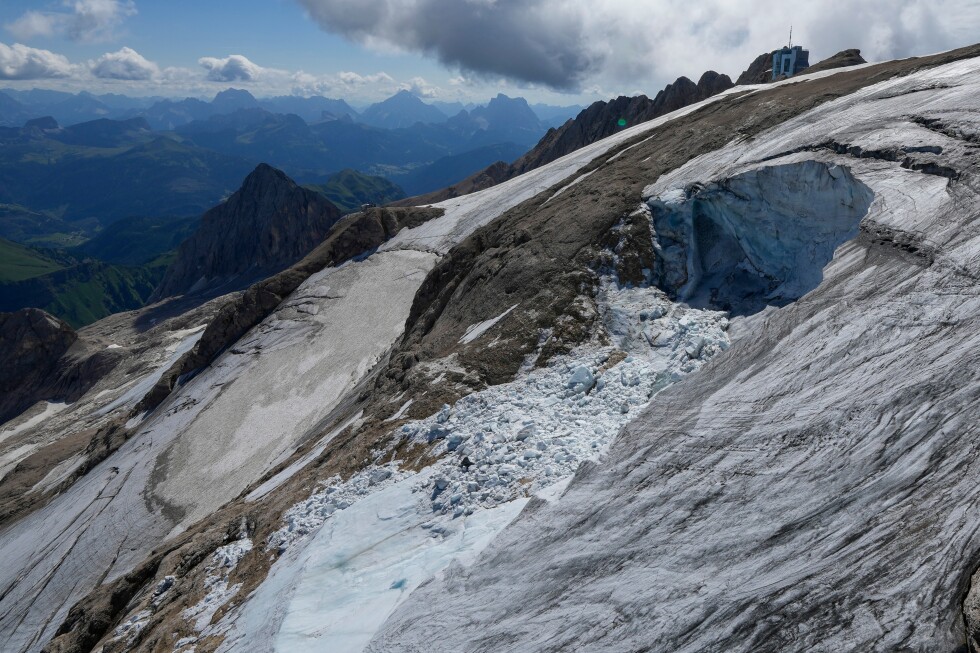
The situation is particularly dire at the Marmolada glacier, located about 50 kilometers from Cortina. In July 2022, a massive chunk of this glacier detached, causing an avalanche that killed 11 hikers. The University of Padua reported in 2023 that the glacier had been halved over 25 years. According to projections from the Goodbye Glaciers Project, it’s expected to be mostly gone by 2034 if global warming reaches 2.7 Celsius.
The stakes extend far beyond winter sports. Glacier loss threatens water sources, increases mountain hazards, and contributes to sea level rise. Patrick Schmitt, a doctoral student at the University of Innsbruck, notes that limiting warming to 1.5 C—the international goal—could extend the Marmolada glacier’s life by another six years and save around 100 glaciers in the Alps.
“Cutting greenhouse gas emissions now will reduce future ice loss and soften the impacts on people and nature,” Schmitt emphasized. “The choices we make in this decade will decide how much ice remains in the Dolomites, across the Alps, and around the world.”
The concern among Olympic athletes crosses national boundaries. Israel’s Noa Szollos, Finland’s Silja Koskinen, and Team USA’s AJ Hurt all described witnessing the glaciers’ decline firsthand. Hurt noted how each season in Austria begins with less snow: “Every year, I feel like we come and there’s a little less snow… It is really sad and it’s hard to ignore in this sport, definitely, when we’re around it so much and it is so clear.”
Norwegian skier Nikolai Schirmer is leading efforts to stop fossil fuel companies—the largest contributors to climate change—from sponsoring winter sports. Meanwhile, American skier River Radamus believes athletes must be environmental stewards: “It’s always present in our mind that we’re on a dangerous trend unless we do something right.”
As global ice loss has exceeded 7 trillion tons since 2000, the list of potential Winter Olympics host locations is projected to shrink substantially in coming years—a stark reminder that what’s happening in Cortina reflects a worldwide crisis requiring urgent action.
Fact Checker
Verify the accuracy of this article using The Disinformation Commission analysis and real-time sources.

14 Comments
As an avid skier, I’m saddened to learn about the disappearance of glaciers that these Olympic athletes have witnessed firsthand. It’s a stark reminder of the devastating impacts of climate change on our natural landscapes.
I agree. It’s heartbreaking to see these iconic glaciers shrinking at such an alarming rate. We must heed the warnings from these athletes and work together to protect our mountain environments for future generations.
It’s disheartening to hear that the glaciers in the Italian Alps have shrunk so dramatically. These natural wonders are an important part of the local ecosystem and a beloved destination for outdoor enthusiasts. I appreciate the athletes for using their platform to raise awareness about this pressing environmental concern.
Absolutely. As athletes who depend on these environments, their perspectives carry a lot of weight. I hope their warnings inspire policymakers and the public to prioritize conservation and climate action to protect these precious glaciers.
The receding glaciers in the Dolomites are a sobering reminder of the real-world impacts of climate change. I’m grateful to the Olympic skiers for speaking out and drawing attention to this issue. We must heed their warnings and take urgent steps to address the root causes of global warming.
The shrinking of glaciers in the Dolomites is a stark reminder of the far-reaching consequences of climate change. I commend the Olympic skiers for using their platforms to sound the alarm and call for urgent action to address this pressing environmental issue.
The shrinking of glaciers in the Italian Alps is a clear sign of the climate crisis we’re facing. I’m glad to see high-profile athletes like Vonn, Shiffrin, and Brignone using their platforms to raise awareness about this critical issue.
It’s concerning to hear about the rapid retreat of glaciers in the Italian Alps. These natural wonders are so important for the environment and local communities. I hope the athletes’ warnings help raise awareness and spur meaningful climate action.
Absolutely. Preserving these glaciers is crucial for the future of winter sports and the overall health of mountain ecosystems. We need to take urgent steps to address the root causes of climate change.
The observations made by these Olympic skiers are a stark reminder of the urgency of the climate crisis. Glaciers are vital to the health of mountain environments, and their disappearance is a profound loss. I hope their voices help spur meaningful action to address this issue.
It’s troubling to hear that the glaciers in the Dolomites have diminished so drastically over the past decades. As a lover of the outdoors, I’m worried about the broader ecological consequences of this glacial retreat. We need to act now to protect these precious natural resources.
I agree. The loss of these glaciers will have far-reaching impacts, not just on winter sports but on the entire mountain ecosystem. We must listen to the concerns of these athletes and work towards sustainable solutions to address climate change.
It’s heartbreaking to hear about the dramatic loss of glaciers in the Italian Alps, a region that has long been a hub for winter sports and outdoor recreation. The firsthand accounts from these elite athletes underscores the urgent need for action to combat climate change and protect our natural environments.
Absolutely. These athletes are on the frontlines of witnessing the devastating impacts of climate change. Their voices are crucial in driving awareness and catalyzing meaningful change to preserve these fragile mountain ecosystems for future generations.