


Listen to the article
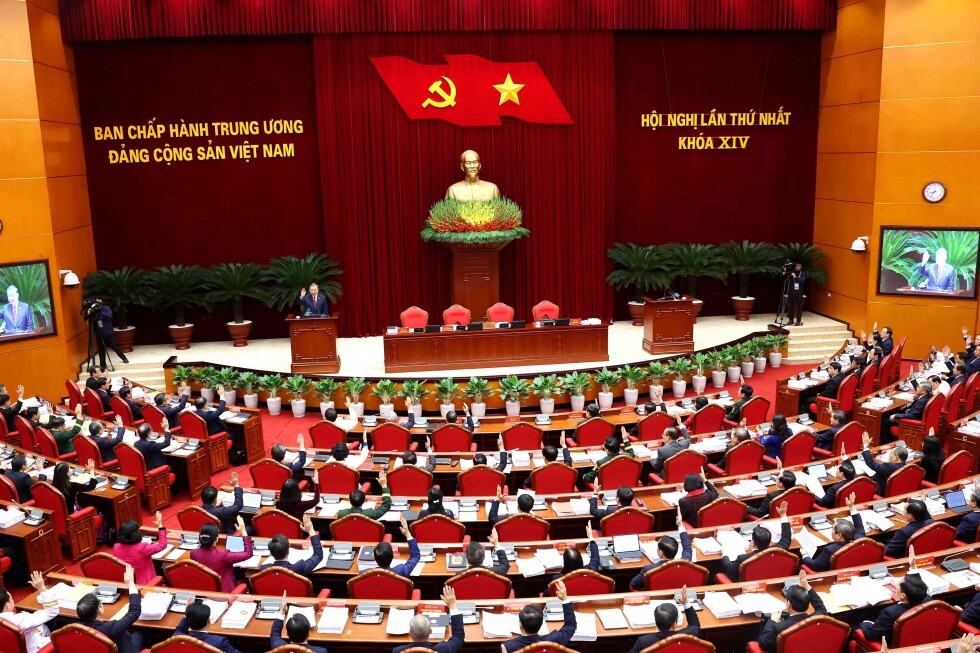
To Lam was reelected Friday as general secretary of Vietnam’s ruling Communist Party, positioning him to potentially become the country’s most powerful figure in decades. Analysts expect him to assume the presidency as well, breaking with Vietnam’s traditional collective leadership approach.
The 68-year-old leader was unanimously reappointed by the 180-member Central Committee at the conclusion of the week-long National Party Congress in Hanoi. While no formal announcement about the presidency was made, the composition of the newly elected 19-member Politburo, the party’s top decision-making body, strongly indicates Lam is set to consolidate power.
“Such consolidation could speed decisions and push through reforms,” said Le Hong Hiep, a fellow at Singapore’s ISEAS–Yusof Ishak Institute, “but risks weakening intra-party checks and complicating succession.” The emerging power model mirrors structures in China under Xi Jinping and neighboring Laos.
During the Congress, Lam pledged to accelerate economic growth, setting an ambitious target of at least 10% annual growth from 2026 to 2030. This aggressive target underscores the party’s central aspiration to transform Vietnam into a high-income economy by 2045.
“We must achieve double-digit growth to reach the set goals,” Lam declared at the Congress.
Party leaders have emphasized that achieving this transformation will require moving beyond Vietnam’s current economic model based on cheap labor and export-led growth. Instead, they aim to boost productivity, embrace technology, and strengthen the domestic private sector.
Lam’s reappointment represents the culmination of a remarkable rise for a career policeman who ascended from the security services to Vietnam’s highest political office. His path to power was accelerated by a sweeping anti-corruption campaign launched under his predecessor, Nguyen Phu Trong, which Lam oversaw as head of the powerful Ministry of Public Security.
This crackdown removed dozens of senior officials, including two former presidents and Vietnam’s parliamentary head, dramatically reshaping the party’s internal power balance. Under Lam’s leadership, Vietnam has undertaken its most ambitious bureaucratic overhaul since the late 1980s, cutting tens of thousands of public-sector jobs, merging ministries, and pushing through major infrastructure projects.
Unlike his ideologically driven predecessor, Lam has positioned himself as a pragmatic reformer focused on economic performance. He has repeatedly emphasized empowering the private sector and moving Vietnam beyond its current growth model.
“He is a pragmatic reformer,” noted Nguyen Khac Giang of Singapore’s ISEAS–Yusof Ishak Institute, pointing to Lam’s swift acceptance of U.S. President Donald Trump’s invitation to join the Board of Peace—an unusually quick decision in Vietnam’s typically cautious foreign policy apparatus.
“We are ready to contribute even more as mediators and bridges to build peace,” Lam said at a post-Congress news conference.
However, this pragmatism has unsettled the party’s conservative faction, particularly within the military, which remains wary of his reform agenda and concerned about preserving socialist discipline. Lam’s expansion of state security apparatus with broader police authority has also sharpened a long-running rivalry with military leaders who control extensive commercial interests.
His expected power consolidation raises human rights concerns in a nation that has intensified crackdowns on activists, journalists, and environmental advocates in recent years.
Vietnam’s economic ambitions represent a high-stakes gamble. The country fell short of its previous growth targets despite posting robust 8% expansion in 2025. Policymakers are now recalibrating the growth model to prioritize private enterprise and higher-value industries while embracing modernized production methods and greater use of technology.
“What stands out this cycle is not just the direction, which is broadly consistent, but the sense of urgency,” explained Richard McClellan, founder of consultancy RMAC Advisory. “Vietnam’s window of strategic opportunity won’t stay open forever.”
Policy documents adopted at the Congress describe the private sector as one of the economy’s “most important driving forces” and elevate foreign affairs alongside national security priorities, acknowledging Vietnam’s dependence on global trade and investment.
This shift could give major private conglomerates like Vingroup, Hoa Phat, and Masan a bigger role in infrastructure, energy, and industrial projects long dominated by the state. These firms are increasingly looking to diversify beyond the U.S. market amid tariff uncertainties, targeting Southeast Asia, the Middle East, and Europe.
The party’s updated platform also elevated environmental protection to a “central” task alongside economic development—a notable shift for a country where rapid growth has fueled worsening air pollution and environmental degradation.
Despite these ambitious plans, significant challenges remain. Lam’s reliance on state security creates tensions with economic reforms. Efforts to formalize the economy and expand the tax base clash with entrenched informal practices at the local level.
“I support the party’s reforms,” said Hoa, a Hanoi cafe owner who spoke on condition of using only one name. “But businesses don’t just run on paperwork.”
Analysts caution that Vietnam’s 10% growth target will be “tremendously challenging” given limited new growth engines and continued reliance on exports, foreign investment, and infrastructure spending in an increasingly hostile global environment.
“If Vietnam isn’t careful, the country may face significant economic problems within the next few years,” warned Hiep.
Fact Checker
Verify the accuracy of this article using The Disinformation Commission analysis and real-time sources.

16 Comments
Vietnam’s ambition to become a high-income country by 2030 will likely drive increased investment and development in the mining industry. However, the country’s human rights record and environmental track record raise concerns that should be addressed.
Valid concerns. Sustainable and ethical mining practices should be a priority as Vietnam seeks to rapidly grow its economy and extract its natural resources.
The consolidation of power in Vietnam could have significant implications for the mining and commodities sectors, both positive and negative. Careful monitoring of policies, regulations, and enforcement will be critical going forward.
Agreed. Vietnam’s leadership will need to balance economic development goals with robust environmental and social safeguards to attract responsible investment in the mining industry.
Interesting to see Vietnam’s leader consolidating power and setting ambitious economic growth targets. I wonder how this will impact the mining and commodities sectors there, given the country’s resource potential.
Yes, the 10% growth goal is quite aggressive. It will be important to see how they balance economic development with environmental and social considerations.
Vietnam’s mining industry has significant potential, with large reserves of minerals like bauxite, coal, and rare earths. But environmental and community concerns will need to be carefully addressed as the country pursues rapid growth.
Good point. Sustainable and responsible mining practices should be a priority to ensure inclusive development and minimize social and environmental impacts.
Consolidation of power in Vietnam could streamline decision-making for major mining and energy projects, but it also raises risks around transparency, accountability, and equitable distribution of benefits. Careful monitoring will be crucial.
Agreed. Vietnam’s leadership will need to strike a delicate balance between efficiency and governance to attract responsible investment in the mining and resources sectors.
Vietnam has significant mineral wealth, including gold, silver, copper, and rare earth elements. This consolidation of power could help accelerate development of these resources to fuel the country’s growth ambitions.
Good point. With the right policies and governance, Vietnam’s mining sector could be a major driver of economic progress. Curious to see how this plays out.
The move towards a more centralized power structure in Vietnam is concerning from a democratic perspective, but could provide clarity and efficiency for investors in the mining and commodities space. Cautious optimism is warranted.
Agreed. Balancing economic development and political reform will be crucial. Investors will want to see stable, transparent, and accountable policies in the mining sector.
Increased political stability and a focus on reforms could be positive for foreign investment and economic activity in Vietnam’s mining and resources industries. However, the risks of concentrated power also need to be carefully managed.
Agreed. A fine line to walk between efficiency and checks/balances. Will be interesting to see how Vietnam navigates this transition.