


Listen to the article
Hundreds of political prisoners in Venezuela, including opposition leaders, journalists, and human rights activists, may soon be freed under a newly announced amnesty bill. Acting President Delcy Rodríguez unveiled the plan on Friday, marking the latest concession since the January 3 capture of former leader Nicolás Maduro by the United States.
Rodríguez addressed a gathering of government officials, stating that the National Assembly, which remains under ruling party control, would promptly take up the legislation. “May this law serve to heal the wounds left by the political confrontation fueled by violence and extremism,” she said during a pre-recorded televised event. “May it serve to redirect justice in our country, and may it serve to redirect coexistence among Venezuelans.”
According to Rodríguez, the amnesty would cover what she described as the “entire period of political violence from 1999 to the present.” However, she specified that individuals incarcerated for murder, drug trafficking, corruption, or human rights violations would not qualify for relief under the proposed law.
In addition to the amnesty bill, Rodríguez announced the closure of El Helicoide prison in Caracas, a facility notorious for documented cases of torture and human rights abuses. The prison will reportedly be transformed into a center for sports, social activities, and culture.
Foro Penal, Venezuela’s leading prisoner rights organization, estimates that 711 political prisoners are currently held in Venezuelan detention facilities. Of these, 183 have already been sentenced, according to the group’s data. The organization’s head, Alfredo Romero, expressed cautious optimism about the proposed legislation.
“A General Amnesty is always welcome as long as its elements and conditions include all of civil society, without discrimination, that it does not become a blanket of impunity, and that it contributes to the dismantling of the repressive apparatus of political persecution,” Romero stated in a social media post.
Among the prominent detainees are former lawmaker Freddy Superlano, attorney Perkins Rocha, and Juan Pablo Guanipa, a former governor and close ally of opposition leader María Corina Machado. Many were detained following Venezuela’s contentious 2024 election, which was widely criticized by international observers.
Machado, a Nobel Peace Prize laureate and opposition leader, suggested that the announced reforms were not voluntary but rather “in response to pressure from the US government.” She highlighted the severity of political detention in Venezuela, noting that people have been held for periods ranging from one month to as long as 23 years solely for their political activities.
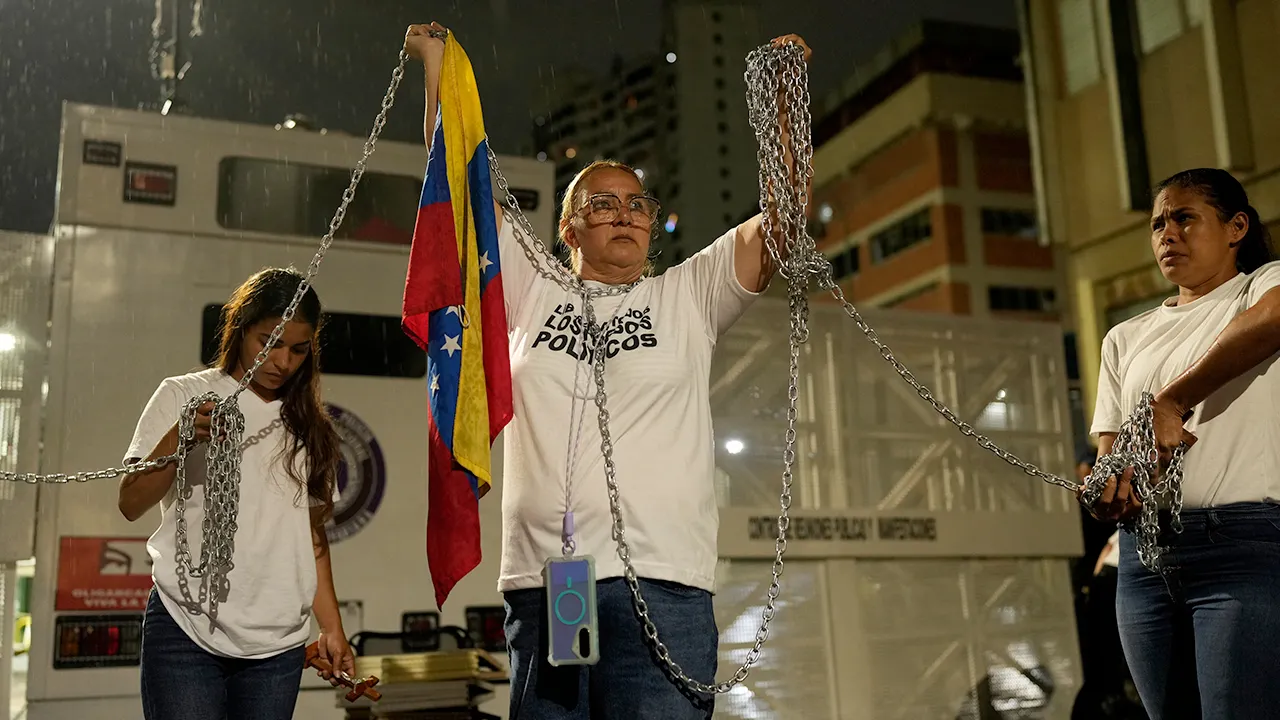
Relatives of some prisoners gathered outside El Helicoide to livestream Rodríguez’s announcement, reflecting the widespread impact of political imprisonment on Venezuelan families. The scene underscored the personal toll of the country’s political crisis, which has seen hundreds detained for opposing the government.
Friday’s developments were followed by an announcement from the U.S. Embassy in Venezuela confirming that “all known U.S. citizens held in Venezuela” had been released. “Should you have information regarding any other U.S. citizens still detained, please contact American Citizen Services,” the embassy stated on social media.
The amnesty proposal comes amid significant political upheaval in Venezuela following Maduro’s capture by U.S. authorities. Rodríguez, who has assumed the role of acting president, has made several concessions in what appears to be an effort to stabilize the government and potentially improve relations with the United States and other international actors.
The political situation in Venezuela remains fluid, with questions about whether the proposed amnesty will be implemented as described and how comprehensively it will address the country’s substantial number of political detainees. Human rights organizations continue to monitor developments closely, maintaining pressure for the release of all those imprisoned for political reasons.
Fact Checker
Verify the accuracy of this article using The Disinformation Commission analysis and real-time sources.

6 Comments
While the amnesty bill is a positive step, it’s important that it is implemented fairly and transparently. Excluding individuals accused of serious crimes like murder and human rights abuses is a prudent measure.
I’m curious to see how this amnesty bill will be received by the international community. It could be an opportunity for Venezuela to demonstrate its commitment to reconciliation and the rule of law.
The closure of El Helicoide prison is also noteworthy. This facility has been notorious for its poor conditions and alleged human rights abuses. Shutting it down could signal a shift in the government’s approach to detention and justice.
This is a complex issue with significant implications for Venezuela’s political landscape. I hope the amnesty bill is a genuine attempt to heal the country’s divisions and not just a symbolic gesture.
The fate of Venezuela’s political prisoners has long been a point of contention. This amnesty bill could be a meaningful step towards addressing their plight, but the details will be crucial.
This is a significant move by the Venezuelan government to address the longstanding political tensions in the country. Releasing political prisoners could help ease the divisions and pave the way for more constructive dialogue.