


Listen to the article
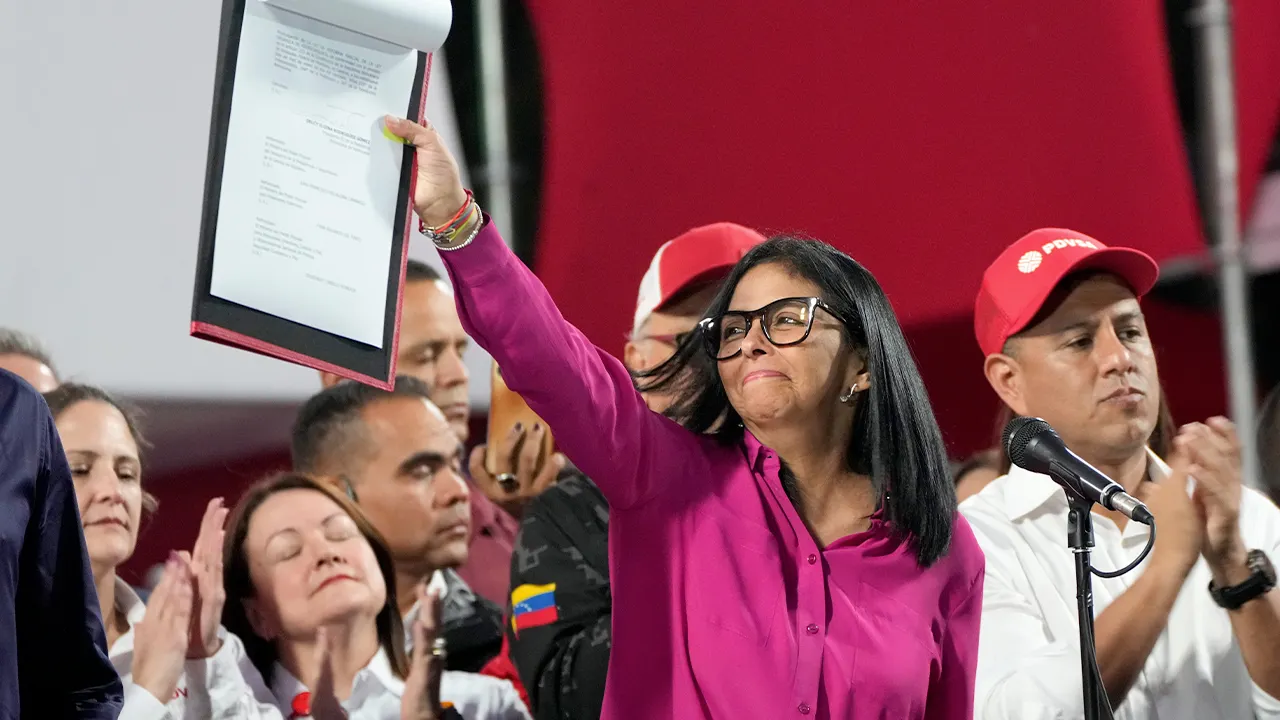
Venezuela’s acting President Delcy Rodriguez has signed a landmark law that fundamentally reshapes the nation’s oil sector by opening it to privatization, marking a dramatic reversal of socialist economic policies that have defined the country for more than two decades.
The reform, enacted less than a month after the U.S. capture of former leader Nicolás Maduro, dismantles the monopoly held by state-owned Petróleos de Venezuela SA (PDVSA) over oil production, sales, and pricing. The move comes amid significant pressure from the Trump administration, which has been eyeing Venezuela’s vast oil reserves—the largest crude oil deposits in the world.
“We’re talking about the future. We are talking about the country that we are going to give to our children,” Rodriguez said while presenting the reform.
The newly signed legislation permits private companies to assume complete management of oil activities “at their own expense, account, and risk” after demonstrating financial and technical capabilities through business plans approved by Venezuela’s Oil Ministry. While private entities gain unprecedented operational control, the government will retain authority over hydrocarbon reserves.
Critically, the law introduces independent arbitration for disputes, removing the requirement that disagreements be settled in Venezuelan courts controlled by the ruling party. It also modifies the tax structure, establishing a royalty cap rate of 30 percent.
The policy shift represents a pragmatic approach to attract the foreign investment needed to revitalize Venezuela’s deteriorating oil infrastructure. Earlier this month, President Donald Trump hosted nearly two dozen top oil and gas executives at the White House, where he announced that American energy companies will invest $100 billion to rebuild what he described as Venezuela’s “rotting” oil infrastructure and boost production to record levels.
On the same day, Trump signed an executive order titled “Safeguarding Venezuelan Oil Revenue for the Good of the American and Venezuelan People,” which prevents U.S. courts from seizing Venezuelan oil revenues held in American Treasury accounts.
The restructuring of Venezuela’s oil sector reflects the new geopolitical reality following Maduro’s capture. President Trump and Secretary of State Marco Rubio reportedly spoke with Rodriguez on Thursday, just one day after Rubio explained to senators the administration’s plans for handling the sale of tens of millions of barrels of Venezuelan oil.
“What we hope to do is transition to a mechanism that allows that to be sold in a normal way, a normal oil industry, not one dominated by cronies, not one dominated by graft and corruption,” Rubio stated at a Senate hearing on Wednesday.
The Secretary outlined a unique oversight arrangement where the U.S. would retain control over oil revenue while Venezuela submits monthly budgets detailing funding needs. The funds would then be transferred to an account under U.S. oversight. Rubio emphasized that while the money would not be directly in U.S. hands, Washington would control its disbursement to ensure it benefits the Venezuelan people rather than being lost to corruption.
The transformation of Venezuela’s oil sector represents a pivotal moment for a nation that has struggled with economic collapse despite possessing the world’s largest proven oil reserves. Years of mismanagement, corruption, and underinvestment under socialist policies led to a catastrophic decline in production capacity from PDVSA, once among the world’s premier oil companies.
The Trump administration had previously imposed sanctions on Venezuela’s oil industry to pressure the Maduro regime, but is now easing restrictions following his capture. This policy shift aims to leverage American energy expertise to help restore Venezuela’s production capabilities while ensuring transparency in revenue management.
For many Venezuelans, the reform represents hope for economic revival after years of hyperinflation and shortages of basic goods. However, the dramatic ideological shift away from state control—a cornerstone of the socialist revolution initiated by Hugo Chávez and continued by Maduro—signals a new chapter in the country’s political economy, one more aligned with market principles and foreign investment.
Fact Checker
Verify the accuracy of this article using The Disinformation Commission analysis and real-time sources.

13 Comments
This is a significant shift in Venezuela’s economic model, and it will be crucial to see how it impacts the country’s oil production, revenue, and overall economic recovery efforts. The role of international actors like the US will be key to watch.
The ability of private companies to manage oil activities ‘at their own expense, account, and risk’ is an interesting development. It will be important to see how this translates to actual on-the-ground operations and changes in the industry.
Venezuela’s oil reforms are a dramatic departure from the socialist policies that have defined the country for decades. The move towards privatization is likely driven by economic necessity, but the risks and rewards remain to be seen.
Venezuela’s oil reforms highlight the complex interplay between domestic politics, economic pressures, and global geopolitical forces. The country’s ability to balance these competing interests will be crucial for its future stability and development.
While the privatization of Venezuela’s oil industry may attract foreign investment, it also raises concerns about the country’s ability to maintain control over its natural resources. The balance between economic necessity and national sovereignty will be a delicate one to strike.
This restructuring of Venezuela’s oil industry highlights the complex interplay between domestic politics, economic pressures, and global geopolitical forces. It will be crucial to monitor how this shift impacts the country’s economic recovery and its relationship with the US and other international actors.
The government’s retention of authority over hydrocarbon reserves suggests an attempt to maintain some control, even as it opens the door to greater private involvement. The balance between state and private interests will be a key factor to watch.
This is a major shift in Venezuela’s oil industry, moving away from state control toward more private involvement. It will be interesting to see how this plays out under US pressure and the country’s ongoing economic and political challenges.
The privatization of Venezuela’s oil sector could have significant implications, both domestically and globally. Balancing national interests with foreign influence will be critical.
Venezuela’s oil reforms mark a notable departure from the socialist policies that have defined the country for decades. It remains to be seen whether this move will help alleviate the nation’s economic woes or further exacerbate the existing turmoil.
The US has long eyed Venezuela’s vast oil reserves, and this restructuring appears to be a direct response to that pressure. The implications for Venezuela’s sovereignty and the regional geopolitics are worth monitoring.
The restructuring of Venezuela’s oil industry is a significant move, but the long-term implications remain uncertain. It will be important to monitor how this shift impacts the country’s economy, its relationship with the US, and the broader regional dynamics.
The government’s decision to retain authority over hydrocarbon reserves suggests an attempt to maintain some control, even as it opens the door to greater private involvement. The balance between state and private interests will be a key factor to watch.