


Listen to the article
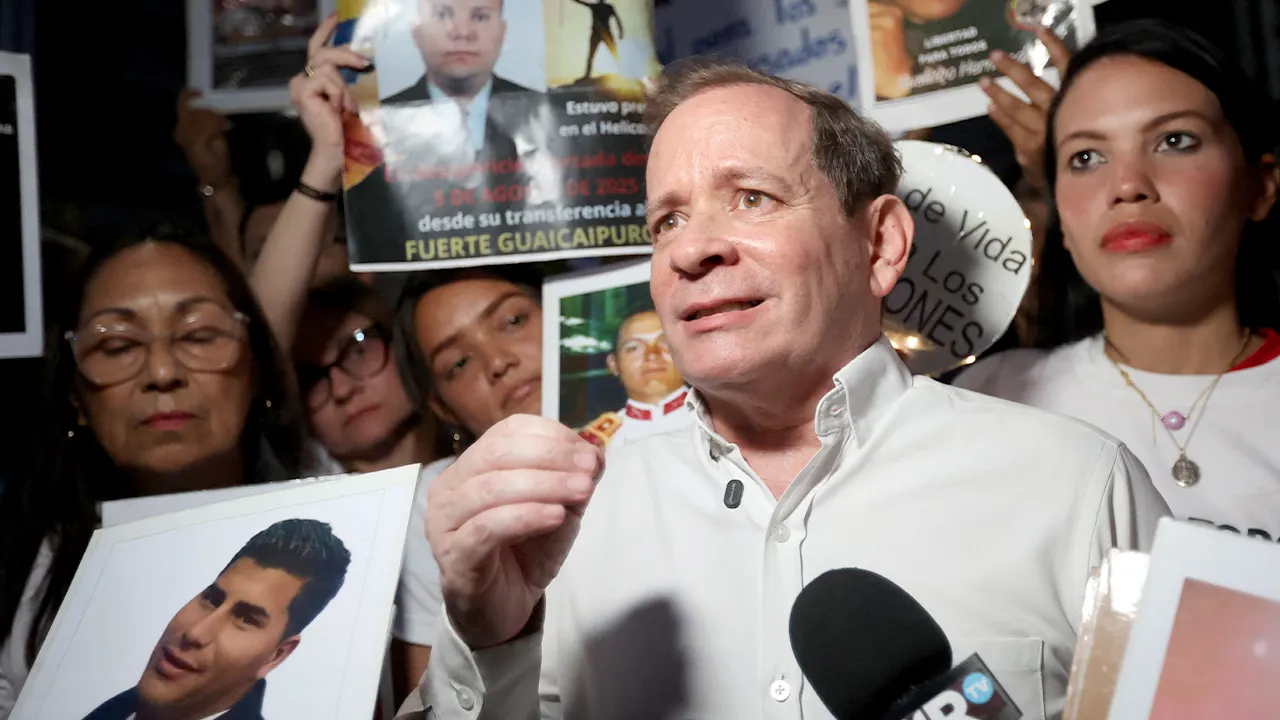
Venezuelan opposition leader Juan Pablo Guanipa was reportedly seized in Caracas on Monday, just hours after being released from jail, according to opposition leader María Corina Machado.
Machado announced on social media platform X that Guanipa, a key political ally, was kidnapped by heavily armed men in civilian clothes in the Los Chorros area of the Venezuelan capital. “We demand his immediate release,” she wrote in her post.
Guanipa was among 35 political prisoners released on Sunday, according to Alfredo Romero, president of the Venezuelan human rights organization Foro Penal. Guanipa had initially been arrested in May of last year as part of the government’s ongoing crackdown on opposition figures.
The circumstances surrounding his re-arrest remain murky. Reuters reported that Venezuelan authorities were seeking court approval to place Guanipa under house arrest. The country’s Public Ministry alleged he violated the terms of his release but provided no specific details about the alleged violations.
Guanipa’s political party, Primero Justicia, reported that he was forced into a silver Toyota Corolla during the incident. The party issued a statement on X directly implicating high-ranking Venezuelan officials: “We hold Delcy Rodríguez, Jorge Rodríguez, and Diosdado Cabello responsible for any harm to Juan Pablo’s life. We call on the international community for the immediate release of Juan Pablo Guanipa and for an immediate and unconditional end to the persecution of the opposition.”
The incident occurs during a period of political transition in Venezuela. Delcy Rodríguez is currently serving as the interim president following the U.S. capture of former President Nicolás Maduro and his wife Cilia Flores earlier this year. The power vacuum has created uncertainty in a nation already facing significant political and economic challenges.
In late January, U.S. President Donald Trump had praised Venezuela for releasing political prisoners at what he called a “rapid rate,” describing the move as a “powerful humanitarian gesture” by the country’s leadership. This latest incident may complicate diplomatic relations between the two countries just as the U.S. has been moving to reopen its embassy in Venezuela after a years-long freeze.
Despite recent releases, human rights organizations report that the humanitarian situation remains dire. According to Foro Penal, approximately 687 political prisoners remained in custody in Venezuela as of February 2, highlighting the ongoing human rights concerns in the country.
Guanipa and Machado have been prominent figures in Venezuela’s opposition movement. Both participated in anti-government protests in Caracas in January, rallying supporters against the Maduro regime. Machado herself has gained international recognition for her leadership in the opposition, even as she has faced persecution from Venezuelan authorities.
The situation underscores the precarious nature of political dissent in Venezuela, where opposition leaders continue to face arrest, harassment, and intimidation despite international pressure for democratic reforms. Human rights advocates have long criticized the Venezuelan government’s use of arbitrary detention as a tool to silence political opponents.
The U.S. State Department did not immediately respond to requests for comment on Guanipa’s reported abduction, though the Biden administration has previously expressed concerns about human rights violations in Venezuela.
As this situation develops, international observers will be watching closely to see whether this represents an isolated incident or signals a broader retreat from the prisoner releases that had been cautiously welcomed by the international community.
Fact Checker
Verify the accuracy of this article using The Disinformation Commission analysis and real-time sources.

8 Comments
I’m curious to learn more about the specific alleged violations that led to Guanipa’s re-arrest. The government’s justification seems vague and raises concerns about the transparency and fairness of the judicial process.
Exactly. Without clear and credible evidence of wrongdoing, this appears to be a politically motivated move to sideline a prominent opposition figure. The international community should demand answers and accountability.
This incident highlights the urgent need for dialogue and reconciliation in Venezuela. The government must respect the rights and freedoms of all citizens, regardless of political affiliation, in order to chart a path forward.
Well said. Meaningful political reform and the restoration of democratic checks and balances are crucial for Venezuela to overcome its profound challenges. The international community should continue to press for a peaceful, negotiated solution.
The details around Guanipa’s re-arrest are murky, but it seems to be part of the government’s broader campaign to stifle political opposition. This sets a dangerous precedent and erodes what little democratic space remains in Venezuela.
This is a deeply concerning situation. Arbitrary arrests and detentions of opposition leaders undermine democracy and human rights. I hope Guanipa is released safely and can continue his work without fear of reprisal.
Agreed. The crackdown on dissent in Venezuela is very troubling. The international community must continue to pressure the government to respect the rule of law and civil liberties.
It’s disheartening to see the continued erosion of democratic norms and institutions in Venezuela. Arbitrary arrests of opposition leaders like Guanipa undermine the country’s fragile political stability and worsen the ongoing humanitarian crisis.