


Listen to the article
Venezuela’s acting President Delcy Rodriguez has replaced a longtime loyalist military official, continuing her cabinet reshuffle amid evolving relations with the Trump administration.
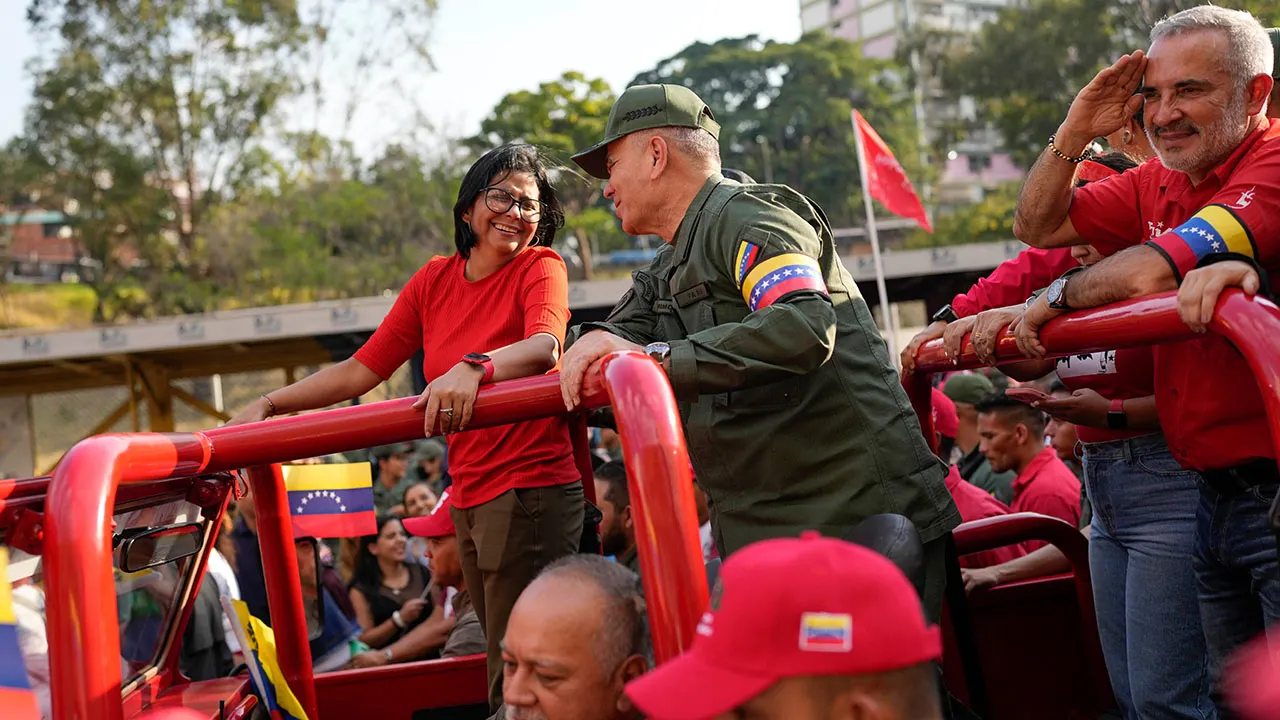
General Gustavo Gonzalez Lopez, 65, will take over as defense minister from General Vladimir Padrino, who held the position for more than a decade, Reuters reported Wednesday. Rodriguez thanked Padrino for his service in a Telegram post, indicating he would be assigned new responsibilities.
The appointment marks a significant shift in Venezuela’s military leadership. Lopez, who was appointed by Rodriguez in January as head of the presidential guard and the General Directorate of Military Counterintelligence (DGCIM), has previously worked closely with Rodriguez as head of strategic affairs at PDVSA, Venezuela’s state-owned oil company, which Rodriguez formerly oversaw as energy minister.
Both Lopez and Padrino have been sanctioned by the United States and European Union for alleged human rights violations and corruption. The U.S. State Department has specifically accused Padrino of corruption and links to drug trafficking networks, allegations that came during his support for ousted President Nicolas Maduro’s regime.
The cabinet reshuffle comes at a critical juncture for Venezuela, as the United States has recently restored diplomatic relations with the South American nation following years of heightened tensions. The diplomatic thaw represents a significant shift in U.S. policy toward the oil-rich nation, which has been subject to extensive sanctions designed to pressure the previous Maduro government.
Despite this diplomatic progress, the United Nations reported last week that Venezuela’s “repressive apparatus” remains largely intact, raising questions about the depth of potential reforms under Rodriguez’s leadership. The Venezuelan government has repeatedly denied allegations of human rights abuses and political oppression.
The military appointment is part of a broader pattern of leadership changes initiated by Rodriguez since assuming the role of acting president. These changes appear designed to consolidate power while potentially signaling openness to new diplomatic approaches, particularly with the United States.
Venezuela’s political transition remains closely watched by international observers. Rodriguez’s decisions regarding military leadership carry particular weight given the armed forces’ historical influence in Venezuelan politics and their role in maintaining stability during periods of political uncertainty.
The leadership change in the defense ministry could potentially impact Venezuela’s internal security posture and its approach to international relations, particularly as the country continues to navigate complex diplomatic relationships with major global powers.
For Venezuela, a country rich in natural resources but plagued by years of economic crisis and political turmoil, these leadership changes come amid ongoing challenges, including recovery efforts for the nation’s critical oil industry, which has suffered from years of underinvestment and mismanagement.
The appointment also raises questions about the future direction of Venezuela’s military and security forces, which have faced international criticism for their role in suppressing opposition movements under the previous administration.
As Rodriguez continues to reshape her cabinet, international stakeholders will be watching closely to determine whether these changes represent a genuine shift in governance approach or merely a repositioning of longstanding power structures within the Venezuelan state.
Fact Checker
Verify the accuracy of this article using The Disinformation Commission analysis and real-time sources.

19 Comments
Replacing a long-serving defense minister with the head of military intelligence could signal an effort to consolidate power and control. But it also raises questions about the motivations behind this personnel change.
You make a good point. Shuffling cabinet positions like this often indicates underlying political tensions or power struggles that bear watching.
Both the outgoing and incoming defense ministers have been sanctioned by the US and EU for alleged human rights abuses and corruption. This underscores the ongoing challenges Venezuela faces in terms of governance and rule of law.
Curious to see how this personnel change will impact Venezuela’s relationship with the US, which has been quite confrontational in recent years. Diplomatic tensions may continue to simmer.
Replacing the long-serving defense minister with someone from military intelligence is an interesting move by Venezuela’s government. It will be important to see how this affects the country’s relations with the US and other nations that have imposed sanctions on Venezuelan officials.
Interesting move by the Venezuelan government to replace their defense minister. Curious to see how this shift in military leadership will impact relations with the US and their sanctions.
This change in Venezuela’s defense ministry comes at a critical juncture for the country. The new minister’s intelligence background and links to the state oil company suggest the government may be trying to tighten its grip on power amid ongoing economic and political crises.
The appointment of the new defense minister in Venezuela is noteworthy, given the sanctions and allegations of human rights abuses and corruption against both the outgoing and incoming officials. This shift in military leadership could signal a strategic pivot for the government.
Agreed. The new minister’s background in intelligence and ties to the state oil company suggest the government may be trying to consolidate power and respond to external pressure.
The shift in military leadership comes as Venezuela navigates evolving relations with the Trump administration. This could be a strategic move to shore up domestic control amid external pressures.
You’re right, the timing of this change is noteworthy given the geopolitical tensions. It will be important to monitor how this plays out in the broader US-Venezuela dynamic.
The sanctions on both the outgoing and incoming defense ministers highlight the ongoing tensions and power struggles within the Venezuelan government. Shuffling key security officials is likely an attempt to shore up control amid economic and political crises.
Good point. It will be important to monitor whether this change in military leadership leads to any notable shifts in Venezuela’s domestic and foreign policies.
Replacing a long-serving defense minister with a military intelligence chief suggests the government is trying to strengthen its grip on security and counterintelligence operations. This bears watching.
This seems like part of a broader effort by the Venezuelan government to consolidate power and control, particularly within the military. The implications for human rights and governance are concerning.
The new defense minister, General Gustavo Gonzalez Lopez, seems to have close ties to the current administration. This could mean further entrenchment of the current regime, for better or worse.
This transition in Venezuela’s defense ministry comes at a critical time, with the country facing a complex web of domestic and international challenges. The new minister’s background in intelligence and links to the state oil company suggest the government may be trying to tighten its grip on power.
Interesting move by Venezuela’s government. Replacing the long-serving defense minister with someone from military intelligence could signal a shift in priorities or strategy. It will be important to watch how this impacts relations with the US and other countries that have sanctioned Venezuelan officials.
Agreed. The new defense minister’s background in intelligence and ties to the state oil company suggest this could be a strategic move to consolidate power and respond to external pressure.