


Listen to the article
Venezuela and Colombia Postpone Presidential Meeting, Cite “Force Majeure”
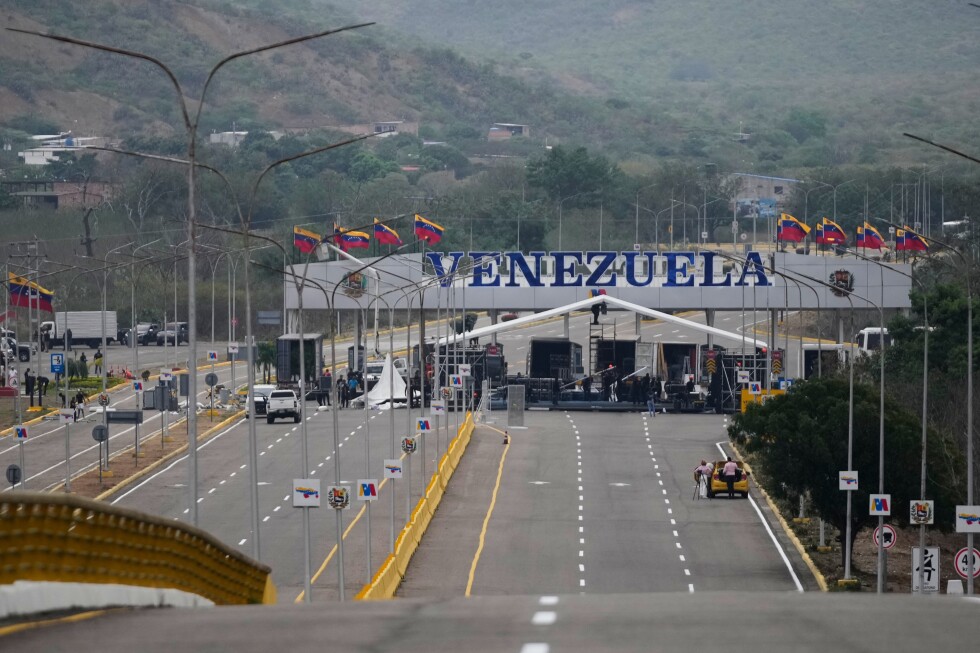
Venezuela and Colombia have abruptly canceled a high-profile diplomatic meeting between their presidents that was scheduled to take place Friday at their shared border, officials from both governments announced Thursday.
In a joint statement released by Venezuela’s Foreign Affairs Ministry, the governments attributed the postponement to unspecified “force majeure” circumstances. The statement emphasized that the meeting would be rescheduled for a later date, though no specific timeline was provided.
The canceled talks would have marked Venezuelan acting President Delcy Rodríguez’s first official encounter with a Latin American head of state since her January inauguration. Rodríguez assumed power following the controversial U.S. military operation that resulted in the capture of then-President Nicolás Maduro, an event that created significant regional tension and raised questions about Venezuela’s political future.
Colombian President Gustavo Petro, who has sought to maintain diplomatic relations with Venezuela despite political turbulence, had extended the invitation to Rodríguez as part of ongoing efforts to address shared challenges. The governments indicated that Petro’s invitation remains open, with both nations expressing their commitment “to strengthening trust, cooperation and bilateral relations.”
The planned meeting had significant regional importance, as it was expected to address critical issues affecting both nations, including border security concerns stemming from the presence of illegal armed groups linked to drug trafficking operations. The porous 1,400-mile border between Venezuela and Colombia has long been a flashpoint for security challenges, with various criminal organizations operating in the region.
Economic cooperation was also on the agenda, particularly the potential for Colombia to import Venezuelan natural gas, which could have provided Venezuela’s struggling economy with a much-needed boost while helping Colombia diversify its energy sources. Venezuela possesses some of the largest natural gas reserves in the Western Hemisphere, but has struggled to develop this resource amid political instability and economic sanctions.
In an interesting diplomatic development that emerged shortly before the cancellation announcement, Petro’s office revealed that the Colombian leader had spoken by phone with U.S. President Donald Trump. According to the statement, Petro wished Trump “success” in his upcoming meeting with Rodríguez, suggesting potential U.S. involvement in regional diplomatic efforts concerning Venezuela.
The timing of the cancellation has prompted speculation about possible political considerations, as Rodríguez continues to navigate a complex domestic and international landscape in her role as acting president. Venezuela remains under significant economic pressure, with ongoing humanitarian concerns and political uncertainty following Maduro’s removal from power.
Regional analysts note that Colombia-Venezuela relations have experienced significant fluctuations in recent years. Under Petro’s administration, Colombia has sought a more pragmatic approach to its neighbor after years of tension during previous governments. The restoration of diplomatic relations between the two countries in 2022 marked an important shift following a three-year rupture.
Despite this postponement, diplomatic sources familiar with the situation suggest that both governments remain interested in maintaining dialogue, particularly given their shared economic and security interests. The border region represents both challenges and opportunities for cooperation between the neighboring nations.
Neither government has indicated when the presidential meeting might be rescheduled, but observers note that maintaining this diplomatic channel will be crucial for regional stability in the coming months.
Fact Checker
Verify the accuracy of this article using The Disinformation Commission analysis and real-time sources.

7 Comments
This is a disappointing development. With the political situation in Venezuela remaining so volatile, it’s important for regional leaders to engage in dialogue. I’m curious to learn more about the specific reasons behind the postponement.
The cancellation of this presidential meeting is concerning, especially given the ‘force majeure’ justification. I hope the two sides can work through whatever challenges have arisen and reschedule the talks soon.
Me too. Maintaining open communication channels is crucial, even when political relationships are fraught. Hopefully this is just a temporary setback.
Quite an unexpected development. I wonder what the ‘force majeure’ circumstances could be that led to the abrupt cancellation of this high-profile meeting between the Venezuelan and Colombian presidents. Geopolitical tensions in the region are certainly running high.
This is an intriguing development, given the ongoing political turmoil in Venezuela. I’ll be curious to see how the rescheduled meeting plays out and whether it can help ease tensions between the two nations.
Agreed. The relationship between Venezuela and Colombia has been strained in recent years, so any progress towards diplomatic engagement would be a positive step.
The cancellation of this meeting is concerning, given the importance of Venezuela-Colombia relations. I hope the ‘force majeure’ circumstances can be resolved quickly so the presidents can meet and discuss the region’s pressing issues.