


Listen to the article
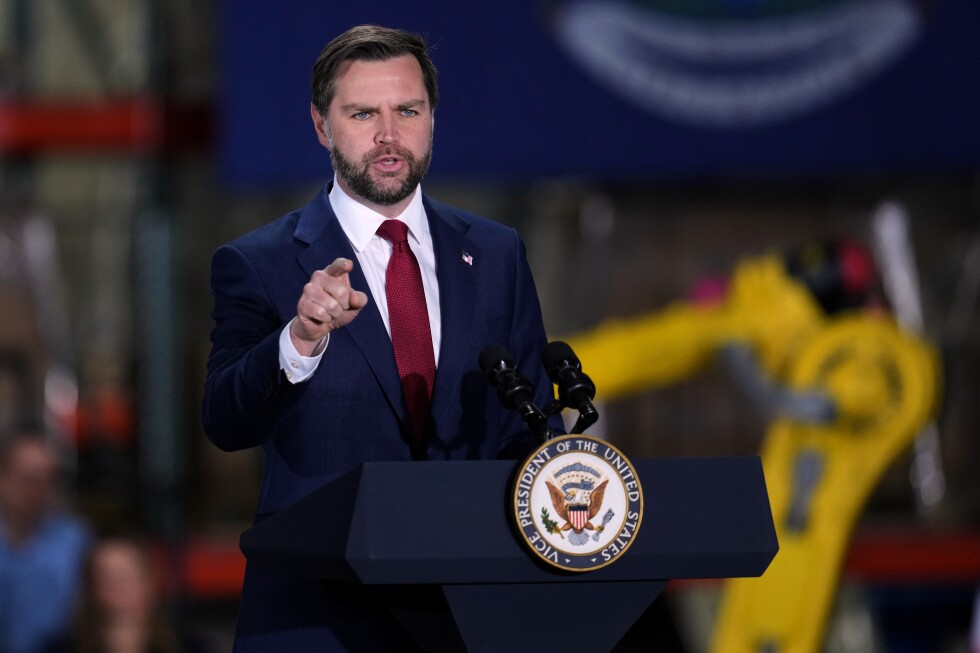
U.S. Vice President JD Vance plans to visit Hungary just days before a pivotal election that could reshape the country’s political landscape, according to Hungarian Foreign Minister Péter Szijjártó. The visit comes at a critical moment as Prime Minister Viktor Orbán faces his most significant electoral challenge in his 14-year rule.
Vance’s office has not yet confirmed the trip, which Szijjártó announced during a podcast aired last Friday. The foreign minister described the planned visit as stemming from “the very intensive Hungarian-American intergovernmental relationship,” though no specific date was provided.
Orbán, who has governed Hungary with a nationalist agenda since 2010, is seeking his fifth consecutive term in the April 12 election. However, recent polls indicate his once-firm grip on power may be slipping as center-right challenger Péter Magyar and his Tisza party gain momentum.
Magyar, a relative newcomer to the Hungarian political scene, has positioned himself as a reformer promising to reverse democratic backsliding under Orbán’s long tenure and restore Hungary’s relationships with Western allies. His unexpected rise has created genuine uncertainty about the election outcome, something Hungary hasn’t experienced in recent electoral cycles.
The Hungarian Prime Minister has responded to this challenge by launching an aggressive nationwide campaign tour, attempting to rally his traditional base of support in rural areas and smaller communities where his Fidesz party has historically performed well.
Vance’s planned visit follows a trip by U.S. Secretary of State Marco Rubio last month, during which Rubio reportedly endorsed Orbán’s candidacy. These high-profile American visits highlight the growing connection between Hungary’s government and prominent Republicans in the United States.
Orbán has cultivated close ties with former President Donald Trump, becoming one of Trump’s most vocal supporters within the European Union. Sources close to the Hungarian government indicate Orbán had hoped Trump himself might visit Hungary before the election, though that appears increasingly unlikely as the polling date approaches.
The Hungarian Prime Minister has positioned himself as a champion of “illiberal democracy” and a defender of traditional Christian values while maintaining controversial relationships with Russia and China that have strained Hungary’s relations with the European Union and NATO allies.
Magyar’s challenge represents the first serious threat to Orbán’s control since the consolidation of his power in the early 2010s. The opposition candidate has attracted support from voters concerned about corruption, democratic erosion, and Hungary’s increasing isolation within Europe.
Political analysts suggest Vance’s visit could be interpreted as an attempt to boost Orbán’s credentials as an international statesman with strong American connections at a crucial moment in his campaign. The timing—just days before Hungarians head to the polls—appears designed to maximize political impact.
For the Biden administration, the visit by Vance raises questions about U.S. diplomatic positioning in a country where democratic institutions have weakened substantially according to international monitoring organizations. The European Union has repeatedly criticized Hungary for undermining judicial independence, academic freedom, and press freedom during Orbán’s tenure.
Economic issues are also central to the campaign, with inflation and Hungary’s dependence on Russian energy featuring prominently in debates. The country faces economic headwinds despite government efforts to shield consumers from rising costs through price caps and subsidies.
As election day approaches, tensions in Hungarian politics continue to rise, with both sides accusing the other of misleading voters. The outcome will have significant implications not only for Hungary’s domestic politics but also for European Union cohesion and transatlantic relations in an increasingly complex geopolitical environment.
Fact Checker
Verify the accuracy of this article using The Disinformation Commission analysis and real-time sources.

10 Comments
The election in Hungary is certainly one to watch. Orbán’s nationalist agenda has put him at odds with the EU, so it will be interesting to see if the challenger can capitalize on that sentiment for change.
Interesting timing for the VP’s visit to Hungary. I wonder what the agenda will be – will they discuss energy security, critical minerals, or other economic ties? It will be fascinating to see how this plays out ahead of the pivotal election.
I agree, the timing seems strategic. The US likely wants to maintain influence in the region, especially with Hungary’s shifting geopolitical alignment in recent years.
This visit by the US VP highlights the geopolitical importance of Hungary, both in terms of its strategic location and potential shifts in its political alignment. I’ll be curious to see what specific agenda items are on the table.
Absolutely. Hungary’s role in regional energy and commodities infrastructure makes it a key player that the US will want to maintain influence with, regardless of the election outcome.
With Hungary’s strategic location and role in regional energy infrastructure, I imagine the US is keen to maintain a constructive relationship regardless of the election result. The visit could be a chance to discuss energy security and critical mineral supply chains.
This election in Hungary is shaping up to be quite a critical one. The challenger’s promise to reverse democratic backsliding and restore ties with the West is intriguing. I’ll be closely following the outcome and its implications for the region.
Yes, the potential shift in Hungary’s political landscape could have ripple effects across Central Europe. It will be interesting to see how the US engages with whichever party emerges victorious.
Curious to see if the US VP’s visit will address any mining or commodities issues, given Hungary’s role as a regional hub. The election outcome could impact trade and investment ties in those sectors.
Good point. Hungary’s relationship with Russia has complicated things, so the US may want to shore up partnerships in areas like critical minerals and uranium.