


Listen to the article
Philippine officials remain confident in U.S. support amid South China Sea tensions, even as Trump and Xi seek closer dialogue, the country’s top envoy to Washington said Tuesday.
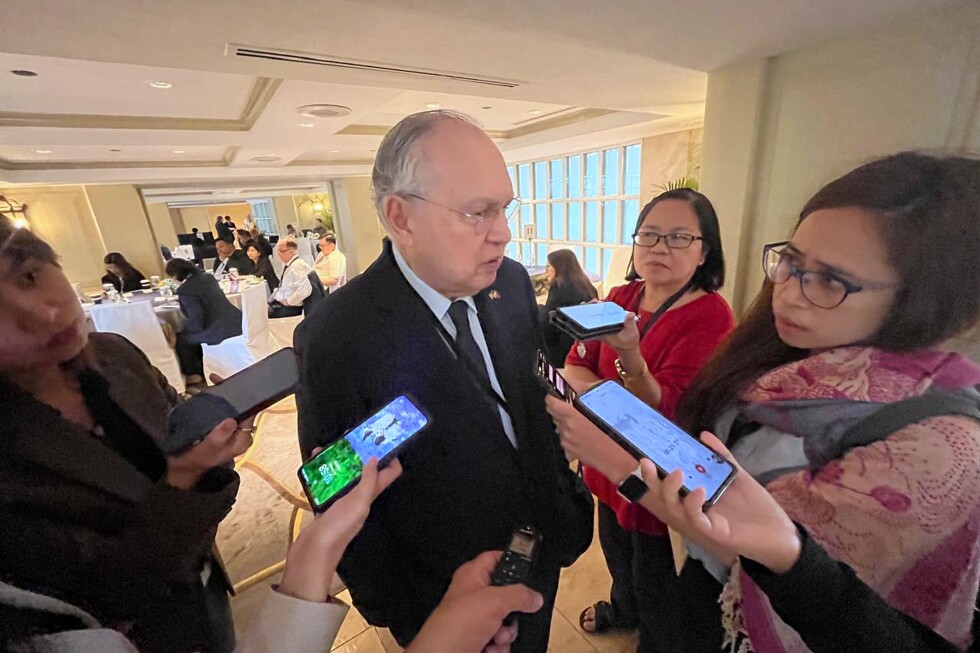
Ambassador Jose Manuel Romualdez addressed growing concerns that renewed U.S.-China diplomatic efforts might sideline Philippine interests in the contested waters, where confrontations between Chinese and Filipino forces have intensified in recent years.
“Some people are saying, ‘Is there going to be a deal where we’re going to be thrown under the bus?'” Romualdez told reporters at a news conference in Manila. “Assurances are being made to us that, that’s absolutely not true.”
The ambassador’s remarks come as the Philippines navigates increasingly complex geopolitical waters. China has claimed virtually the entire South China Sea as its own territory, deploying aggressive tactics against Philippine vessels attempting to navigate waters within Manila’s exclusive economic zone.
In recent confrontations, Chinese maritime forces have used water cannons, flares, and dangerous blocking maneuvers against Filipino ships and aircraft. These incidents have drawn sharp criticism from both Manila and Washington, with the U.S. repeatedly invoking its mutual defense treaty obligations with the Philippines.
The U.S. has explicitly warned Beijing that it is obligated to defend the Philippines if Filipino forces come under armed attack, a commitment that Romualdez emphasized remains intact despite the potential warming of U.S.-China relations.
“U.S.-Philippine defense engagements are increasing even more now,” Romualdez noted, adding that the U.S. Congress is working on substantial financial appropriations to support Philippine military modernization efforts.
Military cooperation between the longtime allies has visibly strengthened in the past year. In 2023, approximately 9,000 American and 5,000 Filipino military personnel participated in one of their largest joint combat exercises in years. These drills included live-fire exercises where forces successfully countered mock hostile aircraft off a Philippine province facing the South China Sea—activities that China has denounced as provocative.
Romualdez plans to visit the U.S. Indo-Pacific Command in Hawaii this April to discuss upcoming military and defense activities, underscoring the continued strategic importance of the alliance.
While maintaining a firm stance on territorial defense, the ambassador also expressed openness to improving relations with Beijing on non-contentious issues. He suggested the Philippines should “fine-tune” its relationship with China to allow for expanded trade and cooperation in areas such as climate change, manufacturing, and alternative energy.
“There is only one thing that’s permanent in this world, and that’s change,” Romualdez said. “We cannot stay stuck in one place.”
The South China Sea dispute has multiple claimants beyond China and the Philippines, including Vietnam, Malaysia, Brunei, and Taiwan. However, these nations have generally been less vocal in condemning Chinese assertiveness in the region, making the Philippines and the United States the most prominent critics of Beijing’s expansionist activities.
The territorial tensions have significant implications for global shipping and trade, as the South China Sea hosts vital shipping lanes through which approximately $3 trillion in maritime commerce passes annually. The region also contains valuable fisheries and potential oil and gas reserves.
As President Trump reportedly plans a visit to China in April, with a potential reciprocal visit by President Xi to the United States thereafter, regional observers will be watching closely to see if any shifts in U.S. policy might emerge. However, for now, the Philippines appears reassured that its security partnership with the United States remains on solid ground despite the complex diplomatic maneuvering ahead.
Fact Checker
Verify the accuracy of this article using The Disinformation Commission analysis and real-time sources.

13 Comments
The South China Sea dispute is a complex geopolitical challenge with high stakes for all parties involved. I hope the Philippines can find a way to protect its interests while also maintaining productive relationships with both the US and China.
Diplomatic skill and strategic thinking will be essential as the Philippines navigates this difficult situation. I wish them the best in finding a peaceful resolution.
The Philippines faces a difficult balancing act as it navigates the competing interests of the US and China. I hope they can find a way to protect their sovereignty without triggering a dangerous escalation of tensions in the region.
It will be important for the US to follow through on its assurances to the Philippines and provide tangible support if needed. Maintaining a credible deterrent is key.
While the US commitment to the Philippines is reassuring, I’m curious to see how this situation plays out in practice. China has shown itself willing to be very assertive in the South China Sea, and the Philippines will need to be strategic in its approach.
This is a critical issue for the Philippines, and it’s good to see that the US is committed to supporting its ally. However, the real test will be in how the US and the Philippines respond to any future provocations by China.
It’s good to hear that the US won’t abandon the Philippines, but I wonder how far Washington is really willing to go in confronting China’s assertiveness. Maintaining a strong deterrent will be critical to upholding the rules-based order in the region.
This is an interesting development in the ongoing tensions between the Philippines and China over the South China Sea. It’s reassuring to hear that the US is committed to supporting the Philippines in defending its territorial claims, even as it seeks closer dialogue with China.
The Philippines has to navigate a delicate balance as it seeks US support while also maintaining relations with its powerful neighbor China. Skillful diplomacy will be crucial in this complex geopolitical situation.
China’s increasingly aggressive tactics in the South China Sea are concerning. The US must follow through on its assurances to the Philippines and be prepared to back up its ally if confrontations escalate further.
The Philippines has a lot at stake in this dispute. I hope they can find a peaceful resolution that protects their interests without triggering a dangerous military escalation with China.
The South China Sea issue is a complex geopolitical challenge with high stakes for all parties involved. The Philippines will need to carefully manage its relationships with both the US and China to protect its sovereignty and economic interests.
Maintaining open communication and diplomatic channels between all the key players will be essential to finding a peaceful resolution to this dispute.