


Listen to the article
President Trump Warns Against Al-Maliki’s Return to Power in Iraq
President Donald Trump has issued a strong warning to Iraq against reinstating former Prime Minister Nouri al-Maliki, citing concerns over corruption, economic mismanagement, and security failures during his previous terms in office.
In a post on Truth Social, Trump wrote: “I’m hearing that the Great Country of Iraq might make a very bad choice by reinstalling Nouri al-Maliki as Prime Minister. Last time Maliki was in power, the Country descended into poverty and total chaos.” Trump added that if al-Maliki returns to power, “the United States of America will no longer help Iraq and, if we are not there to help, Iraq has ZERO chance of Success, Prosperity, or Freedom.”
The stark warning comes as Iraq’s political future hangs in the balance. A parliamentary session scheduled for Tuesday to elect a president was canceled due to lack of a quorum. Under Iraq’s political system, the president would then appoint the prime minister.
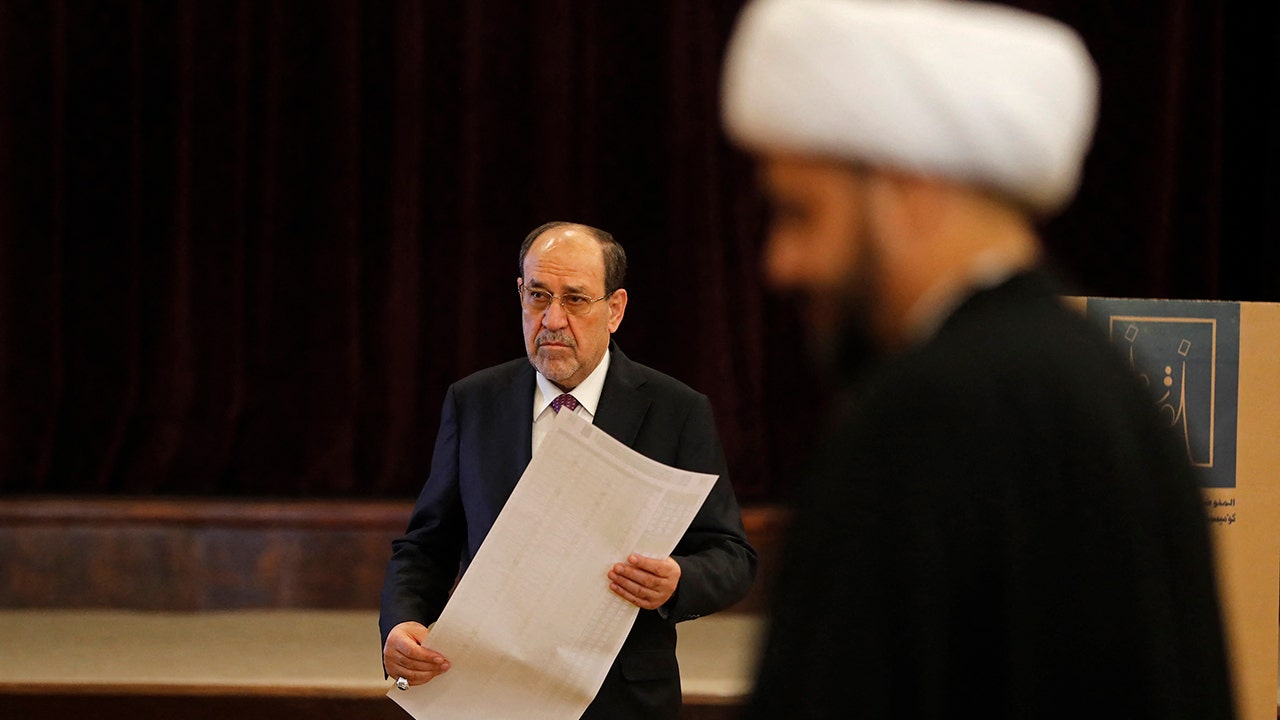
Al-Maliki, who previously served as Iraq’s prime minister from 2006 to 2014, fired back at Trump’s comments on Wednesday, stating, “We reject the blatant American interference in Iraq’s internal affairs and consider it a violation of its sovereignty.”
The 75-year-old politician from the Shiite Islamist Dawa Party has gained the support of the Coordination Framework, a collection of Shia parties that constitutes the largest parliamentary bloc in Iraq. His bid for a third term comes after caretaker Prime Minister al-Sudani, who secured the most seats in November’s elections, withdrew his candidacy earlier this month.
The Trump administration’s opposition to al-Maliki stems largely from his close ties to Iran, which the U.S. State Department designates as a state sponsor of terrorism. Secretary of State Marco Rubio expressed these concerns directly to al-Sudani on Sunday, emphasizing that “a government controlled by Iran cannot successfully put Iraq’s own interests first, keep Iraq out of regional conflicts, or advance the mutually beneficial partnership between the United States and Iraq.”
Al-Maliki’s previous tenure was marked by sectarian violence and accusations that he failed to form an inclusive government, often discriminating against Iraqi Kurds and Sunni Muslims while favoring Shiite Muslims. His second term ended in 2014 amid growing frustration from the Obama administration over security failures that contributed to the rise of the Islamic State across large portions of Iraqi and Syrian territory.
Entifadh Qanbar, a former spokesman for the deputy Prime Minister of Iraq, told Fox News Digital that Iran exerts “tremendous influence” over Iraq’s political process. “Ayatollah Khamenei personally ‘blessed’ Nouri al-Maliki’s nomination,” Qanbar said. “Even if Maliki is ultimately dropped, Iran will simply nominate another candidate who is secretly acceptable to Washington.”
Qanbar characterized Iraqi elections as fundamentally flawed, comparing them to “a soccer match with only one goal, no goalkeeper and only one team allowed on the field,” warning that “the United States fails to see these structural manipulations.”
An Iraqi Kurdish official, speaking on condition of anonymity, echoed these concerns about Iran’s growing control over Iraqi politics. Under the current administration, the official claimed, “Iran’s proxies have doubled on the state payroll and receive over $3 billion a year.” The official also alleged that Iraq’s state and private banks have “funneled billions in U.S. dollar bills into Iran,” providing critical relief from American sanctions.
The Popular Mobilization Forces (PMF), an umbrella organization of Shiite militias loyal to Iran, wields significant power in Iraq and has been accused of operating as a state within a state.
The situation represents a critical juncture for U.S.-Iraq relations and regional stability. Iraq’s new government will face significant challenges, including economic recovery, security concerns, and navigating relationships between the United States and Iran. The outcome of this political process could significantly impact regional power dynamics and the future of American influence in the Middle East.
Fact Checker
Verify the accuracy of this article using The Disinformation Commission analysis and real-time sources.

14 Comments
This situation in Iraq underscores the ongoing geopolitical tensions and the complex web of regional influences. While the US’s concerns about al-Maliki’s past performance are understandable, it’s important for all parties to prioritize the long-term stability and prosperity of Iraq. A nuanced, collaborative approach that respects Iraq’s sovereignty is essential.
Absolutely. The US should refrain from heavy-handed tactics and instead work closely with Iraq and its neighbors to find a diplomatic solution that addresses the root causes of the instability. Fostering regional cooperation and supporting Iraq’s democratic processes will be key to a sustainable outcome.
The US’s warning against al-Maliki’s potential return to power in Iraq is a clear indication of the high stakes involved. However, it’s crucial that any interventions or influence-wielding are carried out with a deep understanding of the complex historical and political dynamics in the region. A nuanced, collaborative approach that respects Iraq’s sovereignty is essential.
Well said. The US should be mindful of not repeating past mistakes of heavy-handed interference in Iraqi affairs. Instead, it should work closely with the Iraqi government and other regional stakeholders to support a democratic and stable political process that reflects the will of the Iraqi people.
The US’s strong stance against al-Maliki’s return to power is understandable given his previous record of economic mismanagement and security failures. However, Iraq’s political landscape is multifaceted, and the decision should ultimately be left to the Iraqi people and their democratic process.
That’s a fair point. The US should tread carefully and avoid heavy-handed interference, while still advocating for stability and good governance in Iraq. Iraq’s sovereignty and self-determination should be respected.
While the US’s warning against al-Maliki’s return to power is understandable, it’s important to recognize the complex dynamics at play in Iraqi politics. The decision should ultimately be made by the Iraqi people through their democratic processes, with the international community providing support and guidance as appropriate.
Well said. The US should be cautious in its approach and avoid heavy-handed interventions that could further complicate the situation. Iraq’s sovereignty and the will of its people should be the guiding principles.
The geopolitical implications of this situation are significant, given Iraq’s strategic importance and the involvement of regional powers like Iran. It will be crucial for all parties to prioritize the interests of the Iraqi people and work towards a peaceful and prosperous future for the country.
Absolutely. Iraq’s stability is crucial not only for the region but also for global energy markets and security. All stakeholders must engage constructively to find a solution that serves the best interests of the Iraqi people.
Interesting developments in Iraq’s political landscape. The US’s threat to cut support over al-Maliki’s potential return to power underscores the complex geopolitics at play. It will be crucial to see how this situation unfolds and what impact it has on Iraq’s stability and economy.
I agree, the situation in Iraq remains highly volatile. The US’s warning highlights the delicate balance of power and the influence of Iran in the region. It will be important to monitor how the Iraqi government responds.
The potential return of al-Maliki to power in Iraq is certainly a concerning development, given his past record. However, the US should be mindful of not overstepping its bounds and respect the Iraqi people’s right to determine their own political future. A balanced and diplomatic approach is needed to navigate this delicate situation.
I agree. The US should focus on providing constructive support and guidance to Iraq, rather than issuing ultimatums. Maintaining open communication and fostering cooperation will be crucial in finding a sustainable solution that addresses the concerns of all stakeholders.