


Listen to the article
U.S.-Iran Conflict Enters Critical Phase as Strategic Options Weigh Global Implications
As the conflict between the United States and Iran intensifies, military strategists and analysts are evaluating several high-stakes options that could determine the future trajectory of the confrontation. Recent U.S. strikes have damaged Iran’s military infrastructure without toppling the regime, creating pressure for the Trump administration to consider more decisive action.
The range of potential next steps spans from targeting Iran’s economic lifeline at Kharg Island to more aggressive scenarios involving ground operations or specialized missions focused on Iran’s nuclear capabilities. Each approach carries significant risks with far-reaching consequences for regional stability, global energy markets, and nuclear proliferation.
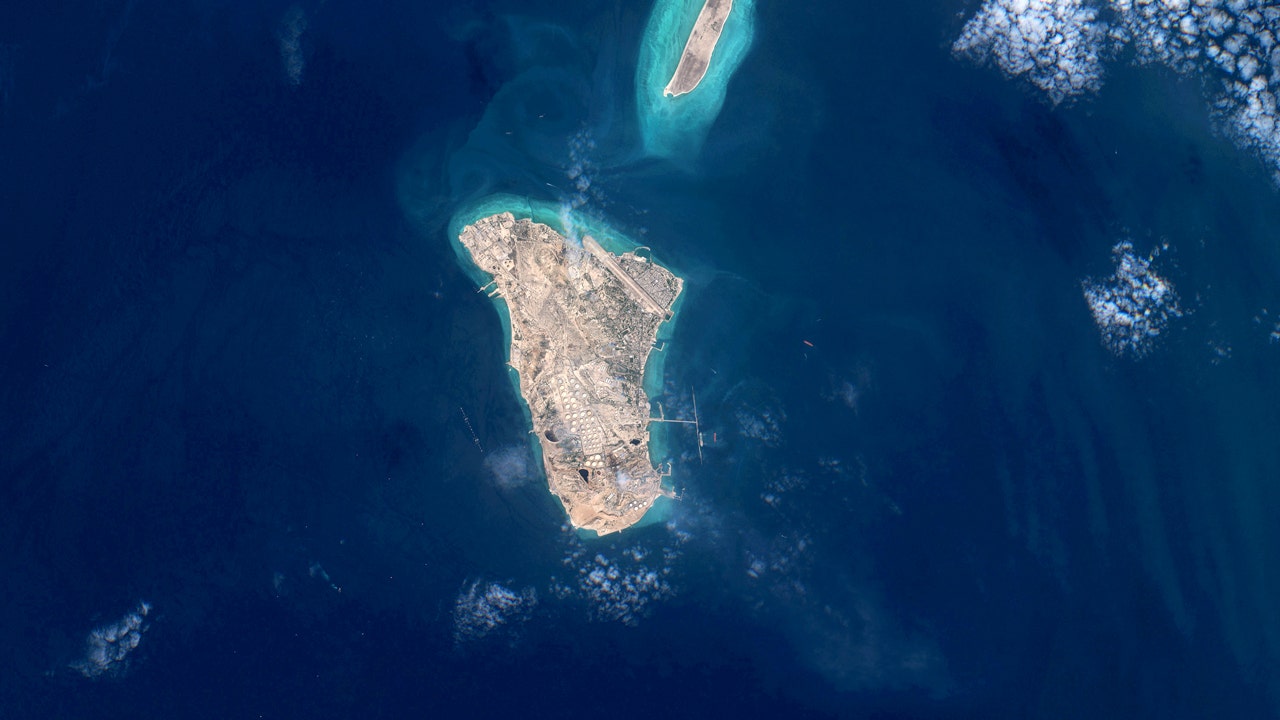
Recent U.S. operations already targeted military installations on Kharg Island while deliberately sparing its oil infrastructure, signaling Washington’s cautious approach to avoid immediate disruption of global oil supplies.
“The Iranian military capacity and offensive abilities have been totally degraded, so we need to probably do something else,” said Bahraini analyst Abdullah Aljunaid in an interview with Fox News Digital.
Kharg Island: Iran’s Economic Vulnerability
Kharg Island represents a critical pressure point in the ongoing conflict. The small island in the Persian Gulf serves as Iran’s primary oil export terminal, handling approximately 90% of the country’s oil exports, which currently range between 1.1 million and 1.5 million barrels per day, primarily destined for China.
Retired General Jack Keane has suggested that the United States could seize control of this vital hub if necessary, a move that would effectively put the Iranian regime in “checkmate” by cutting off a resource that accounts for approximately 50% of Iran’s budget and 60% of its revenue.
“Now we (would) own all of their major assets,” Keane said, highlighting the strategic significance of controlling Iran’s primary source of income.
The approach has a clear strategic rationale: cripple the regime’s financial resources without launching a full-scale invasion of Iran’s mainland. However, U.S. forces have thus far avoided targeting Kharg’s oil infrastructure, reflecting concerns that removing up to 2 million barrels daily from global supply could trigger a sharp spike in energy prices.
Alternative approaches might include non-kinetic strategies. Rick Clay, who served as a senior deputy advisor in Iraq from 2003 to 2009, suggests that maritime insurance could function as a strategic chokepoint. Without recognized insurance coverage, tankers face severe limitations in docking, financing cargo, or operating in compliant markets.
The “Fortress Iran” Challenge
Military experts have long characterized Iran’s geography as “Fortress Iran” due to its natural defenses, including the formidable Zagros and Alborz mountain ranges and vast desert terrain that historically complicated invasion attempts. These features make a ground invasion the most extreme and least plausible option among those being considered.
Analysts often point to Iraq’s failed 1980 invasion of Iran, which devolved into a bloody eight-year war rather than the swift victory Saddam Hussein anticipated. Aljunaid noted that even the 1991 liberation of Kuwait required more than half a million troops, while a ground war inside Iran would present exponentially greater challenges.
Despite sustained U.S. and Israeli airstrikes inflicting heavy damage on Iran’s military infrastructure, the regime remains intact. According to Washington Post reporting, the Islamic Revolutionary Guard Corps has actually consolidated power rather than weakened, suggesting air superiority alone has not destabilized the government sufficiently to justify the extreme risk of occupation.
“We’re not going to put troops on the mainland,” Clay stated. “The only troops you might see, if anything, would be to take out those three islands. That’s it.”
Nuclear Material: The Specialized Operation Scenario
A third option would involve more targeted operations focused specifically on Iran’s nuclear program, particularly its enriched uranium stockpiles and deeply buried facilities that may have survived conventional airstrikes.
While President Donald Trump claimed that June 2025 strikes “obliterated” key nuclear sites, analysts believe critical elements of Iran’s nuclear program remain intact. According to the International Atomic Energy Agency, Iran possesses approximately 440.9 kilograms of uranium enriched to 60%, with over 200 kilograms likely stored in the underground Isfahan tunnel complex.
This scenario presents unique challenges. Unlike oil infrastructure, nuclear materials can be hidden and relocated, and some deeply buried facilities have reportedly withstood conventional bombing campaigns. Securing or neutralizing these materials might require specialized operations with higher operational risks and no guarantee of completely eliminating the threat.
White House spokesperson Anna Kelly outlined the administration’s position: “President Trump and the administration have clearly outlined the goals of Operation Epic Fury: destroy Iran’s ballistic missiles and production capacity, demolish their navy, end their ability to arm proxies, and prevent them from ever obtaining a nuclear weapon.”
“This effort will continue until President Trump, as commander in chief, determines that the goals of the operation, including for Iran to no longer pose a military threat, have been fully realized,” she added.
As Washington weighs these options, each path represents different calculations regarding risk tolerance, strategic objectives, and potential consequences. The Kharg Island approach offers economic pressure without full-scale war; targeted nuclear operations provide a more focused objective but with high operational complexity; while a ground invasion remains the most comprehensive but least feasible option given Iran’s geography and the current political climate.
The decisions made in the coming weeks could reshape not only the U.S.-Iran relationship but also regional power dynamics, global energy markets, and the future of nuclear proliferation in the Middle East.
Fact Checker
Verify the accuracy of this article using The Disinformation Commission analysis and real-time sources.

8 Comments
This is a complex situation with no clear-cut solutions. While targeting Iran’s uranium capabilities may set back their nuclear program, the potential for unintended consequences is concerning. I’ll be following this story closely to see how it develops.
Agreed. Any military action against Iran’s nuclear facilities would be highly sensitive and require very careful planning to minimize risks. Diplomacy should remain the priority, if possible.
Targeting Iran’s uranium capabilities could set back their nuclear ambitions, but the risks of a ground war or strikes on Kharg Island are concerning. I hope the U.S. and its allies can find a measured response that minimizes disruption to global energy markets and regional stability.
This seems like a high-stakes geopolitical situation with no easy solutions. Seizing Kharg Island could disrupt Iran’s oil exports but also risks escalating tensions. I wonder if there are any diplomatic avenues left to pursue before resorting to more aggressive military options.
You raise a good point. Avoiding further escalation should be a priority, but the U.S. may feel pressured to take bolder action if Iran continues to expand its nuclear program and regional influence.
As an investor, I’m closely watching how this situation unfolds and the potential impact on commodity prices, particularly oil and uranium. Any major disruptions to supply from the Middle East could lead to significant market volatility.
That’s a good point. Geopolitical risks in the energy and mining sectors can create both opportunities and challenges for investors. Careful analysis will be crucial in navigating this uncertain environment.
Seizing Kharg Island could give the U.S. leverage, but it’s a risky move that could spark retaliation from Iran. I hope cooler heads prevail and all sides explore diplomatic solutions to ease tensions before the conflict escalates further.