


Listen to the article
US Issues Urgent Warning as Al Qaeda-Linked Group Threatens to Seize Mali
As Mali faces the alarming prospect of becoming Africa’s first nation ruled by an al Qaeda-linked terrorist organization, the U.S. State Department has issued a stark warning for American citizens to evacuate the West African country immediately or avoid traveling there altogether.
“Do Not Travel for any reason due to crime, terrorism, kidnapping, unrest and health risks,” a State Department spokesperson told Fox News Digital, emphasizing that “U.S. citizens should avoid travel to Mali, and those currently in Mali should depart immediately.”
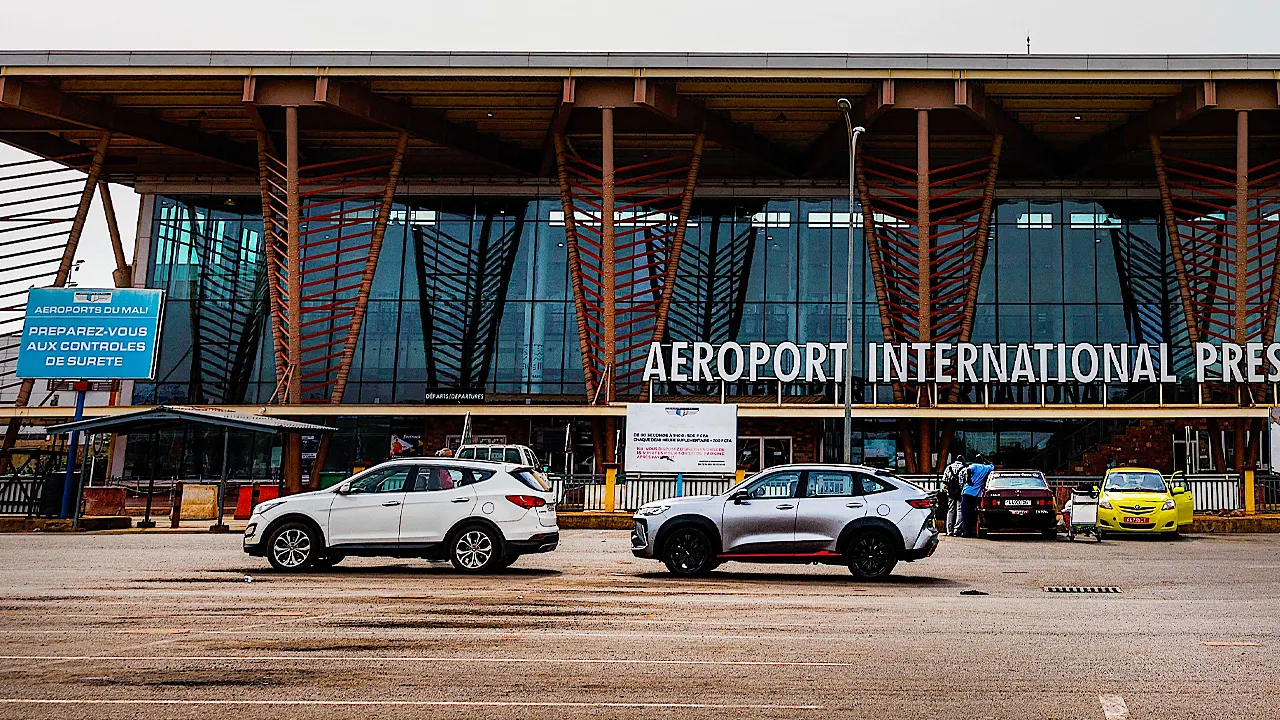
The U.S. Embassy in Bamako reinforced this warning on its website, advising Americans to “depart using commercial aviation, as overland routes to neighboring countries may not be safe for travel due to terrorist attacks along national highways.” The embassy also cautioned against travel outside the capital city, noting its limited ability to provide emergency services beyond Bamako.
The situation has deteriorated rapidly as fighters from Jama’at Nusrat al-Islam wal-Muslimin (JNIM), an al Qaeda affiliate, have surrounded Bamako, effectively blocking fuel supplies by preventing tankers from reaching the city and setting some vehicles ablaze. The Malian army has attempted to break this blockade by organizing armed convoys, but JNIM has successfully attacked several of these efforts.
Major General Kenneth P. Ekman, a retired Air Force general who previously led the Department of Defense’s West Africa Coordination Element for U.S. Africa Command until earlier this year, expressed grave concern about the security implications for the United States.
“The U.S. still has security interests in West Africa,” Ekman stated. “An external operations threat to the American homeland is intolerable, increasingly likely and far more difficult to detect given the dearth of remaining U.S. forces and intelligence assets in the region.”
The crisis intensified after Mali’s military junta expelled U.S. and French troops last year, replacing them with Russian Wagner/Afrika Corps mercenaries—the Kremlin’s private army. According to Mariam Wahba, a research analyst at the Foundation for Defense of Democracies, these Russian forces have “not been very helpful,” appearing more interested in extracting the region’s mineral resources than combating terrorism.
“Both Bamako and Ouagadougou (capital of neighboring Burkina Faso) are at risk,” Ekman warned. “JNIM seems to be gaining momentum and appears to have both expanded objectives and greater resolve.”
The Biden administration’s decision to withdraw American forces from Niger in 2024 without relocating them elsewhere in the region has complicated U.S. monitoring capabilities. “The U.S. surrendered its ability to monitor and respond to the activities and growth of Sahel terrorist organizations, come to the assistance of U.S. embassies under threat, and solve crises like the October kidnapping of an American missionary,” Ekman noted.
The missionary, a pilot kidnapped in Niger on October 21, remains missing with no communication since his capture.
JNIM has been officially designated both a Foreign Terrorist Organization and a Specially Designated Global Terrorist by the State Department, underscoring its serious threat level.
“The Malian army is fighting an irregular and asymmetric enemy,” Wahba explained. “They are jihadists, at the end of the day, and the government is having trouble out-predicting them. If this continues, Bamako may fall in days or weeks.”
The Biden administration has shown awareness of the threat. Last month, Deputy Secretary of State Christopher Landau traveled to Bamako to meet with the junta’s foreign minister, Abdoulaye Diop, to discuss “shared security interests in the region.”
Caleb Weiss, senior analyst at the Bridgeway Foundation and editor at the FDD’s Long War Journal, expressed concern about the potential imposition of strict Sharia law if JNIM succeeds. “Al Qaeda’s branch in West Africa is putting intense economic and social pressure on Bamako, likely in hopes that the military junta there will concede in some fashion,” he said.
“The regime in Bamako is absolutely overstretched, and its allies in Russia’s Wagner/Afrika Corps are proving to be ineffective,” Weiss added. “JNIM is far less likely to accept anything but a Mali governed by its strict interpretation of Sharia law.”
As the situation deteriorates, Ekman suggested the outcome could have been different with a more strategic approach to the U.S. military presence in the region: “Whatever access and relationship other U.S. government agencies are able to develop in countries like Mali will likely fall short of what the U.S. could have achieved in redistributing its military capabilities as they exited Niger.”
Fact Checker
Verify the accuracy of this article using The Disinformation Commission analysis and real-time sources.

12 Comments
This is a deeply troubling situation unfolding in Mali. The prospect of al-Qaeda seizing control of the country is extremely alarming. I hope the international community can work swiftly to support the Malian government in countering this extremist threat and restoring stability.
Absolutely. The security and humanitarian implications of this crisis are severe. Decisive action is needed to protect civilians and critical infrastructure in Mali.
This is a very concerning development for the mining and energy sectors operating in Mali. The threat of terrorist activity and potential instability could disrupt supply chains and operations. Companies will need to carefully assess the risks and plan accordingly.
Good point. Firms with assets in Mali will need to closely monitor the situation and have contingency plans in place to protect their personnel and operations if the security environment deteriorates further.
The U.S. warning for Americans to evacuate Mali immediately is a clear sign of the grave threat posed by al-Qaeda-linked militants in the region. This is a very concerning development that could have major implications for the mining, energy, and other industries active in the country.
The U.S. State Department’s strong warning highlights the dire security situation in Mali. With al-Qaeda-linked militants threatening to seize control, it’s crucial that the international community provides support to the Malian government to confront this extremist threat.
Absolutely. The safety of American citizens and all civilians in Mali must be the top priority right now. I hope diplomatic efforts can find a peaceful resolution to this crisis.
This is a very concerning development in Mali. The al-Qaeda threat is alarming and the US warning for Americans to evacuate immediately is a clear sign of the gravity of the situation. I hope the Malian government and international community can work to stabilize the country and protect civilians.
Agreed. The terrorist groups like JNIM pose a serious threat to the region’s stability. Urgent action is needed to secure Mali and prevent further escalation.
This is a very worrying development for the mining and energy industries operating in Mali. The threat of terrorism and potential disruption to supply chains is a serious concern. Companies will need to carefully assess the risks and have contingency plans in place.
Agreed. Firms with investments in Mali will be closely watching this situation and may need to consider scaling back operations or evacuating personnel if the security situation continues to deteriorate.
The situation in Mali is extremely alarming. With al-Qaeda-linked militants encroaching on the capital, the decision by the U.S. to urge all Americans to evacuate immediately is a stark warning. I hope a diplomatic solution can be found to restore stability and security in the country.