


Listen to the article
US Military Shoots Down Iranian Drone Near Aircraft Carrier in Arabian Sea
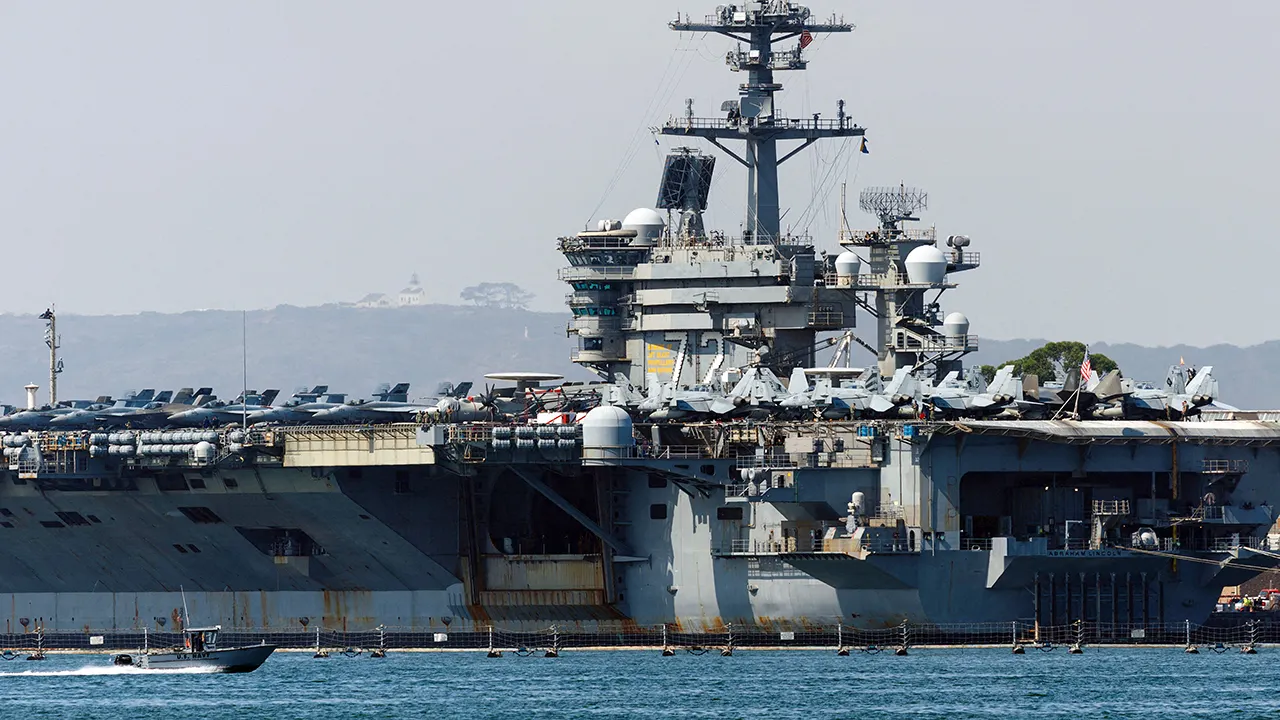
The U.S. military has shot down an Iranian drone over the Arabian Sea after it approached the USS Abraham Lincoln aircraft carrier in what American officials described as an aggressive manner with “unclear intent.”
Iranian media, however, is offering a different narrative. The Tasnim News Agency, which has known ties to Iran’s Islamic Revolutionary Guard Corps (IRGC), cited an unnamed source Wednesday claiming the drone was conducting “a routine and lawful mission over international waters” when it was downed.
According to the Iranian source, the Shahed-139 drone had successfully completed its reconnaissance mission, transmitting surveillance images to its command center before communication was lost. The source emphasized that the drone was engaged in legitimate surveillance activities in international airspace.
U.S. Central Command (CENTCOM) spokesman Captain Tim Hawkins provided details of the encounter, which occurred approximately 500 miles from Iran’s southern coast. “The Iranian drone continued to fly toward the ship despite de-escalatory measures taken by U.S. forces operating in international waters,” Hawkins said.
American military officials stated that an F-35C fighter jet from the Abraham Lincoln ultimately shot down the drone “in self-defense and to protect the aircraft carrier and personnel on board.” CENTCOM confirmed that no U.S. service members were injured during the incident, and no equipment was damaged.
The confrontation marks another escalation in tensions between the United States and Iran in the strategically vital waterways of the Middle East. The USS Abraham Lincoln, a Nimitz-class nuclear-powered aircraft carrier, was deployed to the region following President Donald Trump’s recent statement that “A massive Armada is heading to Iran.”
Maritime security experts note that the Arabian Sea and nearby Strait of Hormuz are critical shipping lanes for global oil supplies. Approximately 20% of the world’s oil passes through the Strait of Hormuz, making any military confrontation in these waters particularly concerning for energy markets and global trade.
CENTCOM also reported that “during a separate incident hours later in the Strait of Hormuz, IRGC forces harassed a U.S.-flagged, U.S.-crewed merchant vessel lawfully transiting the international sea passage.” This indicates a pattern of provocative actions by Iranian forces in the region.
The Iranian Shahed-139 drone is part of the country’s expanding unmanned aerial vehicle program, which has become increasingly sophisticated in recent years. Military analysts believe Iran has been using drone surveillance to monitor U.S. naval activities in the Persian Gulf and surrounding waters as tensions between the two nations continue.
These incidents come amid broader regional instability, including ongoing conflicts in Gaza and Lebanon, where Iran maintains significant influence through proxy groups like Hamas and Hezbollah.
The U.S. Navy maintains a substantial presence in the Middle East, with the Fifth Fleet headquartered in Bahrain. The Abraham Lincoln Carrier Strike Group represents one of America’s most powerful naval assets, capable of projecting military power throughout the region.
Neither country has indicated plans to de-escalate, raising concerns about the potential for further confrontations as U.S. naval forces continue operations in close proximity to Iranian waters and airspace.
Fact Checker
Verify the accuracy of this article using The Disinformation Commission analysis and real-time sources.

12 Comments
The differing accounts from the US and Iran highlight the complexity of the situation and the need for transparent communication to avoid misunderstandings. Both sides must exercise restraint and focus on de-escalation to prevent this incident from triggering a broader conflict.
Maintaining open communication channels and established conflict resolution mechanisms is crucial in these types of volatile geopolitical situations. Unilateral actions, no matter how justified they may seem, carry the risk of unintended consequences.
While the US claims the drone was acting aggressively, Iran insists it was conducting routine surveillance. Ultimately, the truth may be difficult to determine from the outside. Objective, fact-based reporting is needed to understand what really happened.
This highlights the importance of maintaining open communication and conflict resolution mechanisms between adversaries, even in tense geopolitical situations. Unilateral action carries significant risks of unintended consequences.
Interesting development in the ongoing tensions between the US and Iran. It’s concerning to see an escalation like this over the Arabian Sea. I wonder what the Iranian perspective is on the drone’s mission and whether it was truly a ‘routine’ surveillance flight as claimed.
The differing accounts from the US and Iran highlight the need for more transparency and open communication to avoid further misunderstandings or miscalculations in this volatile region.
This incident underscores the fragile nature of the relationship between the US and Iran. While the US claims self-defense, Iran maintains the drone was conducting routine surveillance. Objective analysis is needed to determine the facts and avoid further escalation.
Cooler heads must prevail on both sides to prevent this from spiraling into a larger conflict. Diplomatic solutions should be the priority, as unilateral military actions carry significant risks of unintended consequences.
The downing of the Iranian drone is a concerning development that could further inflame tensions in the region. Both sides need to show restraint and focus on diplomatic solutions to avoid a dangerous escalation of the conflict.
Maintaining open communication channels and de-escalation protocols is critical to prevent miscalculation and unintended consequences. The stakes are too high for either side to act rashly in this volatile situation.
This incident underscores the fragility of the situation in the Middle East. Both sides need to exercise maximum restraint to prevent an unintended conflict from spiraling out of control. Cooler heads must prevail to find a diplomatic solution.
De-escalation and conflict prevention should be the top priorities here. The potential for miscalculation is high, so clear communication channels between the US and Iran are crucial.