


Listen to the article
Iran’s UN Ambassador Clashes with US Envoy During Security Council Emergency Session
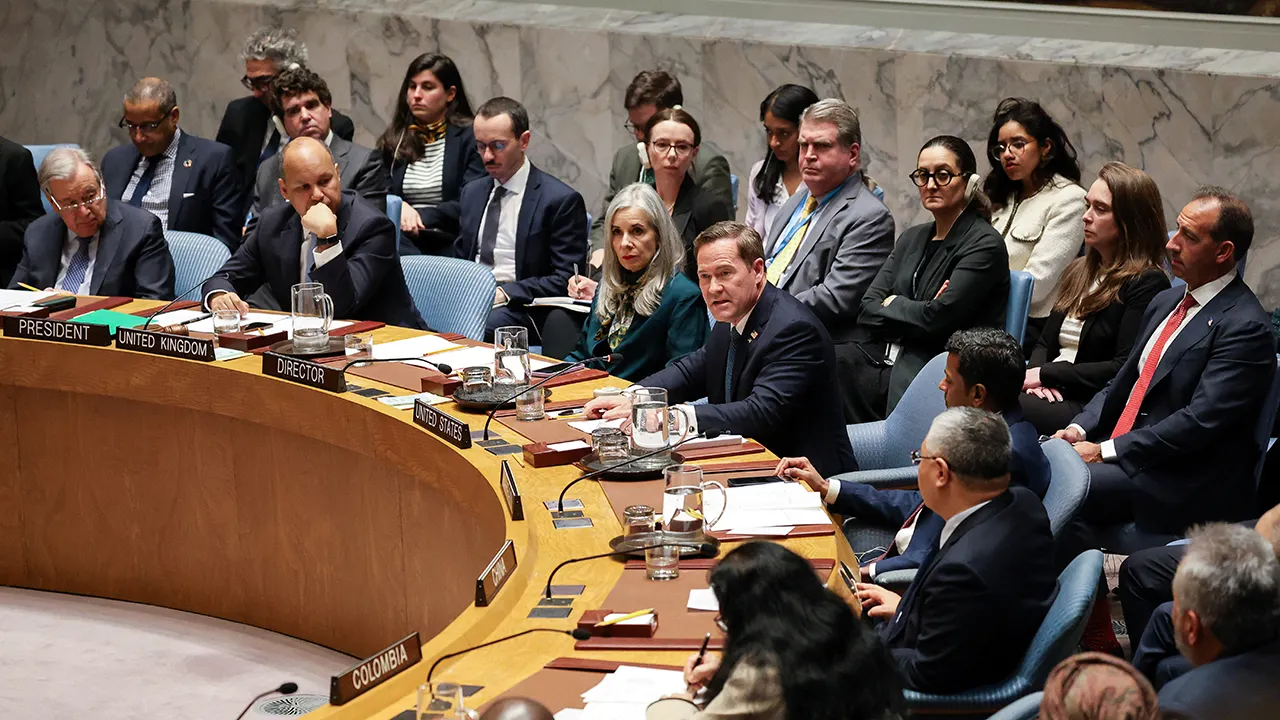
Iran’s ambassador to the United Nations, Saeid Iravani, engaged in a tense exchange with U.S. envoy Mike Waltz during an emergency Security Council session on Sunday, as diplomatic tensions escalated amid ongoing military actions between the United States, Israel, and Iran.
The confrontation began when Iravani told the American ambassador to “be polite,” a remark that prompted a sharp rebuke from Waltz, who refused to “dignify this with another response.” The U.S. envoy instead criticized the Iranian regime for its human rights record, accusing Tehran of having “killed tens of thousands of its own people and imprisoned many more simply for wanting freedom from your tyranny.”
The heated exchange occurred during a critical Security Council briefing as the three nations entered into military conflict. Throughout the session, diplomats presented starkly different perspectives on the legality and justification of the expanding military campaign under international law.
In his extended remarks, Ambassador Waltz forcefully rejected what he characterized as Iran’s “ridiculous and frankly farcical assertion” that U.S. military actions violated international standards. He argued that the United States acted “in close coordination with the Government of Israel” and in accordance with “Article 51 of the Charter of the United Nations,” which addresses the inherent right of self-defense.
Waltz further emphasized Iran’s decades-long role in regional destabilization, highlighting Tehran’s support for armed proxy groups across the Middle East. This accusation comes at a particularly sensitive moment in Middle Eastern geopolitics, as regional tensions have reached a critical breaking point following years of proxy conflicts and direct confrontations.
The diplomatic clash unfolds against a backdrop of broader controversy surrounding Iran’s position within the United Nations system. Last month, despite objections from Western and Israeli officials, Iran was elected vice chair of the UN Charter Committee—a body specifically tasked with examining and strengthening the principles of the UN’s founding document.
Adding to the controversy, UN Secretary-General António Guterres recently sent a congratulatory message to Iran marking the anniversary of the 1979 Islamic Revolution. The gesture drew immediate criticism from various quarters, with detractors describing it as “abjectly tone-deaf” given the Iranian government’s widely documented human rights violations.
The timing of this diplomatic confrontation is particularly significant as the United States prepares to assume the rotating presidency of the Security Council on March 1. This monthly rotating position grants the presiding country substantial procedural influence, including control over the council’s agenda and meeting schedule. This places Washington in a pivotal position as regional tensions continue to escalate and international diplomatic efforts struggle to contain the conflict.
The Security Council, as the UN’s most powerful body with primary responsibility for maintaining international peace and security, now faces one of its most challenging tests in recent years. Its ability to respond effectively to this rapidly evolving crisis will likely have far-reaching implications for the Middle East region and global stability.
As military actions intensify and diplomatic rhetoric hardens, the international community watches closely to see whether the Security Council can facilitate meaningful dialogue or if deeper divisions will emerge among major powers with competing interests in the region.
Fact Checker
Verify the accuracy of this article using The Disinformation Commission analysis and real-time sources.

22 Comments
The heated dialogue between the US and Iranian envoys underscores the heightened tensions in the region. Waltz’s criticism of Iran’s human rights record and support for terrorism is a serious concern that warrants continued international pressure.
Resolving the ongoing conflicts between the US, Israel, and Iran will require sustained diplomatic efforts and a united international response.
Tense diplomatic exchanges at the UN are concerning, but necessary to address the serious security issues at hand. Waltz appears to have taken a firm stance in condemning Iran’s human rights record and military actions.
It’s critical that the US and its allies continue to hold Iran accountable for its destabilizing regional activities and support for terrorism.
This tense exchange highlights the complex geopolitical challenges facing the US and its allies in dealing with Iran. Waltz’s strong rhetoric reflects the Biden administration’s tough stance on Iran’s destabilizing activities.
Diplomatic clashes at the UN are concerning, but necessary to confront Iran’s destabilizing regional influence and human rights abuses.
Watching the US and Iranian representatives clash at the UN is a sobering reminder of the fragility of the geopolitical landscape. Both sides seem entrenched in their positions, making diplomatic progress challenging.
Addressing Iran’s destabilizing regional influence and human rights abuses will be critical to achieving lasting peace and stability in the Middle East.
This tense exchange at the UN underscores the high stakes involved in the ongoing conflict between the US, Israel, and Iran. Both sides seem entrenched in their positions, making progress towards a peaceful resolution challenging.
Continued diplomatic pressure and international cooperation will be essential to address Iran’s destabilizing regional activities and human rights abuses.
Waltz’s strong rebuke of Iran’s human rights record and support for terrorism reflects the Biden administration’s hardline stance on the issue. The US appears unwilling to back down in the face of Iran’s provocative actions.
The UN Security Council must continue to play a crucial role in mediating this conflict and finding a diplomatic solution that addresses the legitimate security concerns of all parties involved.
The UN Security Council plays a vital role in mediating global conflicts. While the dialogue between the US and Iranian envoys was heated, open communication is important to deescalate tensions and find diplomatic solutions.
Addressing Iran’s human rights violations and military aggression will be key priorities as the international community seeks to restore stability in the region.
The clashing rhetoric between the US and Iranian envoys reflects the deep divisions and mistrust that exist between the two nations. Resolving this conflict will require a delicate balance of firmness and diplomacy.
While the exchange was heated, it’s encouraging to see the US and its allies maintain a principled stance in condemning Iran’s human rights violations and regional aggression.
The confrontational dialogue between Waltz and the Iranian ambassador highlights the deep-seated distrust and animosity between the US and Iran. Resolving these tensions will require tough negotiations and concessions from both sides.
While the exchange was heated, it’s important that diplomatic channels remain open to prevent further escalation of the conflict.
The confrontational dialogue at the UN highlights the complex geopolitical challenges facing the international community in addressing the ongoing tensions between the US, Israel, and Iran. Diplomatic efforts will be crucial to finding a peaceful resolution.
Waltz’s strong criticism of Iran’s human rights record and support for terrorism reflects the Biden administration’s commitment to holding the regime accountable for its destabilizing actions.
The heated exchange between the US and Iranian envoys at the UN underscores the fragility of the situation and the high stakes involved. Both sides appear firmly entrenched in their positions, making progress towards a diplomatic solution difficult.
Continued international pressure and diplomacy will be essential to address Iran’s human rights abuses and destabilizing regional activities, while also preventing further escalation of the conflict.