


Listen to the article
U.S. Lifts Sanctions on Brazilian Supreme Court Justice in Diplomatic Reset
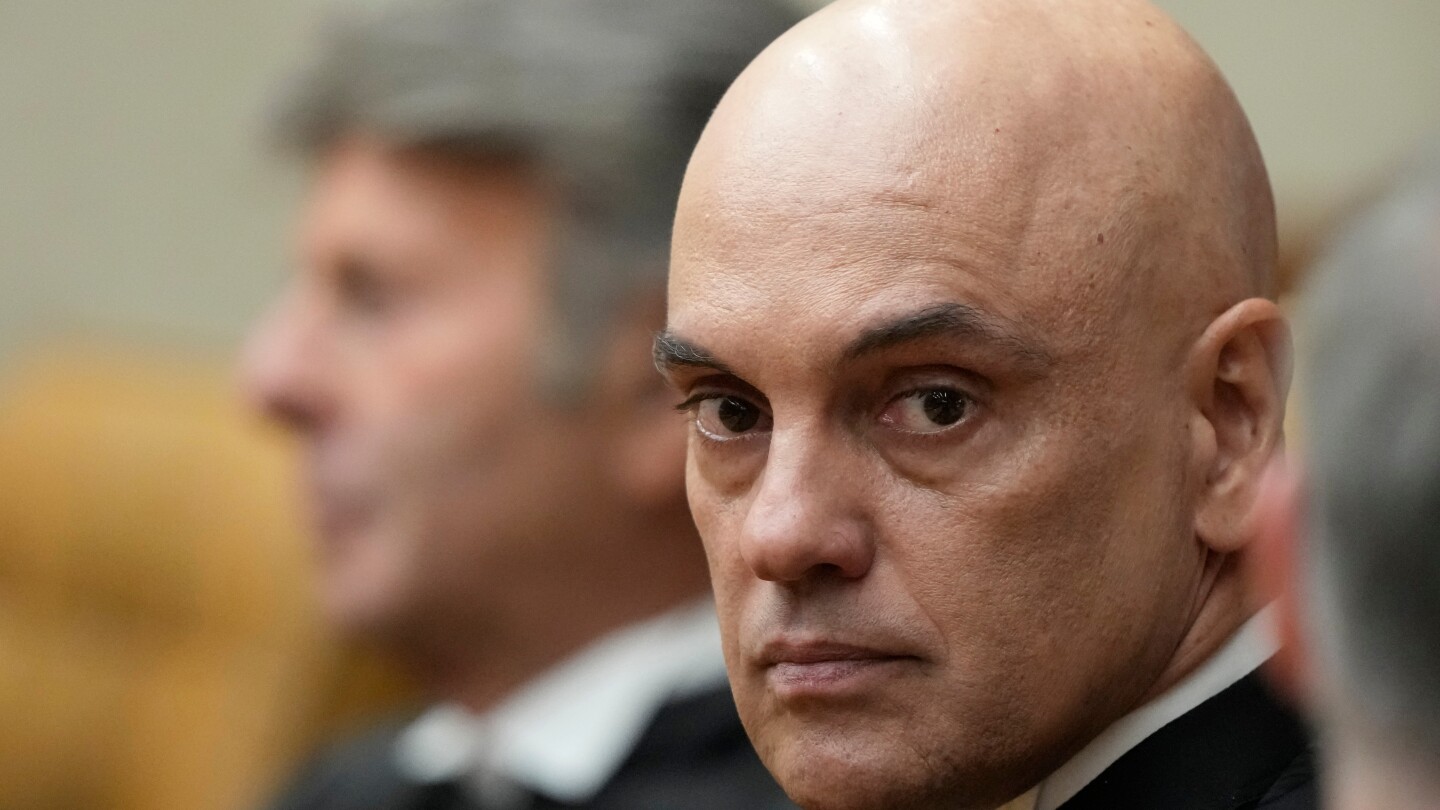
The United States removed Brazilian Supreme Court Justice Alexandre de Moraes from its sanctions list Friday, marking a significant shift in diplomatic relations between the two nations. The decision, which also removed de Moraes’ wife and the Lex Institute she leads from the list, follows a recent phone conversation between U.S. President Donald Trump and Brazilian President Luiz Inácio Lula da Silva.
The Trump administration had placed sanctions on de Moraes in July, accusing him of authorizing arbitrary pretrial detentions and suppressing freedom of expression in Brazil. According to a senior U.S. official who spoke on condition of anonymity, the sanctions were lifted after Brazil’s lower house passed an amnesty bill, which the administration viewed as a positive signal that “lawfare conditions” in Brazil are improving.
“This is a victory of Brazil’s judiciary,” de Moraes declared Friday evening at an event in São Paulo. “Brazil’s judiciary did not bow to threats, coercion and it will never do so. It carried on with unbias, seriousness and courage. It is a victory for national sovereignty.”
The decision represents a thawing in relations between Washington and Brasília, following multiple high-level meetings and calls that both sides have characterized positively. The diplomatic reset is particularly notable given that Trump had maintained closer ties with Lula’s predecessor, Jair Bolsonaro, who was often labeled the “Trump of the Tropics” during his presidency.
Bolsonaro faces charges of masterminding a plot to retain power despite his electoral defeat to Lula in 2022, allegations similar to those Trump faced following the January 6, 2021, Capitol riots. The former Brazilian president was convicted and sentenced to over 27 years in prison, beginning his sentence last month while requesting house arrest due to health concerns.
Brazil’s current government framed the lifting of sanctions as a political victory. “It was Lula who put this repeal on Donald Trump’s desk, in a dignifying and sovereign dialogue,” said Gleisi Hoffmann, Brazil’s minister for institutional relations. “It is a big defeat for the family of Jair Bolsonaro, traitors who have conspired against Brazil and the judiciary.”
Lula’s administration has long accused Eduardo Bolsonaro, a lawmaker and son of the former president, of misleading Trump about de Moraes and other court members. The younger Bolsonaro, who announced plans in March to relocate to the U.S. to lobby for his father, expressed regret over the sanctions being lifted and vowed to continue fighting for Jair Bolsonaro.
The original sanctions against de Moraes had been implemented under the Global Magnitsky Human Rights Accountability Act, which targets perpetrators of human rights abuses and corrupt officials. De Moraes had described the application of the act against him as “illegal and regrettable.”
The Trump administration had also imposed steep tariffs on Brazilian products earlier this year—a 40% tariff on top of a previous 10% tariff—claiming that Brazil’s policies and prosecution of Bolsonaro constituted an economic emergency.
Thomas Traumann, a political consultant and author of a recent book on Brazil’s political divisions, said the reversal indicates that “the U.S. government wants a normal relationship with Brazil, even though it is a leftist administration.”
“Trump removed almost all tariffs it had increased, stopped discussing politics with Lula, now it is all about security and trade, and he managed to make Brazil’s government somewhat neutral in other Latin American affairs, especially Venezuela,” Traumann noted. “This is a process to show Brazil needs to be treated differently in the region.”
The reconciliation process began at the United Nations General Assembly in September, followed by a private meeting in Malaysia in October and subsequent phone conversations. Lula has been working not only to reverse tariff increases but also to end sanctions on de Moraes and certain government officials.
Separately, Lula has been urging Latin American nations to help prevent conflict in Venezuela as the Trump administration orders military action against vessels allegedly connected to drug cartels.
Last month, Trump signed an order removing additional import tariffs on some Brazilian agricultural products. According to the U.S. Census Bureau, the United States maintained a $6.8 billion trade surplus with Brazil in 2023, highlighting the economic significance of the relationship between the hemisphere’s two largest economies.
Fact Checker
Verify the accuracy of this article using The Disinformation Commission analysis and real-time sources.

11 Comments
This seems like a positive diplomatic move between the US and Brazil, though the details around the sanctions and ‘lawfare’ issues remain murky. It will be interesting to see how this impacts the relationship going forward.
Agreed, diplomacy is a delicate balance. Lifting these sanctions could help reset the bilateral ties, but there are likely still underlying tensions that need to be addressed.
The removal of these sanctions is an interesting development, especially given the accusations around suppression of free expression in Brazil. I’m curious to learn more about the conditions that led to this decision.
Yes, the passage of the amnesty bill seems to have been a key factor. It will be worth monitoring how this plays out and whether it leads to any further shifts in US-Brazil relations.
The lifting of these sanctions is a notable shift, though the underlying issues around judicial independence and freedom of expression in Brazil remain concerning. Curious to see how this develops.
Agreed, there are clearly complex geopolitical dynamics at play here. This move may be more about realpolitik than resolving the core challenges.
Interesting diplomatic move, though the details are still a bit murky. Will be curious to see if this leads to any broader shifts in the US-Brazil relationship, or if it’s more of a tactical adjustment.
While the removal of these sanctions is noteworthy, the underlying issues around judicial independence and civil liberties in Brazil are still quite worrying. Cautious optimism is warranted here.
Absolutely, this is likely more about realpolitik than a fundamental resolution of the deeper tensions. The relationship dynamics between the US and Brazil bear close watching.
This is an important diplomatic move, though the details are still a bit murky. It will be interesting to see if it leads to any broader changes in the relationship between the US and Brazil’s leadership.
It’s always interesting to see how diplomatic relationships evolve, even when the specifics are hazy. This seems like a potentially significant shift, though the long-term implications are hard to predict.