


Listen to the article
US to Deploy Advanced Missile Systems in Philippines Amid Rising Tensions with China
The United States plans to increase its deployment of advanced missile systems to the Philippines this year as part of ongoing efforts to counter China’s growing assertiveness in the South China Sea, officials from both countries announced Tuesday.
During annual bilateral talks held in Manila on Monday, US and Philippine officials condemned what they described as “illegal, coercive, aggressive, and deceptive activities” by China in the disputed waters, highlighting the deteriorating security situation in one of the world’s most contested maritime regions.
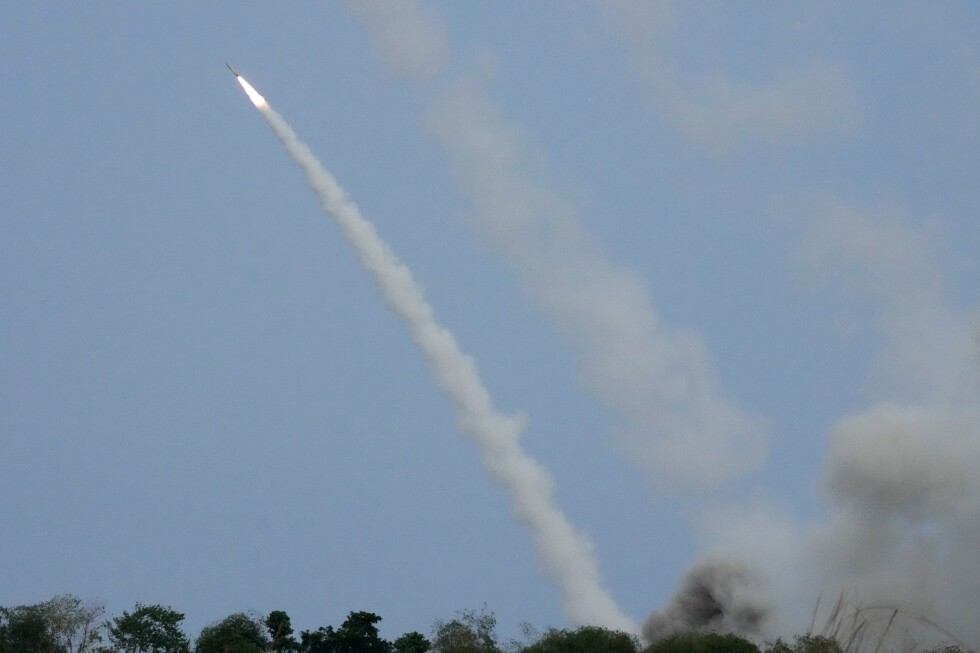
The planned deployments would build upon existing US military hardware already positioned in the Philippines, including the Typhon mid-range missile system and an anti-ship missile launcher installed last year. These weapons systems have drawn sharp criticism from Beijing, which has demanded their removal, claiming they threaten regional stability and are designed to contain China’s influence.
Philippine President Ferdinand Marcos Jr. and his administration have firmly rejected China’s demands, underscoring the Philippines’ increasingly assertive stance in protecting its territorial interests with US backing.
“It’s purely for deterrence,” Philippine Ambassador to Washington Jose Manuel Romualdez told The Associated Press. “Every time the Chinese show any kind of aggression, it only strengthens our resolve to have these types.”
The latest plans involve “cutting-edge missile and unmanned systems,” according to the joint statement released after the talks. Ambassador Romualdez revealed that discussions included the potential deployment of “upgraded” types of US missile launchers that the Philippines may eventually purchase for its own military.
The Typhon missile system, deployed to the northern Philippine region of Luzon in April 2024, is capable of firing Standard Missile-6 and Tomahawk Land Attack Missiles. Tomahawks have a range exceeding 1,000 miles (1,600 kilometers), putting parts of China within striking distance from Philippine territory.
Similarly, the Navy Marine Expeditionary Ship Interdiction System deployed to Batan island in the northernmost Philippine province of Batanes last year positions US military assets near the strategically crucial Bashi Channel. This sea passage south of Taiwan represents a vital trade route and military corridor that both US and Chinese forces have sought to control.
The military cooperation comes amid a sharp increase in confrontations between Chinese and Philippine vessels in the South China Sea. These incidents have escalated tensions not only between Manila and Beijing but also affected broader regional stability. Vietnam, Malaysia, Brunei, and Taiwan also maintain territorial claims in these waters, complicating the geopolitical landscape.
Beyond missile deployments, the US and Philippines outlined plans for expanded joint military exercises and continued US support for the modernization of the Philippine armed forces. Both nations emphasized their commitment to “preserving freedom of navigation and overflight, unimpeded lawful commerce and other lawful uses of the sea for all nations.”
As part of the military cooperation, US forces have been conducting training sessions with Filipino troops to familiarize them with the operational capabilities of these advanced weapons systems, highlighting the long-term nature of the security partnership.
The expanded military cooperation reflects the strengthening of the US-Philippines alliance under President Marcos, who has taken a more pro-US stance than his predecessor while seeking to defend Philippine sovereignty in the face of China’s expansive maritime claims. The deployment of sophisticated US weapons systems on Philippine soil marks a significant escalation in the ongoing contest for influence and control in the Indo-Pacific region.
Fact Checker
Verify the accuracy of this article using The Disinformation Commission analysis and real-time sources.

14 Comments
This is a concerning development. Tensions in the South China Sea are already high, and further militarization by the US and its allies will only escalate the situation. I hope the parties can find a diplomatic solution to ease regional tensions.
I agree, the risk of miscalculation and conflict is very real. Both sides need to show restraint and focus on de-escalation through diplomatic channels.
This decision by the US reflects its growing concern over China’s assertiveness in the South China Sea. However, responding with more military hardware is unlikely to resolve the underlying issues and may only exacerbate tensions.
You make a fair point. A more comprehensive diplomatic approach, addressing the root causes of the disputes, may be a more constructive path forward.
The US deployment of advanced missile systems to the Philippines is a significant escalation that will undoubtedly alarm China. This could trigger a dangerous cycle of retaliation and counter-retaliation.
Absolutely. De-escalation and conflict prevention should be the top priority for all parties involved. Ratcheting up military posturing is a risky strategy that could backfire.
Increased US military presence in the Philippines is bound to heighten regional tensions. While the US may view it as a deterrent, China is likely to perceive it as a direct threat to its security interests.
I agree. This move could further erode trust and lead to a dangerous security dilemma, where both sides feel compelled to take increasingly assertive actions.
From a military and security perspective, I can see the logic behind the US deployments. However, I hope both sides can find ways to reduce tensions through constructive dialogue and confidence-building measures.
Agreed. Unilateral actions often beget further escalation. Multilateral diplomacy and compromise will be essential to maintaining regional stability.
The US appears to be doubling down on its strategic containment of China in the region. While I understand the security concerns, this kind of tit-for-tat military buildup is worrying and could lead to an unintended clash.
You make a fair point. Maintaining a delicate balance between deterrence and provocation is crucial in such a volatile geopolitical environment.
This move by the US is likely to provoke a strong reaction from China. I worry that the cycle of action and counteraction could spiral out of control, with serious consequences for the entire region.
You raise a valid concern. The potential for miscalculation and unintended conflict is a real risk that policymakers on all sides need to carefully consider.