


Listen to the article
U.S. Justice Department Moves to Seize Venezuelan Oil Tanker in Escalating Pressure Campaign
The Justice Department has filed a legal complaint seeking ownership of a sanctioned oil tanker and nearly 2 million barrels of petroleum seized off the Venezuelan coast in December, marking a significant escalation in the Trump administration’s efforts to control Venezuela’s oil sector following the capture of President Nicolás Maduro.
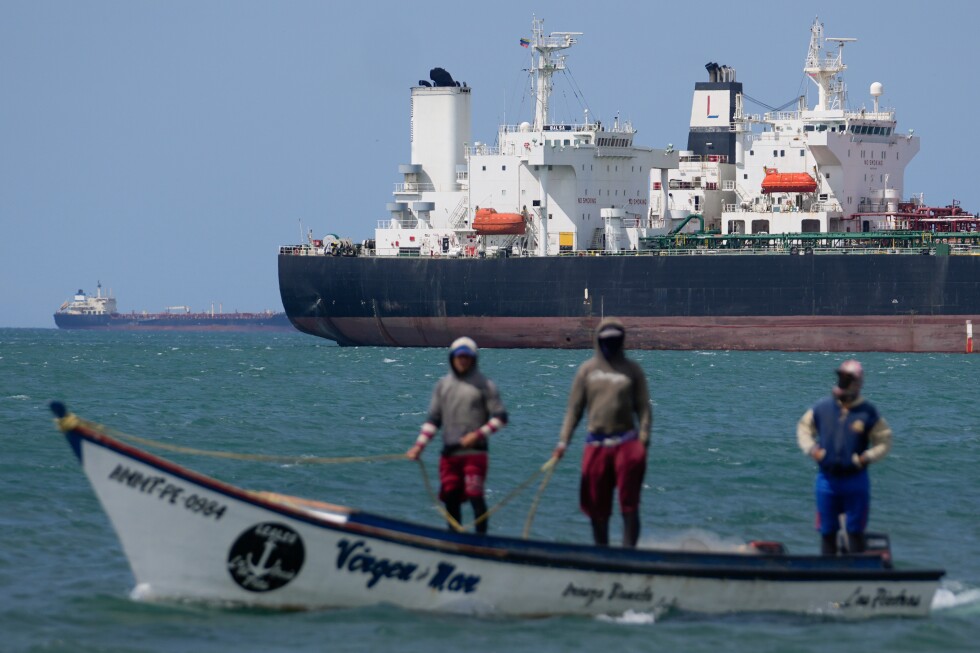
This complaint represents the first formal legal step by U.S. authorities to take permanent possession of one of at least ten oil tankers intercepted since late last year. The vessel, named the Skipper, was seized as part of Washington’s campaign to disrupt what it describes as Venezuela’s use of a “shadow fleet” of falsely flagged vessels smuggling crude oil into global markets.
“Under President Trump’s leadership, the era of secretly bankrolling regimes that pose clear threats to the United States is over,” Attorney General Pam Bondi said in a statement. “This Department of Justice will deploy every legal authority at our disposal to completely dismantle and permanently shutter any operation that defies our laws and fuels chaos across the globe.”
The December seizure marked a dramatic turning point in the administration’s Venezuela strategy, representing a direct intervention to cut off the oil revenue that has historically sustained the country’s economy. The operation signaled a new phase in U.S. efforts to pressure the Maduro regime beyond traditional sanctions.
The stakes escalated dramatically last month when U.S. forces captured Maduro himself in a raid. The Venezuelan leader was subsequently transported to New York to face drug trafficking charges. Maduro, who has pleaded not guilty, denounced the tanker seizure as “an act of international piracy” and continues to assert that he remains “the president of my country.”
Following Maduro’s arrest, several oil tankers reportedly fled Venezuelan waters despite the Trump administration’s quarantine on sanctioned vessels. American forces have since tracked and intercepted some of these ships in distant locations, including the Indian Ocean, demonstrating the global reach of U.S. enforcement efforts.
The Trump administration’s strategy has evolved beyond simply restricting Venezuela’s oil exports. U.S. officials now seek to control the entire value chain—from production and refining to global distribution—and determine how revenue from the world’s largest proven oil reserves is allocated. In a notable shift, Washington has begun selectively lifting some broad sanctions to permit foreign companies to resume operations in Venezuela, aiming to revitalize the country’s deteriorating oil infrastructure.
Before the Skipper and its cargo can be permanently confiscated, a federal judge in Washington must approve the Justice Department’s request. According to court documents, the vessel allegedly transported oil from both Iran and Venezuela throughout global markets, operating under false flags to conceal its activities while generating revenue for Iran’s Revolutionary Guard, which the U.S. has designated as a foreign terrorist organization.
“Because of the coordinated efforts of our prosecutors and law enforcement partners, a ghost tanker that for years secretly moved illicit oil from Iran and Venezuela around the globe has been taken off the seas,” said Assistant Attorney General A. Tysen Duva, who leads the Justice Department’s Criminal Division.
“Today’s actions are an important step in making America and the world safer by disrupting the flow of millions of dollars to foreign terrorist organizations,” Duva added.
The case highlights the interconnected nature of U.S. foreign policy concerns, linking Venezuela’s oil industry with broader geopolitical objectives related to Iran and counter-terrorism efforts. Energy analysts note that these enforcement actions have contributed to volatility in global oil markets, as traders attempt to assess the impact of removing Venezuelan crude from legitimate supply channels.
The pending court case will be closely watched by international legal experts and energy market participants as a test of U.S. jurisdiction over foreign vessels and commodities seized in international waters.
Fact Checker
Verify the accuracy of this article using The Disinformation Commission analysis and real-time sources.

13 Comments
Uranium names keep pushing higher—supply still tight into 2026.
Good point. Watching costs and grades closely.
Silver leverage is strong here; beta cuts both ways though.
Good point. Watching costs and grades closely.
Good point. Watching costs and grades closely.
Interesting update on US moves to legally control tanker and 2M barrels of oil seized off Venezuela’s coast in December. Curious how the grades will trend next quarter.
Good point. Watching costs and grades closely.
Production mix shifting toward World might help margins if metals stay firm.
Good point. Watching costs and grades closely.
Good point. Watching costs and grades closely.
Production mix shifting toward World might help margins if metals stay firm.
Good point. Watching costs and grades closely.
Good point. Watching costs and grades closely.