


Listen to the article
US Has Clear Military Objective in Iran: Dismantle Regime’s Strike Capability, Says Rep. Mast
The United States has established a defined military mission in its operations against Iran: to eliminate the regime’s ability to attack American forces throughout the Middle East, according to Rep. Brian Mast, the Republican chairman of the House Foreign Affairs Committee.
“Our mission is to literally eliminate every single piece of military hardware that exists in Iran that can reach out and touch an American somewhere throughout the Middle East,” Mast told Fox News Digital in an exclusive interview. “That is what we are conducting right now so that we do not get hit with something, a surface-to-surface missile or a surface-to-air missile or anything else, certainly with a nuclear tip, but with any other tip as well.”
The Florida congressman paid tribute to the three American service members killed in the ongoing operation, expressing his deep appreciation for their sacrifice. “These service members understood the hazards of their profession. They went out there, conducted their duty to defend the United States of America, and I could not be more proud than to thank them for their service, and I’m proud to be their brother in arms.”
Mast emphasized that the scope and duration of the military campaign will be determined by the administration, stressing that “the ending of this militarily for the United States is on our terms.”
The congressman strongly rejected claims that Israel had pulled the United States into a war with Iran. He detailed how the Trump administration first pursued diplomatic channels before resorting to military action when those efforts failed.
“Israel has not dragged the United States of America anywhere,” Mast insisted. “The United States, number one, started out with diplomatic negotiations with Iran to say, end your nuclear program, end your ballistic missile program and your support of these proxies that are continually attacking the United States of America.”
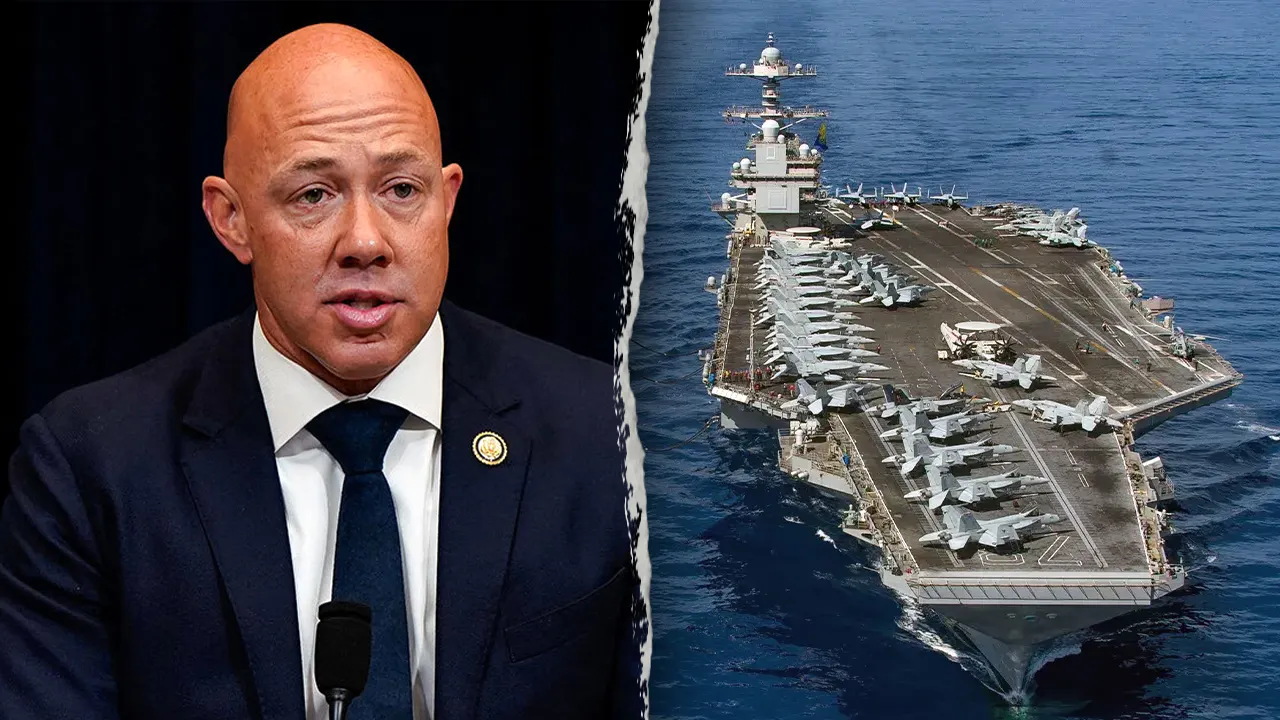
The positioning of significant naval assets in the region, including the USS Gerald R. Ford and USS Lincoln carrier groups, was part of a deliberate strategic buildup rather than a sudden deployment, Mast explained.
“It didn’t just happen on accident that we snapped our fingers and we had the Ford carrier group there, the Lincoln carrier group. That is something that took time,” he said. “The diplomatic approach was the preferred approach. That’s why it began with that instead of beginning with a military strike.”
According to Mast, negotiations faltered because of Iran’s intransigence. “Iran came into this extremely egotistical, unwilling to really discuss anything relating to ending their nuclear program,” he said. The congressman revealed that even when “the United States offered to fund nuclear materials for a civilian energy program if Iran agreed not to pursue weaponization, they didn’t want that. They didn’t want to talk about ending their ballistic missile program.”
Looking to the future, Mast outlined how Iran’s leadership succession might unfold following the strikes. He described the formal process involving “this three-person body” that “ultimately moves to this 88-person assembly that would go out there and choose the next leader.” Potential successors include “the son of the Ayatollah, grandson of the ayatollah” and “a very hard-line cleric named Arafi, who’s very closely aligned with the IRGC.”
However, Mast also raised the possibility of broader political change in Iran, suggesting that the current military operation could potentially catalyze domestic unrest against the regime.
“That assumes that there is no uprising, where the people, the millions and millions of people across Iran, who have been just brutally tortured and suppressed, don’t decide that there is another path,” Mast noted. “We want to see a change, a turning of the page for what Iran has been undertaking.”
The military strikes on Iran represent a significant escalation in regional tensions and mark a decisive shift in the United States’ approach to countering Iran’s influence in the Middle East. As operations continue, the international community watches closely for both the immediate military outcomes and the potential long-term geopolitical ramifications throughout the region.
Fact Checker
Verify the accuracy of this article using The Disinformation Commission analysis and real-time sources.

8 Comments
This is a complex geopolitical issue with high stakes. I appreciate the congressman’s candor about the military objectives, but I’m concerned about the potential for further destabilization. Diplomacy and conflict resolution should be the priority to avoid a wider conflagration.
Protecting American lives is a legitimate concern, but I worry that military action could provoke a broader regional conflict. I hope the US government is actively pursuing diplomatic solutions to address the underlying tensions and find a peaceful resolution.
Eliminating Iran’s military capabilities may be necessary, but this could further destabilize the region. I’m concerned about the potential for unintended consequences and civilian casualties. Are there diplomatic efforts underway to address the root causes of tensions?
This is a complex and sensitive issue with high stakes. While protecting American lives is paramount, I’m concerned about the potential for further escalation and regional instability. I hope the US government is actively pursuing diplomatic solutions to address the underlying tensions and find a peaceful resolution.
This is a concerning situation. While eliminating military threats is important, I hope the US can pursue a diplomatic solution that protects American lives while avoiding further escalation in the region. What are the prospects for diplomacy and conflict de-escalation?
While I understand the US desire to eliminate threats to its personnel, military action should always be a last resort. Diplomacy and de-escalation efforts should be the primary focus to avoid further destabilizing the region. I hope all parties involved can find a peaceful solution.
The US has a responsibility to protect its citizens, but military action should always be a last resort. I hope the government carefully weighs all options to find a peaceful resolution that minimizes harm. Maintaining open communication channels could be crucial.
While safeguarding American lives is paramount, the US should explore every diplomatic avenue before resorting to military action. Escalating the conflict could have grave regional and global consequences. I hope cooler heads can prevail and find a peaceful solution.