


Listen to the article
Iran and the United States are set to engage in a second round of nuclear talks next week in Geneva, the Swiss Foreign Ministry announced Saturday. The upcoming discussions follow initial indirect negotiations hosted by Oman on February 6.
The precise dates for the Geneva talks have not yet been disclosed, but they come amid escalating tensions and stern warnings from U.S. President Donald Trump. Following the first round of discussions, Trump cautioned Tehran that failing to reach an agreement with his administration would have “very traumatic” consequences.
Previous negotiation efforts collapsed last June when Israel launched what became a 12-day military campaign against Iran that included U.S. strikes on Iranian nuclear facilities. The conflict significantly heightened regional tensions and derailed diplomatic progress.
Trump has consistently maintained a hardline stance toward Iran, repeatedly threatening military action to force compliance on nuclear constraints. His administration recently announced the deployment of the USS Gerald R. Ford, the world’s largest aircraft carrier, to the Middle East. The carrier will join other substantial U.S. military assets already positioned in the region, signaling Washington’s willingness to back diplomatic pressure with force.
“A change in power in Iran would be the best thing that could happen,” Trump stated on Friday, further intensifying his rhetoric against the Iranian regime.
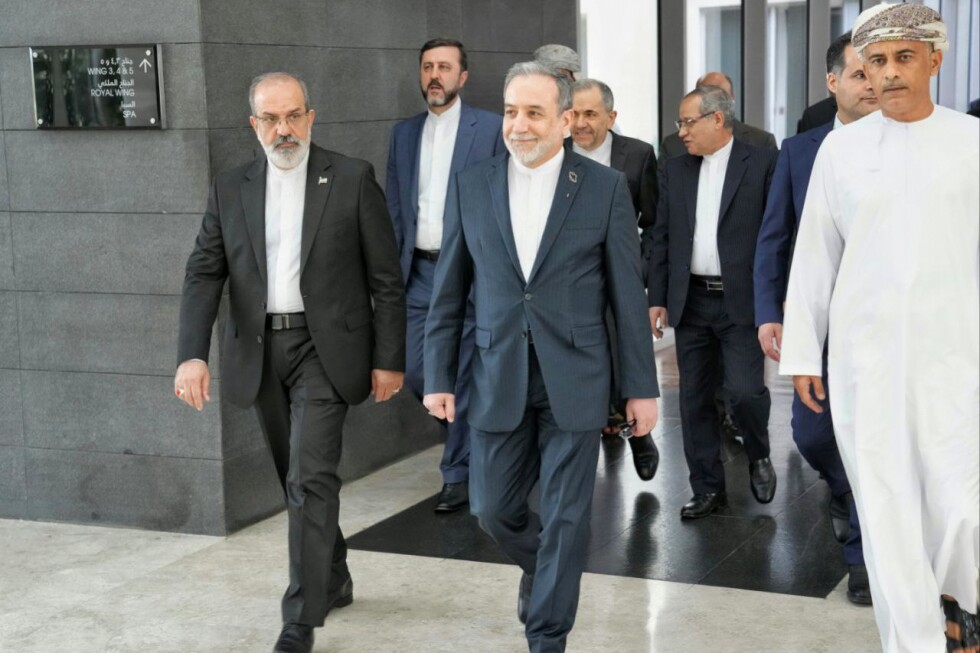
The February 6 indirect negotiations involved Iranian Foreign Minister Abbas Araghchi and U.S. Middle East envoy Steve Witkoff. Notably, the top U.S. military commander in the Middle East was also present at these talks, marking a significant escalation in the seniority of participants and suggesting the increased strategic importance Washington places on the discussions.
A fundamental impasse remains at the center of negotiations. The Trump administration continues to insist that Iran completely abandon uranium enrichment under any potential agreement. Tehran has categorically rejected this position, creating a significant barrier to progress.
Iranian officials maintain that their nuclear program exists solely for peaceful purposes, though they have increasingly hinted at the possibility of pursuing nuclear weapons. Prior to last June’s conflict, Iran had been enriching uranium to 60% purity—just a technical step away from weapons-grade levels.
Iranian President Masoud Pezeshkian has expressed willingness for “any kind of verification” of the country’s nuclear activities. However, the International Atomic Energy Agency (IAEA), the UN’s nuclear watchdog, has been unable to conduct inspections or verify Iran’s nuclear stockpile for several months, creating significant uncertainty about the current state of the program.
While Trump has recently indicated that scaling back Iran’s nuclear program is his primary objective, Israeli Prime Minister Benjamin Netanyahu is pushing for a more comprehensive approach. During his Washington meeting with Trump this week, Netanyahu advocated for any deal to address Iran’s ballistic missile capabilities and end Tehran’s support for proxy groups like Hamas and Hezbollah.
The talks come as Gulf Arab nations have warned that any military conflict between the U.S. and Iran could rapidly escalate into a broader regional war, potentially destabilizing the entire Middle East. Iran has pledged to respond forcefully to any attack on its territory.
The Geneva negotiations represent a critical juncture in the long-standing tensions between Washington and Tehran, with significant implications for regional stability and global nuclear non-proliferation efforts. As both sides prepare for the upcoming talks, the international community watches closely to see whether diplomacy can prevail where previous efforts have failed.
Fact Checker
Verify the accuracy of this article using The Disinformation Commission analysis and real-time sources.

12 Comments
With the USS Gerald R. Ford now deployed to the Middle East, the stakes are high for these nuclear talks. Both sides will need to exercise caution and restraint to avoid further escalation.
Definitely. Maintaining open communication channels and avoiding miscalculation will be critical during this delicate diplomatic process.
The outcome of these nuclear talks could have significant implications for global energy markets and commodity prices. I’ll be following the developments closely.
Agreed. A successful agreement could pave the way for Iran’s return to global energy markets, potentially impacting oil, gas, and uranium prices.
I’m curious to see what specific issues will be on the agenda for these nuclear talks. Addressing the concerns of both sides will be essential for any meaningful progress.
Good point. The discussions will likely focus on reinstating the JCPOA and mapping out a pathway for sanctions relief and nuclear inspections.
The timing of these talks is certainly significant, coming amid heightened rhetoric and military posturing. Careful diplomacy will be crucial to navigating this sensitive situation.
Agreed. Both sides need to approach these discussions in good faith and with a willingness to compromise.
It’s encouraging to see the US and Iran returning to the negotiating table. Successful nuclear talks could have far-reaching implications for geopolitics in the Middle East.
Absolutely. A breakthrough agreement would be a significant diplomatic achievement and could help ease tensions in the region.
Interesting to see the US and Iran engaging in another round of nuclear talks. Given the history of tensions, I hope both sides can find common ground and make progress this time around.
Absolutely. Diplomatic dialogue is key to reducing regional tensions and avoiding further conflict.