


Listen to the article
Trump Administration Steps Up Peace Efforts in Sudan’s Devastating Civil War
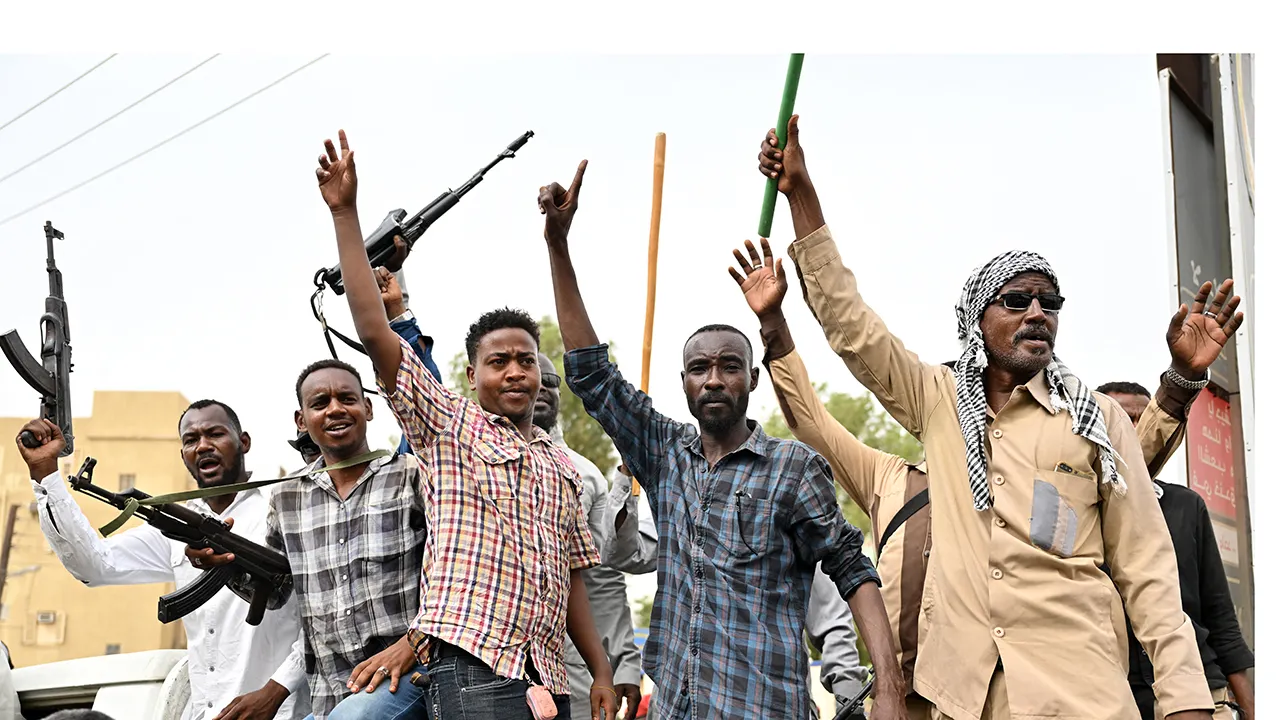
President Donald Trump’s administration has intensified diplomatic efforts to end Sudan’s devastating 30-month civil war, which has left tens of thousands dead and approximately 14 million people displaced from their homes. The peace initiative is part of a broader agenda by Trump’s team to resolve conflicts worldwide.
“Ending wars is a priority for President Trump, and the United States remains focused on working with our partners and other stakeholders to resolve the crisis in Sudan,” a State Department spokesperson confirmed on Wednesday. “Engagement with all relevant stakeholders is essential to achieving this goal. Given the immediate urgency of de-escalating the violence, we will continue to engage with the belligerents to end the conflict.”
The conflict pits the Rapid Support Forces (RSF) militia, led by Gen. Muhammad Hamdan Dagalo Musa, commonly known as Hemedti, against the Sudan Armed Forces (SAF) under Gen. Abdel Fattah al-Burhan’s command. Peace talks initiated during the Biden administration showed little progress but have gained significant momentum under Trump’s leadership.
In September, the U.S. formed an international Quad with Egypt, Saudi Arabia, and the United Arab Emirates to coordinate peace efforts. This diplomatic coalition represents a strategic alignment of regional powers with significant influence in Sudan.
The pace of peace negotiations has accelerated dramatically in recent days. Massad Boulos, the White House’s senior advisor for Arab and African Affairs, who recently brokered a ceasefire between the Democratic Republic of the Congo and Rwanda, held talks with Egypt’s Foreign Minister Badr Abdelatty in Cairo on Sunday, followed by meetings with the Arab League on Monday.
Boulos reportedly made progress in the negotiations, stating, “Both parties have agreed in principle, and we have not recorded any initial objection from either side. We are now focusing on the fine details.”
Despite these diplomatic advancements, fighting continues. Sudan’s Defense Minister Hassan Kabroun acknowledged the Trump administration’s peace efforts during a televised statement following a government council meeting in Khartoum but added, “Preparations for the Sudanese people’s battle are ongoing. Our preparations for war are a legitimate national right.”
The fall of El-Fasher, effectively giving the RSF control of the entire Darfur region, appears to have catalyzed the renewed diplomatic push. “The RSF’s full control of the Darfur region could have dangerous and worrying consequences in the future in terms of partition,” Boulos told Al Jazeera, highlighting concerns that the country could be permanently split.
White House Press Secretary Karoline Leavitt emphasized the administration’s commitment, stating, “The United States is actively engaged in efforts to bring about a peaceful resolution to the terrible conflict in Sudan. We remain committed to working with our international partners, including Quad members — Egypt, Saudi Arabia and the UAE — as well as others to lead a negotiated peace process.”
UN Secretary General Antonio Guterres called for an immediate ceasefire on Tuesday, warning that the war is “spiraling out of control.”
“The fall of El-Fasher to the RSF is a defining moment in Sudan’s brutal civil war,” said Mariam Wahba, research analyst at the Foundation for Defense of Democracies. “It marks the militia’s full control of the Darfur region and leaves Sudan effectively split in two.”
The humanitarian situation has reached catastrophic levels. According to the UN, over 21 million people across Sudan face acute food insecurity—the largest such crisis globally. The Integrated Food Security Phase Classification has confirmed that famine conditions exist in El-Fasher and Kadugli, with desperate civilians surviving on leaves, animal feed, and grass.
Disturbing evidence has emerged from El-Fasher following its capture by RSF forces. The Yale School of Public Health’s Humanitarian Research Lab released satellite images showing “evidence of body disposal activities include at least two earth disturbances consistent with mass graves at a mosque and the former Children’s Hospital,” suggesting cleanup of alleged mass atrocities.
Sources indicate that intense U.S.-led negotiations continue. While specific details remain confidential, the proposed agreement would likely begin with a three-month humanitarian truce to facilitate aid delivery, followed by a permanent ceasefire and transition to civilian leadership.
“For Washington, the stakes in Sudan are rising by the day,” warned Wahba. “The more time the RSF has to cement its control over Darfur and push toward Khartoum again, the harder it will become to prevent the country’s permanent collapse. What happens next in Sudan will shape the balance of power across the Horn of Africa and signal to America’s adversaries whether the United States still has the will to confront instability before it spreads in this critical region of the world.”
Fact Checker
Verify the accuracy of this article using The Disinformation Commission analysis and real-time sources.

6 Comments
Ending the devastating civil war in Sudan is a crucial humanitarian priority. I hope the renewed US diplomatic efforts can help facilitate a lasting peace agreement between the warring factions.
The situation in Sudan remains deeply troubling. I’m glad to see the US stepping up efforts to broker a ceasefire and path to a sustainable peace. All stakeholders must be engaged to resolve this complex crisis.
The staggering loss of life and displacement of millions due to this conflict is truly tragic. Sustained engagement and mediation by the US and international community is essential to resolving the crisis.
Agreed. Reaching a peaceful resolution requires all sides to come to the negotiating table in good faith. I hope the pressure and incentives from the US can help make that happen.
It’s concerning to see the conflict escalating and the death toll rising. Diplomatic efforts to end the violence and facilitate a political transition are critical at this stage.
Ending long-running civil wars is extremely difficult, but the US should be commended for intensifying its diplomacy to try to de-escalate the violence in Sudan. A peaceful resolution is desperately needed.