


Listen to the article
U.S. Forces Intercept Vessel Attempting to Evade Presidential Quarantine Order
U.S. forces have successfully interdicted the Veronica III, a vessel that attempted to defy a quarantine order issued by the Trump administration, the Department of War announced Sunday.
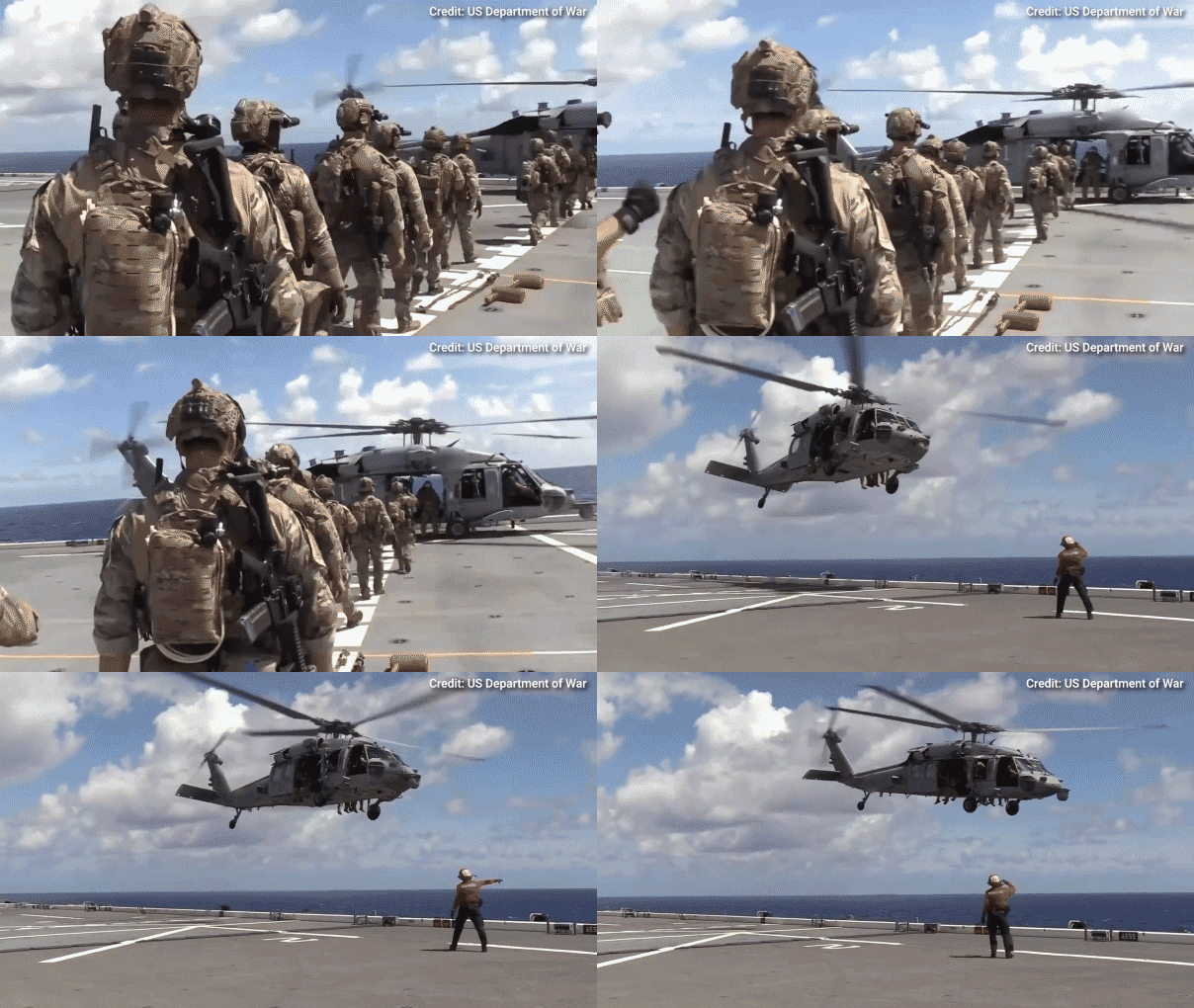
The boarding operation occurred without incident in the Indo-Pacific Command area of responsibility, marking the latest in a series of high-profile maritime enforcement actions targeting sanctioned vessels.
“The vessel tried to defy President Trump’s quarantine — hoping to slip away. We tracked it from the Caribbean to the Indian Ocean, closed the distance, and shut it down,” the Department of War stated on its official social media account. “No other nation has the reach, endurance, or will to do this.”
The operation underscores the administration’s aggressive stance on sanctions enforcement. “International waters are not sanctuary. By land, air, or sea, we will find you and deliver justice,” the statement continued, emphasizing the government’s determination to “deny illicit actors and their proxies freedom of movement in the maritime domain.”
The Veronica III, a large crude oil carrier built in 2006 and flagged in Panama, is listed on the U.S. Treasury Department’s Specially Designated Nationals sanctions list. The vessel has been linked to the transport of hundreds of thousands of metric tons of sanctioned Iranian oil and is reportedly affiliated with a Chinese ship-management company that has also faced U.S. sanctions.
Maritime security experts note that the tanker has operated under various names and flags in apparent attempts to disguise its activities and evade international sanctions. This practice, known as “flag-hopping,” is common among vessels involved in illicit trade networks.
The interdiction comes amid intensified U.S. efforts to enforce sanctions against Venezuela. In mid-December, President Trump announced a blockade of all sanctioned oil tankers entering or leaving Venezuelan ports, significantly increasing American naval presence in the Caribbean. The move was designed to increase pressure on then-Venezuelan dictator Nicolás Maduro’s regime.
The Veronica III was among dozens of vessels targeted by the Treasury Department in December 2024 as part of broader sanctions against 35 entities and tankers involved in transporting illicit Iranian oil to foreign markets. These sanctions reflect the administration’s focus on disrupting both Iranian and Venezuelan revenue streams.
Global energy market analysts suggest these enforcement actions could impact oil prices if they significantly disrupt the “shadow fleet” of tankers that transport sanctioned petroleum products. Such vessels often operate with limited insurance coverage and safety protocols, raising environmental and security concerns beyond sanctions compliance issues.
The successful tracking of the Veronica III from the Caribbean to the Indian Ocean demonstrates the extensive reach of U.S. maritime enforcement capabilities and intelligence networks. The Department of War’s public messaging about the interdiction appears designed to deter other vessels from attempting similar sanctions evasion tactics.
Maritime law experts point out that such interdictions typically involve complex jurisdictional considerations under international law, though vessels on sanctions lists provide clear legal authority for enforcement actions.
The interception represents a significant operational achievement for U.S. forces, highlighting their ability to conduct long-range tracking and interdiction operations across multiple maritime theaters and command areas.
This incident marks the latest development in the ongoing efforts by the United States to enforce its sanctions regime and demonstrates the global reach of American military capabilities in support of foreign policy objectives.
Fact Checker
Verify the accuracy of this article using The Disinformation Commission analysis and real-time sources.

8 Comments
This operation underscores the U.S. military’s global reach and willingness to use force to uphold economic sanctions. It will be interesting to see the diplomatic fallout, if any.
Intercepting sanctioned oil tankers is a high-stakes game. I wonder what intelligence and logistical capabilities the U.S. leveraged to track and board this vessel.
This highlights the ongoing tensions around maritime sovereignty and the delicate balance between national security and international cooperation. It will be worth following developments in this case.
Interesting to see the U.S. acting so assertively to enforce sanctions and restrict illicit maritime activity. It seems like a strategic move to deter sanctions evasion and uphold the administration’s policies.
Proactive interdiction of sanctioned vessels is an important tool for maintaining economic pressure and global order. This operation demonstrates the U.S. military’s long reach and willingness to take action.
Sanctions enforcement is a complex issue with legal and geopolitical nuances. While the U.S. action seems justified, the broader implications warrant close observation.
The U.S. seems intent on aggressively pursuing sanctions violators, even in remote parts of the world. This could have broader implications for global trade and geopolitical dynamics.
Sanctions enforcement is a complex issue. While the U.S. has the capability to track and intercept sanctioned ships, there are often geopolitical and legal considerations involved. It will be interesting to see how this case plays out.