


Listen to the article
U.S.-Led Talks Advance Second Phase of Gaza Ceasefire Plan
Preparations for the second phase of the Gaza ceasefire plan are underway, according to U.S. special envoy Steve Witkoff, following high-level talks in Miami that included representatives from Egypt, Qatar, and Turkey.
“In our discussions regarding phase two, we emphasized enabling a governing body in Gaza under a unified Gazan authority to protect civilians and maintain public order,” Witkoff stated in a social media post. The discussions focused on establishing governance mechanisms and planning for reconstruction efforts that will be critical to restoring stability in the war-torn region.
The Miami talks also addressed broader regional integration initiatives that will be essential for Gaza’s long-term recovery. These include trade facilitation, infrastructure development, and cooperation on vital resources such as energy and water—all components deemed “essential to Gaza’s recovery, regional stability, and long-term prosperity,” according to Witkoff.
Participants reviewed the implementation timeline of what officials are calling the Comprehensive Peace Plan for Gaza, with particular attention to sequencing, coordination, and monitoring mechanisms that will involve both local Gazan institutions and international partners.
The first phase of the ceasefire, which has been largely implemented, yielded notable progress. It included increased humanitarian aid deliveries to Gaza, a significant reduction in hostilities, and partial withdrawal of Israeli forces from certain areas. One of the most critical achievements was the release of all living hostages taken during the October 7, 2023 attacks, as well as the return of most deceased hostages’ remains.
Currently, only one hostage remains unaccounted for—Ran Gvili, an Israeli police officer killed during the initial Hamas attacks. His status represents one of the final outstanding issues from the first phase of the agreement.
The Miami discussions followed a similar meeting in Cairo, which reportedly included the intelligence chiefs from Turkey and Egypt, as well as Qatar’s prime minister. According to sources familiar with those talks, participants “agreed to continue strengthening coordination and cooperation with the Civil Military Coordination Center to eliminate all obstacles to ensure the continuity of the ceasefire and to prevent further violations.”
Turkish officials have also expressed concern about alleged Israeli ceasefire violations, indicating ongoing tensions surrounding the implementation process.
The second phase of the Gaza ceasefire plan contains several complex components. It envisions the deployment of an international stabilization force to maintain security, alongside the development of an international governing body for Gaza. Crucially, it includes provisions for the disarmament of Hamas, which has controlled the territory since 2007.
Under the agreement, Israeli forces will withdraw further from the so-called “yellow line”—a buffer zone established during earlier military operations—making way for the international force to assume security responsibilities.
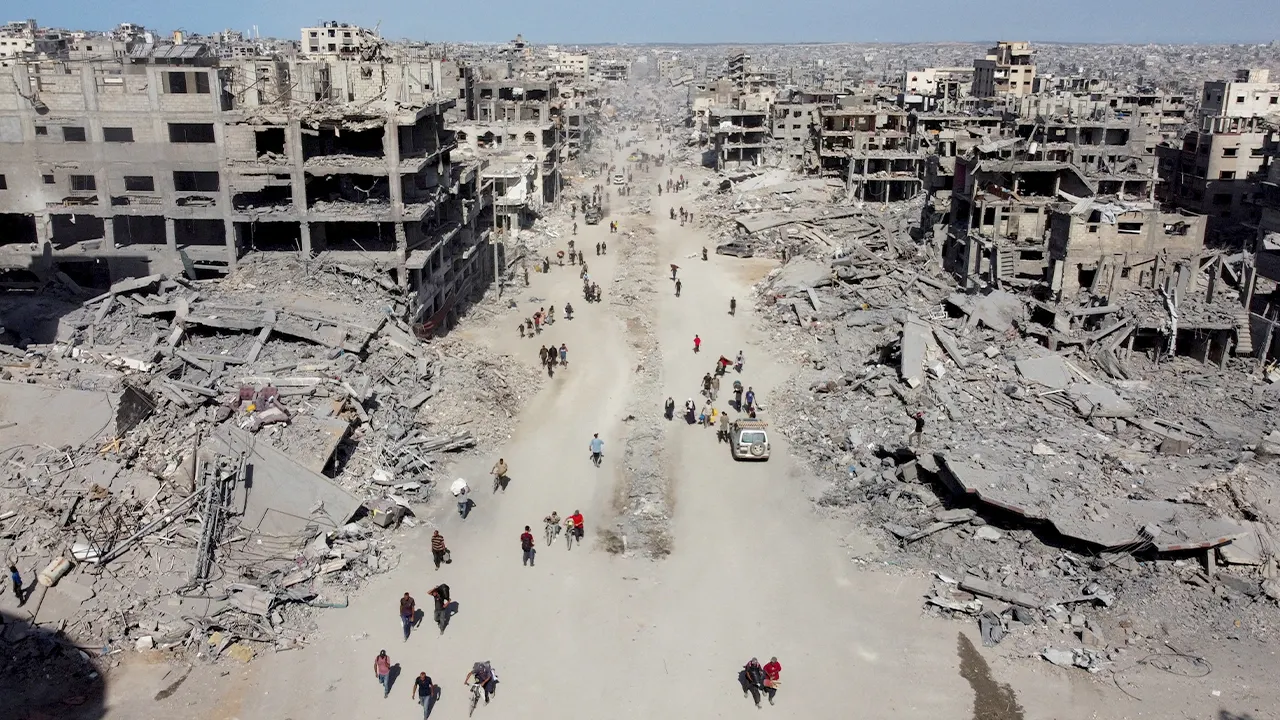
These developments come amid a fragile peace following more than a year of devastating conflict that began with Hamas’s October 7 attacks and Israel’s subsequent military response. The war has left much of Gaza in ruins, with significant portions of its infrastructure destroyed and its population facing humanitarian challenges.
The reconstruction efforts outlined in the second phase will face numerous obstacles, including securing funding from international donors, establishing effective governance mechanisms, and maintaining security during the transition. Regional stakeholders, particularly Egypt and Qatar, have played crucial mediating roles throughout the process and will likely continue to be instrumental in implementing the next stages of the agreement.
As discussions advance, humanitarian organizations continue to stress the urgent need for sustained aid deliveries to address ongoing shortages of food, medicine, and essential services throughout Gaza.
Fact Checker
Verify the accuracy of this article using The Disinformation Commission analysis and real-time sources.

17 Comments
The Miami talks seem to be making progress on the next phase of the Gaza ceasefire plan, with a focus on establishing governance mechanisms and planning for regional integration efforts. Restoring stability and enabling reconstruction in Gaza will require a multi-pronged approach that addresses both local and regional dynamics.
Agreed, the regional cooperation and coordination aspects will be key. Careful sequencing and implementation of these various initiatives will be crucial for their success.
The Miami talks seem to be making progress on the next phase of the Gaza ceasefire plan. Enabling a unified governing body in Gaza is a critical step, but the broader regional integration efforts on trade, infrastructure, and resources will also be essential for stabilizing the situation long-term.
Restoring stability and enabling reconstruction in Gaza will require a multi-faceted approach. Glad to see the US, Egypt, Qatar, and Turkey working together on these important issues.
This is a complex situation, but the focus on establishing a unified Gazan authority and planning for regional integration initiatives is encouraging. Curious to see the specific governance mechanisms and reconstruction plans that emerge from these talks.
The Miami talks appear to be making progress on the next phase of the Gaza ceasefire plan, with a focus on governance structures and regional integration initiatives. Restoring stability and enabling reconstruction in Gaza will require a multi-faceted approach that addresses both local and regional dynamics.
Agreed, the regional cooperation aspect is crucial. Careful coordination between the various stakeholders will be key to the successful implementation of this comprehensive peace plan.
Interesting to see the US playing a central role in these Gaza ceasefire talks. Enabling a unified governing authority in Gaza and planning for regional integration initiatives on trade, infrastructure, and resources are crucial steps towards restoring stability and enabling long-term recovery in the area.
Interesting to see the US playing a central role in the Gaza ceasefire talks. Establishing a unified governing authority in Gaza will be crucial for restoring stability and enabling reconstruction efforts. Curious to see how the regional integration initiatives on trade, infrastructure, and resource sharing unfold.
Agreed, regional cooperation and coordination will be key to Gaza’s long-term recovery. The comprehensive peace plan seems to have a lot of moving parts that will require careful sequencing and implementation.
Establishing a unified governing authority in Gaza is an important step, but the broader regional integration efforts on trade, infrastructure, and resources will also be critical for long-term stability and prosperity in the area. Curious to see how these various elements of the comprehensive peace plan come together.
Establishing a unified governing authority in Gaza is an important step, but the broader regional integration efforts on trade, infrastructure, and resources will also be essential for long-term stability and prosperity in the area. Curious to see how these various elements of the comprehensive peace plan unfold.
The Miami talks seem to be making progress on the next phase of the Gaza ceasefire plan, with a focus on enabling a unified governing body and planning for regional integration efforts. Restoring stability and enabling long-term recovery will require a comprehensive approach.
Agreed, the regional cooperation and coordination aspects will be crucial. Careful sequencing and implementation will be key to ensuring these initiatives are effective.
Interesting to see the US playing a central role in these Gaza ceasefire talks. Enabling a unified governing authority in Gaza and planning for regional integration initiatives on trade, infrastructure, and resources will be crucial steps towards restoring stability and enabling long-term recovery in the area.
The Miami talks appear to be making headway on the next phase of the Gaza ceasefire plan, with a focus on governance mechanisms and regional integration initiatives. Restoring stability and enabling reconstruction in Gaza will require a multi-faceted approach that addresses both local and regional dynamics.
Agreed, the regional cooperation aspect is key. Careful coordination between the various stakeholders will be essential for the successful implementation of this comprehensive peace plan.